
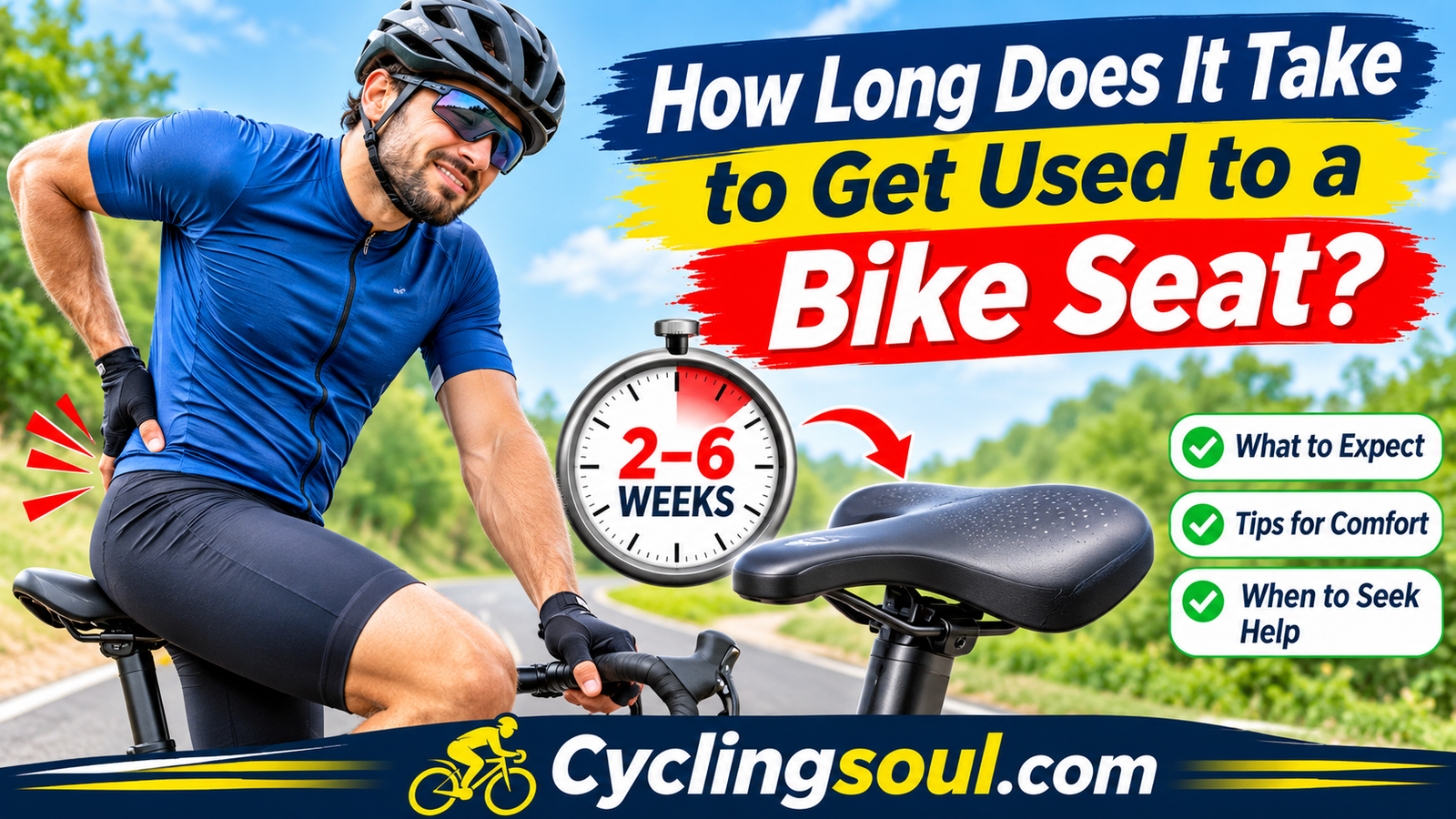
How Long Does It Take to Get Used to a Bike Seat?
Every new cyclist hits the same moment: a few rides in, the saddle starts to feel like the enemy. The good news is that this is normal, it usually passes, and there is plenty you can do to speed things up. This guide explains how long it typically takes to get used to a bike seat, why discomfort happens and how to shorten the awkward phase.
You will also learn how to tell healthy adjustment from real warning signs, and which fit, saddle and clothing choices help most. If you are just starting out, begin with how to start cycling and then come back here.
Why this question matters
Saddle discomfort is one of the most common reasons new riders quit. It is rarely dramatic, just a steady, nagging irritation that makes the next ride feel less appealing. Understanding the timeline removes much of the worry, because you can see that the discomfort has a pattern and an end.
How to use this guide
Read the sections in order if you are new, or jump straight to the topic that matches your problem. Fit, saddle shape, clothing and habits all work together, so the best results come from combining small improvements rather than hunting for one magic fix.
The Short Answer: How Long Does It Really Take?
Most riders need somewhere between two and six weeks of regular riding before a new saddle stops demanding attention. That is a range, not a promise. Some people feel fine after a handful of rides, and others take longer because of body shape, riding volume or a poorly matched saddle.
The useful way to think about it is in rides, not days. Your body adapts to repeated exposure. Three or four rides a week gives your skin, muscles and sit bones a steady signal to adjust. Riding once every ten days resets the clock each time, so you stay in the awkward phase far longer.
Two kinds of adjustment
Comfort comes from two separate processes. Your tissues toughen and your brain learns to ignore normal pressure. The second happens quickly. The first takes weeks. If you are new to the sport, our guide on how to start cycling explains how to build up gradually.
What “used to it” actually means
It does not mean zero sensation. It means pressure feels familiar, you can ride for your target time without dreading the saddle, and you recover quickly afterward. If pain is sharp, numbing or getting worse, that is not adaptation, and later sections explain what to do.
A realistic expectation
If you ride three or four times a week, you will likely notice the sharpest discomfort fading within the first couple of weeks. By the end of a month, most riders can sit comfortably for their usual ride length. Riders returning from a long break or moving to a more aggressive bike may need longer.
Why some people adapt faster
People who already have strong hips, a stable pelvis and a well-fitted bike tend to adjust sooner. Those with a poor setup may never fully adjust until the setup is fixed, no matter how many weeks they ride. That is why adaptation and fit have to be addressed together.
The role of mindset
Tension makes everything worse. Riders who clench the bars, brace against the saddle and worry about pain often create more pressure than necessary. Relaxed shoulders, soft elbows and loose hips let the bike move under you, which reduces both friction and pressure.
Set a simple plan
Pick a target such as riding comfortably for an hour, then build toward it. Write down how each ride felt. After a couple of weeks the notes show a trend, which is reassuring on the days when progress feels invisible.
Signs you are adapting well
Rides end with less tenderness, you recover faster the next day and you stop shifting around constantly. You may also notice you can think about the scenery instead of the saddle. Those are small wins, and they add up.
When progress seems slow
If three weeks pass with little change, review your setup before blaming yourself. Saddle height, tilt, width and shorts are the usual culprits, and each can be adjusted quickly.
Why the first month is the hardest
Early rides combine every challenge at once: new muscles, new contact points, new clothing and often a new bike. Each of these settles at its own pace. Once they line up, riding becomes far more pleasant, and the saddle fades from your thoughts.
Why a New Bike Seat Feels So Uncomfortable
A saddle asks your body to carry weight in a place that normally does not. When you sit on a chair, pressure spreads across a large area. On a bike, it concentrates on two bony points called the sit bones and a narrow strip of soft tissue between them.
Pressure and friction
Your sit bones are designed to carry load, but the skin and muscle around them are not used to rhythmic rubbing. Pedaling creates thousands of small movements per ride, so even a smooth surface produces friction. That is why soreness often shows up as a dull ache or a tender, rubbed feeling.
Nerves and blood flow
Soft tissue pressure can reduce blood flow and irritate nerves, which causes numbness or tingling. This is common early on and usually points to a fit, position or saddle width issue rather than a lack of toughness.
Posture matters
A more upright position loads the sit bones. A forward, aggressive position shifts load toward the soft tissue. Your bike’s geometry and how you sit on it both change the story, which is why choosing the right bike, as covered in how to choose a road bike, has a direct effect on saddle comfort.
The sit bones do the heavy lifting
Your sit bones, or ischial tuberosities, are meant to bear weight. A saddle of the right width lets them carry most of the load. If the saddle is too narrow, the sit bones hang off the edges and the soft tissue between them takes the pressure instead.
Skin and friction
Skin is surprisingly adaptable. With regular exposure it thickens slightly and tolerates rubbing better. Sweat, bunched fabric and a poorly fitting chamois accelerate irritation, which is why clothing choices matter so much in the early weeks.
Muscles and tendons
Cycling uses muscles in the hips, glutes and lower back differently from daily life. As these muscles strengthen, they support your pelvis better and ease the burden on the saddle. If you want to see which muscles are involved, read what muscles cycling works.
Why it feels worse on some days
Fatigue, dehydration, a longer ride than usual or a different pair of shorts can all change how the saddle feels. One bad ride does not mean you are going backward. Look at the overall trend instead.
Vibration and road surface
Small bumps travel through the frame into the saddle. Wider tires at sensible pressure absorb some of that buzz, and a compliant seatpost can help too. Smooth roads make the early weeks gentler.
The difference between pressure and pain
Pressure is the sense of being supported. Pain is a warning. Learning to tell them apart is a big part of getting used to riding.
A Realistic Adaptation Timeline
Every rider is different, but the following pattern is common for someone riding a few times each week. Treat it as a guide and listen to your body.
| Stage | What You Feel | What Helps |
|---|---|---|
| First rides | Sore sit bones, general awkwardness | Short, easy rides and padded shorts |
| First two weeks | Tenderness fades between rides | Regular riding, small fit tweaks |
| Weeks three to four | Pressure feels familiar | Gradually lengthen rides |
| Beyond a month | Comfortable for your usual rides | Maintain consistency, keep kit clean |
Why consistency beats intensity
Riding often for short periods adapts you faster than one long effort per week. If you are training toward a goal, see how to train for cycling for a steady build.
What if you take a break?
Time off can bring back a little tenderness, but it returns faster the second time. Ease back in rather than jumping straight to long rides.
Early phase: the first week
Expect awareness. You notice every contact point and probably shift often. Keep rides short and easy, and finish while you still feel fresh. Many riders find that thirty to sixty minutes is enough at this stage.
Building phase: weeks two to three
Tenderness often eases between rides and recovers faster. This is a good time to extend rides slightly, perhaps by ten or fifteen minutes. If soreness increases, hold the duration steady for a few more rides.
Settled phase: week four and beyond
The saddle begins to feel like part of the bike. You may still feel pressure on long days, but it is manageable and does not linger. This is the time to fine-tune position, since you can now tell the difference between adaptation and a real fit problem.
What can stall progress
Skipping rides for long stretches, changing several settings at once, wearing the wrong shorts or riding while skin is irritated can all slow things down. Patience and consistency are the cure. If you are also cycling for fitness, cycling for weight loss explains how to keep your routine steady.
Using ride notes
After each ride, jot down duration, how the saddle felt and any changes you made. Within a few weeks the pattern becomes clear, and you can see whether things are improving or whether a setting needs another look.
Don’t rush the finish line
Once discomfort fades, resist the urge to jump straight to your longest ride. Keep adding time gradually so the gains hold.
A sample first-month plan
In week one, ride three times for short, easy sessions. In week two, keep the same frequency and extend each ride a little. In week three, add one slightly longer ride, and in week four, test your target distance if you feel good. Adjust the plan whenever your body asks for more rest.
Normal Soreness vs. Warning Signs
Not every ache means the same thing. Knowing the difference lets you push on when it is safe and stop when it is not.
Normal Adjustment
- Dull ache that fades soon after riding
- Mild tenderness on sit bones
- Improves across a couple of weeks
Warning Signs
- Numbness that lingers after the ride
- Sharp or burning pain
- Open sores, swelling or worsening redness
Saddle sores
Friction plus moisture can create sores or irritated patches. Prevention matters more than treatment, so read how to prevent saddle sores before they happen.
When to see a professional
Persistent numbness, severe pain, or skin problems that do not improve with rest deserve attention from a healthcare provider. A bike fitter can help with position issues, but they cannot diagnose medical problems.
How to judge pain levels
A useful rule is to compare how you feel during the ride and the day after. Mild ache that disappears within a day is typical. Pain that worsens ride after ride is not. Treat that as a signal to change something rather than a test of toughness.
Numbness and tingling
Mild tingling can occur when pressure restricts blood flow or irritates a nerve. Try standing up for a few moments, adjusting saddle tilt or checking that your saddle is not too narrow. If numbness persists beyond the ride, stop and seek advice.
Skin problems
Redness, chafing and small bumps are common if moisture builds up. Keep skin clean and dry and take a rest day if the area is sore. Do not ride on broken skin, and speak with a healthcare professional if a problem lingers or worsens.
Listen, adjust, retest
Make one change at a time. If discomfort improves after that change, you have found something that works. If not, try the next adjustment. Careful testing beats guessing.
One side more than the other
Pain on one side often points to saddle tilt, an uneven position or a difference in leg length or flexibility. Check that the saddle is level left to right and that cleats are set evenly if you use clipless pedals.
Don’t self-diagnose long-term problems
If discomfort changes shape, spreads or lingers well beyond a ride, a healthcare professional is the right person to ask. Gear and fit adjustments are helpful, but they are not a substitute for medical advice.
Factors That Speed Up or Slow Down Adaptation
Two riders can get the same saddle and have wildly different experiences. These factors explain why.
Riding frequency and duration
Frequent, moderate rides adapt you best. Long rides early can overwhelm tissue that is not ready.
Body shape and flexibility
Sit bone width, pelvic tilt and hip flexibility all change how weight lands on the saddle. Tight hamstrings can rotate the pelvis backward and load soft tissue.
Bike type and position
A relaxed endurance setup is gentler than an aggressive race position. If you moved from an upright bike to a road bike, expect a longer adjustment.
Body weight and fitness
Heavier riders may press harder on the saddle, while very light riders may find firm saddles harsh. Fitness helps indirectly because stronger core and glute muscles support you better. If that interests you, read about whether cycling builds glutes.
Clothing and hygiene
Quality padded shorts, clean kit and dry skin all lower friction. See what to wear cycling for the basics.
Experience level
A rider who cycles regularly in other settings, such as spinning classes, may adapt faster than a complete beginner. Even so, a road saddle is a different experience, so do not skip the gradual build.
Terrain and ride style
Rough roads send vibration through the saddle, while smooth roads allow a steadier ride. Hilly terrain changes how often you move on the saddle. Riders who stay seated through climbs may feel more pressure than those who alternate positions.
Climate and sweat
Hot weather increases sweating, which raises friction risk. Cold weather can stiffen muscles, making your position less relaxed. Adjust your kit to conditions and carry spare clothing if needed.
Health and recovery
Sleep, nutrition and hydration all influence how your body recovers between rides. If you are tired or run down, tissue heals more slowly. Support recovery with good food and rest. For broader benefits and context, see why cycling is good for you.
Age and body changes
Tissue recovers at different speeds for different people. Older riders may need a little more time between longer rides, and that is perfectly normal. Listening to recovery signals works better than comparing timelines.
Previous cycling experience
Someone who rode as a teenager may have forgotten what a saddle feels like. Their legs may remember the movement, but the saddle contact area still needs rebuilding.
Your routine and schedule
Riders who fit rides into a steady weekly rhythm adapt more smoothly than those who ride in bursts. Choose days and times you can keep up, even when life is busy, and protect them like any other appointment.
Getting Saddle Position Right
Even a great saddle feels terrible if it is set up wrong. Three adjustments do most of the work.
Height
Too high and your hips rock side to side, causing chafing. Too low and your knees bend excessively and weight collects on the saddle. A slight bend in the knee at the bottom of the pedal stroke is a common starting point.
Tilt
Most riders do best with the saddle level or nearly level. A nose tilted up presses on soft tissue, and one tilted down pushes you forward onto your hands. Make small changes and test them.
Fore and aft position
Sliding the saddle on its rails changes your reach and knee position. Move it a little at a time, and recheck handlebar reach afterward.
Make one change at a time
Adjust a single variable, ride, and take notes. If you change everything at once, you will not know what helped.
Know your sizing
Size and reach affect saddle comfort too. Revisit frame choices in our road bike guide if the bike seems fundamentally wrong.
Start from a neutral baseline
Level the saddle with a small spirit level or a phone app, set the height so your knee has a slight bend at the bottom of the stroke and place the saddle roughly in the middle of its rails. From there, adjust in small steps.
Signs your saddle is too high
Your hips rock from side to side, your toes reach to touch the pedal, and you may feel pain behind the knee. Lower it a few millimeters at a time.
Signs your saddle is too low
Your knees feel crowded at the top of the stroke, quadriceps tire quickly and you feel more weight on the saddle. Raise it gradually.
Check reach and bar height
A stem that is too long or a bar that is too low pitches your weight forward and can increase soft-tissue pressure. Sometimes a shorter stem or a few spacers can solve what seems like a saddle problem.
Mark your settings
Use a marker or tape to record your saddle height and position so you can restore them after travel or maintenance. That way, you always return to a known starting point.
Small adjustments, big effects
A single millimeter or two of saddle height can change how a ride feels. Tilt changes of a degree or so can matter too. Make changes in small increments and give each a couple of rides before judging.
Get a second opinion
A friend, club mate or bike shop mechanic can spot position issues you cannot see yourself. A quick photo or video from the side while you pedal can reveal an obvious problem.
Cleats, pedals and foot position
If you ride clipless, cleat position changes how your hips and pelvis move. A small shift can influence saddle comfort more than you might expect. Make changes slowly and keep both cleats matched.
Choosing the Right Saddle Shape and Width
The saddle that came with your bike is a guess made by the manufacturer. It may suit you or not. Width, shape and cutouts matter.
Width
Your saddle should support your sit bones without pressing on the inner thighs. Many shops offer a sit-bone measuring tool, and it is worth using.
Shape and cutouts
A central cutout or channel can relieve soft-tissue pressure for some riders, while others prefer a flat, simple shape. Try, do not assume.
Padding and firmness
Softer Saddles
- Feel plush at first
- Can compress and cause pressure over long rides
Firmer Saddles
- Support the sit bones well
- Feel hard on the first few rides
Do not assume more padding means more comfort. Many riders find moderate padding better over distance. Women’s cyclists often benefit from saddles designed for wider sit bones, and women’s kit helps too, such as the options in best women’s cycling shorts.
Measure your sit bones
Many bike shops can measure your sit bone width with a simple pad. This number helps match you to a saddle width. It is not a perfect predictor, but it narrows the search.
Try before you buy
Look for shops with demo saddles or return policies. A saddle that feels great in the shop may feel different after an hour. Give any new saddle a few rides before judging it.
Match saddle to riding position
Riders in an upright position often prefer wider, more supportive saddles. Riders in a low, aggressive position may need a shape that allows the pelvis to rotate forward. Think about how you actually sit on your bike.
Don’t chase trends
Cutouts, channels and unusual shapes work for some riders and not others. Choose based on how your body responds, not on what is popular.
Women and men are individuals
Saddle choice depends on anatomy, flexibility and riding style rather than label alone. Some women prefer women-specific saddles and others do not. Test several shapes, and stick with the one that supports you.
Saddle materials and rails
Saddle shells and rails vary in flexibility. A slightly flexible shell can absorb shocks, while stiffer ones transmit more road feel. Rails can also flex, which changes how the saddle behaves over bumps.
Give it time
Most saddles need a few rides before you can judge them fairly. If one feels clearly wrong from the first ride, move on. Otherwise stay patient and use your notes to decide.
Used saddles and swaps
Swapping saddles with a friend or buying a second-hand one can be a cheap way to test shapes. Just remember that saddles wear over time, so inspect the cover and rails before committing.
Padded Shorts and Bibs Make a Big Difference
A good chamois reduces friction and spreads pressure, and it does it far better than extra saddle padding. Wear padded cycling shorts without underwear, which removes seams that rub.
Shorts or bibs?
Shorts are easy to use and fit most riders. Bibs hold the chamois in place with straps, preventing waistband pressure. Compare them in best cycling shorts and best cycling bibs.
Fit is everything
A chamois that bunches or slides causes chafing. It should feel snug without squeezing. Wash after every ride, and replace shorts when the padding flattens.
Chamois cream
Some riders use a cream to cut friction and keep skin comfortable on long rides. Apply it as directed and patch-test if you have sensitive skin.
What a chamois does
A chamois is the padded insert in cycling shorts. It cushions, wicks moisture and reduces seam friction. The best ones are shaped to match typical riding positions and are designed to stay put as you pedal.
Why no underwear
Underwear adds seams and traps moisture, which increases rubbing. Cycling shorts are made to be worn directly against skin so the chamois can do its job.
Choosing thickness
Thicker padding is not automatically better. Thick chamois can bunch or retain heat. Moderate padding paired with good material is often more comfortable on long rides.
Fit and care
Shorts should feel snug without cutting in. Wash after each ride and avoid products that coat fibers. Replace shorts once the padding wears flat or fabric thins.
A kit for every season
Light fabrics suit hot days. Thermal bib tights help in cold weather. You can find ideas in our guide on what to wear cycling, and helmet comfort matters too, so see best cycling helmets.
Seams, panels and straps
Look at how the shorts are constructed. Flat seams and wide, soft straps reduce rubbing. Gripper bands at the leg should hold without squeezing. Small details like these affect comfort over hours.
Try more than one brand
Cuts and chamois shapes differ between brands, so one maker may suit your body better than another. If a pair feels off, try a different style rather than assuming shorts do not work for you.
Riding Habits That Speed Up Adaptation
You can help your body get used to a saddle with simple habits.
Start short and build
Begin with rides you can finish comfortably, then add time slowly. Progress should feel steady, not heroic.
Change position often
Stand briefly on climbs, shift on the saddle and relax your grip. Small movements let blood flow and reduce pressure. A short out-of-the-saddle stretch every so often helps.
Keep a smooth pedal stroke
Bouncing on the saddle creates friction. Aim for a steady cadence and relaxed hips.
Engage your core
A strong trunk keeps your weight from collapsing onto your saddle. Core work and general fitness, like the muscles covered in what muscles cycling works, pay off here.
Fuel and hydrate
Fatigue makes posture slump. Eat and drink on longer rides, perhaps with products from best energy gels for cycling.
Warm up gradually
Start each ride easily for the first ten minutes. Let your body settle onto the saddle before you increase effort. This reduces sudden stress on tissue.
Vary your position
Shift forward and back, stand briefly on hills and sit up to stretch your back. Small changes allow blood flow to recover. Do this every so often rather than waiting for discomfort.
Relax your upper body
Tense shoulders and arms push weight onto the saddle. Keep elbows soft and hands light on the bars. A relaxed upper body creates a more balanced posture.
Build a base slowly
Add distance or time in small steps, rather than leaps. If you are interested in a structured approach, see what is FTP in cycling for understanding intensity.
Cross-train
Strength work for your core, glutes and hips supports riding posture. Activities such as walking, swimming or yoga can help mobility. Running is another option, and cycling vs running explains how they compare.
Cadence and smoothness
A steady, moderate cadence reduces bouncing and rubbing. If you feel yourself hopping on the saddle, lower the gear slightly or reduce your effort until your rhythm smooths out.
Breathing and relaxation
Deep, steady breaths keep tension from building in your hips and shoulders. Relaxation is a skill, and it improves with practice.
Long rides and breaks
On longer outings, plan short breaks to stand, stretch and drink. A few minutes off the saddle lets tissue recover and helps you finish the ride in better shape than non-stop sitting would.
Hygiene and Chamois Care
Clean kit is not just about comfort. It is about skin health.
After every ride
Change out of sweaty shorts soon after you finish and wash your skin. Moisture and bacteria are the main ingredients for irritation.
Washing your kit
Wash shorts after each wear, following the care label. Avoid heavy fabric softener, which can reduce wicking. Air dry if possible.
Skin care
Keep the area clean and dry, and look after any small irritation early. Rest a day if skin looks raw.
Rotate your kit
Having two or three pairs of shorts means you always have a clean pair ready, and it extends the life of each.
Why hygiene matters
Bacteria thrive in warm, damp environments. Sweaty shorts left in a bag invite skin irritation. A quick change and wash after riding is one of the most effective ways to prevent problems.
Washing and drying
Turn shorts inside out, wash according to the label and dry thoroughly. Avoid high heat which can damage elastic and padding. Make sure they are fully dry before wearing again.
Skin routine
Wash gently after riding, pat dry and let skin breathe. Avoid harsh products on sensitive areas. If skin feels tender, give it a day off from riding.
Cream and balm
Some riders use a chamois cream to reduce friction. Test a small amount before a long ride, and follow the product’s directions.
Carry spares
For multi-day trips, bring multiple pairs of shorts. Fresh kit makes a noticeable difference to comfort.
Spotting early irritation
A little redness after a long ride can fade overnight. If it persists, rest, wash gently and review your kit. Treating small issues quickly stops them turning into bigger ones.
Laundry habits that last
Wash shorts in a mesh bag if you can, close zips and avoid mixing them with rough fabrics. Gentle care keeps the chamois shape longer.
Common Mistakes New Riders Make
Most early saddle misery comes from a handful of avoidable errors.
Doing too much, too soon
A huge first ride is the quickest route to a very sore week. Build gradually.
Wearing the wrong clothes
Regular underwear or gym shorts rub. Padded cycling shorts solve this at a modest cost.
Ignoring fit
Many people live with a badly adjusted saddle for months. Spend time on it.
Buying a saddle too early
Give the stock saddle a fair chance of several weeks before swapping, unless something is clearly wrong.
Pushing through pain
Discomfort is normal. Sharp or numbing pain is a signal. Respect it.
Mistake: changing everything at once
New saddle, new shorts, new position, all in one week. When something improves or worsens you cannot tell why. Make one change at a time.
Mistake: relying on thick padding
A saddle with heavy padding can feel nice for ten minutes and awful after an hour. Support and shape matter more than softness.
Mistake: ignoring pain
Learning to tell soreness from injury is part of cycling. If something hurts in a way that feels wrong, stop and fix it.
Mistake: comparing yourself to others
Other riders have different bodies, bikes and experience. Your timeline is your own. Compare yourself to where you were last week.
Mistake: skipping recovery
Rest days let tissue repair. Overdoing it delays progress. Healthy riding means consistent effort with sensible breaks.
Mistake: forgetting energy
Fatigue makes posture slump. Eat enough and think about how many calories you burn, which this calorie guide explains.
Mistake: neglecting tire pressure
Overinflated tires transmit more buzz to the saddle. Check the recommended range, and consider a slightly lower pressure for comfort.
Mistake: giving up too soon
Many riders quit in the second week, just before things improve. Setting a firm plan to ride regularly for a month gives your body a fair chance.
When to Change Your Saddle or Get a Fit
If you have given a properly set-up saddle several weeks of regular riding and it still hurts, it is time to change something.
Try a different saddle
Many shops have demo programs that let you test saddles. Look for width and shape, not brand.
Book a bike fit
A fitter checks your position, flexibility and equipment. It can fix problems that no amount of padding will.
Consider shoes and pedals
Foot position affects hips and pelvis. See best cycling shoes and how to clip into pedals if you are changing your setup.
Joint comfort
If knee or hip discomfort is mixed in with saddle pain, read about cycling and your knees.
Signs it is time for a change
If you have followed good habits, set the saddle up well and still feel pain after several weeks, the saddle itself may be wrong. Persistent numbness, pain on one side or a feeling that you slide off the saddle all suggest adjusting.
What a fitter looks at
A fitter assesses sit bone width, flexibility, saddle height, reach, cleat position and more. They may adjust several settings or recommend a different saddle. A single session can save months of frustration.
Keep a log
Record saddle height, tilt, fore-aft position and how each ride felt. A log makes conversations with a fitter much more productive.
Be patient with the process
Finding the right setup can take a few tries. Once you find it, you will likely not think about the saddle again, which is exactly the goal.
Don’t forget the basics
Before buying anything new, confirm that your saddle is level, your height is right and your shorts fit. Many apparent saddle problems disappear with these simple checks.
Think of it as a long-term investment
A comfortable setup keeps you riding for years. Spending a little time and money to find it is far cheaper than a bike that sits unused.
Make the decision with evidence
Use your notes, your fit checks and your honest sense of progress. If the data points to the saddle, change it. If it points to position, adjust that. Clear information leads to better decisions than frustration does.
Frequently Asked Questions
How long does it take to get used to a bike seat?
Many riders adapt within a few weeks of regular riding. Frequency, fit, shorts and saddle shape all affect the timeline. Comfort usually improves noticeably in the first few weeks, then keeps getting steadier. Keep notes and be patient.
Is it normal for my bottom to hurt after cycling?
Mild soreness is common in the early weeks. Sharp pain, numbness or sores are not, and they need attention. Pressure-related soreness is expected at first. If it is sharp, lasting or accompanied by skin problems, adjust your setup or seek advice.
Do bike seats get more comfortable over time?
The saddle itself may soften slightly, but most of the improvement comes from your body adapting. The padding on a saddle may settle slightly, but most gains come from adaptation, fit and better clothing.
Should I buy a wider or softer saddle?
Choose width based on your sit bones. Softer is not always better, especially on longer rides. Measure your sit bones if you can, and test saddles for a few rides before deciding.
How often should I ride to get used to a saddle?
A few times per week is a common pattern. Consistency matters more than any single long ride. Aim for regular rides that suit your fitness, and increase duration slowly.
Do padded shorts really help?
Yes. A good chamois reduces friction and spreads pressure, and it is the easiest upgrade you can make. Pair padded shorts with a properly fitted saddle for the best results, and wash them after every ride.
Can saddle height cause pain?
Yes. A saddle that is too high or too low changes how weight and friction land on your body. Small changes to height can matter, so adjust in tiny steps and test each one.
When should I change my saddle?
If a well-adjusted saddle still hurts after several weeks, try a different shape or width. Before replacing it, check height, tilt and shorts, since these are common sources of discomfort.
Does cycling more often help?
Regular rides help your body adapt, as long as you avoid doing too much too soon. See how often to cycle for pacing ideas. Rest days still matter, because tissue adapts while it recovers.
Is numbness down there serious?
Occasional tingling can come from pressure. If numbness lingers or is severe, adjust your setup and consult a professional. Try standing briefly, adjust tilt and check saddle width, and speak with a professional if numbness continues.
Does a good bike fit matter?
Very much. A professional fit can solve problems that gear alone cannot. A good fit session can address several issues at once and is often worth the cost.
Conclusion
Getting used to a bike seat takes patience, but it rarely takes forever. Ride regularly, set up the saddle with care, wear proper shorts and listen to your body. Small adjustments add up, and before long the saddle fades into the background so you can enjoy the ride.
Remember, the first few weeks are the hardest. After that, your body, your setup and your habits come together. Stay consistent, make careful changes and enjoy the journey.
A final checklist
Before your next ride, confirm that your saddle is level and set to a sensible height, that you are wearing clean padded shorts, and that your planned ride is short enough to finish comfortably. Keep tire pressure within the recommended range, and plan a few easy position changes during the ride.
After the ride, wash, dry and rest. Write a short note about how the saddle felt. Repeat this routine for a few weeks and you will almost certainly see steady improvement.
Keep the bigger picture in mind
The saddle is only one part of a happy cycling life. Good fitness, sensible clothing, a well-sized bike and enjoyable routes all matter. Once the saddle stops being the main topic, you are free to enjoy the miles, the views and the way riding makes you feel. Stay patient, stay curious and keep pedaling.
Many riders say they cannot remember when the saddle stopped bothering them. That is the best sign of success: one day you notice you have not thought about it for the whole ride.