

Gear Guide · Tested & Compared
Best Cycling Shorts: 15 Padded Shorts Ranked for Comfort, Fit, and Value
From $25 liner shorts to legacy road classics — we broke down the chamois, the fabric, the grippers, and the fit so your saddle stops being the enemy.
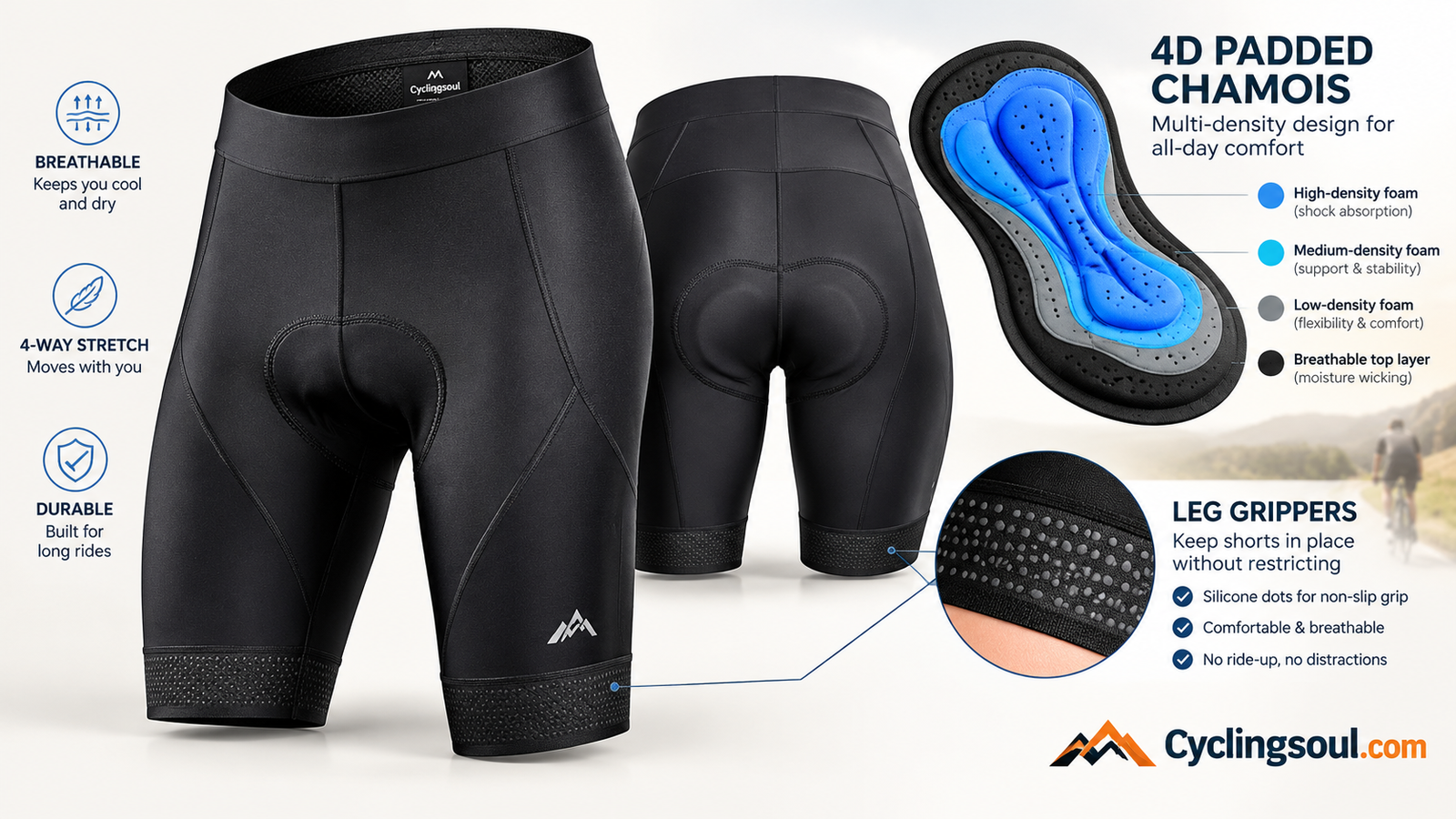
Ask ten cyclists what single upgrade changed their riding the most, and a surprising number will not say “lighter wheels” or “a power meter.” They will say a pair of shorts. The humble padded cycling short is the closest thing the sport has to a magic trick: it takes a hard, narrow saddle and turns it into something you can sit on for five hours without counting the minutes. It is unglamorous, it looks ridiculous in the coffee shop, and it works.
The problem is that the market for cycling shorts has exploded. Search for the best cycling shorts and you will find everything from ten-dollar underwear with a lump of foam sewn in to two-hundred-dollar Italian bib shorts with a chamois engineered like a mattress. Somewhere in the middle sits the gear most people actually buy — and that is exactly where the differences between good and bad become painfully obvious, usually around mile thirty.
This guide covers fifteen of the most popular padded shorts on the market right now, spanning liners, standard road shorts, women’s-specific cuts, and heritage touring designs from brands that have been doing this for decades. Whether you are just figuring out how to start cycling and want your first pair of padded shorts, or you have logged thousands of miles and want a better value than the big European labels, there is something here for you.
Quick Picks: The Short Answer
If you only have thirty seconds, these are the standouts in each category. The full breakdowns — with pros, cons, and fit notes — are in the sections below.
| Category | Our Pick | Why It Wins |
|---|---|---|
| Best Overall | Bikewa Men’s 3D Padded Bike Shorts | Comfortable 3D chamois, clean fit, unbeatable price-to-performance |
| Best With Pockets | baleaf Men’s 4D Padded Bike Shorts with Zipper Pockets | Secure zip storage plus a supportive multi-density pad |
| Best Liner | Souke Sports Men’s 4D Padded Cycling Liner | Invisible under baggy shorts, breathable, stays put |
| Best Budget | Ohuhu Men’s 3D Padded Cycling Underwear | Shockingly cheap, genuinely usable for short-to-mid rides |
| Best for Women | Heathyoga Women’s 4D Padded Bike Shorts | Women’s-specific chamois, pockets, and a flattering waistband |
| Best Premium | PEARL iZUMi Quest Cycling Shorts | Refined fabric and a proven chamois from a heritage brand |
| Best for Touring | Terry Bicycles Touring Short | All-day pad, practical pockets, relaxed coverage |
Browse the current best-sellers in padded cycling shorts and compare live prices.
Why a Good Pair of Cycling Shorts Is Worth Every Penny
Let’s start with the obvious question: why not just wear gym shorts? After all, they are comfortable, you already own them, and they do not make you look like an extra from a European time-trial film. The honest answer is that gym shorts are designed for movement — squats, sprints, lunges — while cycling shorts are designed for contact. Everything about them exists to manage the specific, repetitive, hours-long pressure of sitting on a saddle while your legs spin in circles.
Three things do the work. First, the chamois — the padded insert that sits between you and the saddle. Second, the compression fabric, which supports the muscles that keep working no matter how tired you get. Third, the fit, which holds the chamois exactly where it needs to be and prevents the fabric from bunching into a painful ridge underneath you. Remove any one of those and the other two stop mattering.
Comfort Is Not a Luxury — It Is a Performance Metric
There is a persistent myth in cycling that suffering is the point. It is not. Discomfort is a distraction, and distraction is slow. When your sit bones ache, you shift constantly, you sit up, you coast, you stand. Every one of those movements is energy that did not go into the pedals. Riders who are comfortable ride longer, ride more often, and hold a better position — which is why a good pair of shorts is arguably the cheapest speed you can buy.
This matters even more if you are riding for health reasons. The list of reasons cycling is good for you is long — cardiovascular fitness, mental health, low-impact conditioning — but none of those benefits accumulate if you stop riding at the twenty-minute mark because your saddle hurts. Comfortable shorts remove the single most common barrier that keeps new riders off the bike.
It Is Also About Your Body, Not Just Your Ego
Cycling is famously kind to joints compared with running, and one of the most common questions from beginners is whether cycling is good for your knees. Generally, yes — the smooth circular motion is far gentler than the impact of each running stride. But “gentle” depends on position, and position depends on staying seated in a stable, neutral posture. A chamois that lets you slide around the saddle forces your hips to compensate, and that compensation travels downhill into the knees.
There is also a soft-tissue argument. Modern chamois designs feature a central relief channel that reduces pressure on nerves and blood vessels in the perineal area. This is not marketing fluff; it is the reason that numbness, the classic complaint of new riders, has largely disappeared from serious saddle and short design. If you have ever finished a ride and felt that pins-and-needles sensation, the fix is usually a better pad in a better position, not a tougher attitude.
Value Lives in the Middle
The good news for your wallet is that the price-to-comfort curve in cycling shorts flattens quickly. A thirty-dollar pair of well-designed shorts will outperform a badly designed pair at triple the price. Where premium shorts earn their money is in fabric longevity, chamois refinement over very long rides, and the quality of the stitching after two years of washing. For rides under two hours — which is the vast majority of riding — a smart mid-range or budget pick delivers ninety percent of the experience. That is the territory most of this guide explores.
Compare padded shorts across every price tier and find the fit that matches your riding.
The Anatomy of a Great Cycling Short: What We Looked For
Before we rank anything, it helps to know what you are actually paying for. A cycling short looks simple — it is essentially Lycra with a pad — but almost every detail is there to solve a specific problem. Once you can read those details, shopping becomes dramatically easier, and you stop relying on star ratings that may or may not reflect how the short performs after the twentieth wash.
The Chamois: Density Beats Thickness
The chamois is the heart of the short, and the single most misunderstood component. Thicker does not mean better. A slab of soft foam compresses completely within an hour and leaves you sitting on the saddle through it. What you want is multi-density construction — firmer foam under the sit bones where the load is concentrated, softer foam around the edges for transition, and a shaped central channel to relieve pressure in the middle. This is what manufacturers mean by “3D” and “4D” padding: the pad is molded in multiple dimensions and densities rather than being a flat, uniform sheet.
As a rough rule: 3D pads are typically single-density or lightly contoured and work brilliantly for rides up to about two hours. 4D pads use multiple foam densities and deeper contouring and stay comfortable well beyond that. Neither is automatically “better” — it depends on how far you ride and how sensitive you are.
Fabric: Compression, Wicking, and Recovery
Good short fabric does three things at once. It compresses gently to support the muscles doing the work — and if you have ever wondered what muscles cycling actually works, it is the quadriceps, hamstrings, glutes, and calves, all of which benefit from that support over long efforts. It wicks sweat away from the skin so you do not sit in a damp patch for three hours. And it recovers its shape, meaning it does not bag out at the knees and seat by the end of the ride.
Most shorts in this guide use some blend of nylon and spandex, usually in the 80/20 to 90/10 range. Higher spandex content means more compression and a tighter fit; more nylon generally means more durability and a slightly more matte, less “shiny race suit” look.
Panels and Seams: The Architecture You Never See
Cheap shorts are cut from two or three pieces of fabric. Better shorts are built from six, eight, or more panels, curved to follow the shape of a body in a riding position rather than standing still. The more panels, the more the short can wrap around the hip and thigh without pulling — which means fewer pressure points and less chafing.
Seam placement matters just as much as panel count. Flatlock stitching lies flush against the skin and is the standard for a reason: a raised seam in the wrong place will rub you raw by mile forty. Look for shorts where the seams avoid the inner thigh and the area directly under the chamois edge.
Leg Grippers, Waistbands, and Pockets
Leg grippers — silicone dots, printed bands, or compressive hems — keep the short from riding up your thigh. They work best when they are wide and gentle; thin, tight silicone bands can create a sausage effect and leave marks. Waistbands vary hugely: traditional elastic bands dig in when you are bent over the bars, while wide, flat, or crossover waistbands distribute pressure and feel dramatically better on long rides.
Pockets are the modern wild card. Once rare on cycling shorts, they are now everywhere — side drop-in pockets for a phone, zippered rear pockets for keys and cash, and small stash pockets for nutrition. If you ride without a jersey or a saddle bag, pockets turn your shorts into your storage system.
Our Evaluation Checklist
- Chamois quality: multi-density construction, anatomical shaping, breathable top sheet, secure stitching
- Fit retention: compression that holds after repeated washes without bagging out
- Moisture management: fabric that dries quickly and does not feel clammy on hot days
- Seam comfort: flatlock construction with no chafe zones in the inner thigh or under the pad
- Gripper performance: holds position without pinching or rolling
- Waistband design: wide and flat for comfort in the riding position
- Practical extras: usable pockets, reflective details, true-to-size availability
- Durability per dollar: how the short looks and feels after sustained use
The one thing to internalize
A cycling short is a system, not a pad. A brilliant chamois sewn into a baggy, poorly cut short will still let you down — and a modest pad in a perfectly cut short will feel better than you expect. When we rank the shorts below, we are ranking the whole system.
Put it into practice — filter Amazon’s selection by padding type, pockets, and fit.
The Full Lineup: Every Short at a Glance
Fifteen shorts, three broad families. There are liner shorts, designed to be worn under baggy shorts or mountain bike shorts, usually lighter and more breathable. There are standard cycling shorts, the classic Lycra road style that you wear on their own. And there are touring and heritage shorts, which look more like casual athletic wear but carry a serious pad inside. This table lays out the whole field before we dive into individual picks.
| Short | Type | Padding | Pockets | Best For |
|---|---|---|---|---|
| Bikewa 3D Padded | Road short | 3D gel | None | Best overall value |
| baleaf 3D Liner | Liner | 3D | Small stash | Under baggy shorts |
| baleaf 4D Zip Pocket | Road short | 4D multi-density | Zippered | Riders who carry gear |
| NICEWIN 4D | Road short | 4D gel | Side/zip | Longer road rides |
| Sponeed Padded | Road short | Multi-panel gel | Minimal | Everyday road miles |
| Souke 4D Liner | Liner | 4D | Hidden pocket | MTB and commuting |
| Ohuhu 3D Underwear | Liner / underwear | 3D foam | None | Ultra-budget entry |
| Sportneer 4D | Road short | 4D gel | Side pocket | Best sub-value all-rounder |
| Heathyoga Women’s 4D | Women’s road short | 4D women’s-specific | Yes | Women’s best overall |
| baleaf Women’s 4D | Women’s road short | 4D | Yes | Women’s best value |
| PEARL iZUMi Quest | Road short | Multi-density | Minimal | Premium refinement |
| Terry Touring | Touring short | Multi-density touring | Yes | All-day comfort |
| Bellwether O2 | Road short | Multi-density | Minimal | Performance road riding |
| Canari Optime | Road short | Multi-density | Minimal | Classic training short |
| Aero Tech Designs Classic | Women’s classic | Multi-density | Varies | Relaxed fit, wider sizing |
Two patterns jump out immediately. First, the liner category is where value is most extreme — you get a genuinely serviceable pad for very little money, because you are not paying for a finished outer garment. Second, the traditional performance brands compete less on raw pad technology than on fabric quality, cut refinement, and longevity. Both are legitimate reasons to spend more; neither is required to be comfortable on a bike.
How to Read the Rest of This Guide
Sections four through eight walk through the picks grouped by use case: overall best performers, liners, budget options, women’s shorts, and premium brand-name designs. Each pick gets a verdict, a feature breakdown, and honest pros and cons. Sections nine through twelve cover the knowledge that makes any pair work better — fit, care, riding style, and the rest of your kit.
Amazon’s cycling shorts category lets you sort by rating, price, and padding type in seconds.
Best Overall Picks for Men
These are the shorts we would put on a friend who asked for “something good, not too expensive, that just works.” Each one covers the fundamentals — a shaped pad, compression fabric that holds up, secure grippers — with a distinct personality.
Best Overall
Bikewa Men’s 3D Padded Bike Shorts
The Bikewa shorts do the hardest thing in this price class: they feel like they should cost more. The 3D gel chamois is properly shaped rather than being a flat foam slab, with thicker support under the sit bones and a tapered edge that does not dig into the inner thigh. The fabric has real compression without feeling like a tourniquet, and the leg grippers use a wide printed band instead of a thin silicone strip — a small detail that makes a big difference over distance.
- 3D gel-molded chamois with multi-zone density
- Moisture-wicking, quick-dry compression fabric
- Wide flatlock seams positioned away from chafe zones
- Broad leg grippers that hold without pinching
- Clean, understated look with no loud graphics
Pros
- Exceptional comfort-to-price ratio
- Pad holds up beyond two-hour rides
- True-to-size fit for most body types
- Stitching quality above its class
Cons
- No pockets for storage
- Limited color selection
- Not designed as a liner under baggy shorts

Best With Pockets
baleaf Men’s 4D Padded Bike Shorts with Zipper Pockets
baleaf has spent years refining the “do everything” short, and this 4D version is their most complete expression of the idea. The multi-density pad is noticeably more structured than entry-level 3D designs — the center is firmer, the edges softer, and there is a defined relief channel. The headline feature, though, is the pocket layout: zippered pockets that actually keep a phone from launching into a hedge on a rough descent.
- 4D multi-density chamois with central relief channel
- Zippered side and rear pockets sized for a modern phone
- Wide, soft waistband that sits flat in the riding position
- Reflective accents for low-light visibility
- Compressive fabric with strong shape retention
Pros
- Genuinely secure storage — rare at this price
- Pad stays comfortable on longer efforts
- Huge size range including taller builds
- Well-finished seams and grippers
Cons
- Phone in a side pocket can feel noticeable when sprinting
- Fit runs athletic — sizing up helps if you’re between sizes
- Zip pulls can rattle against a phone without a case
Why These Two Lead the Field
Both shorts nail the fundamentals, but they solve slightly different problems. The Bikewa is the purist’s pick: no pockets, no distractions, just a comfortable pad in a well-cut short at a price that makes buying two pairs sensible. The baleaf 4D is the practical rider’s pick: a slightly more advanced pad plus the storage that modern riders expect from a garment they might wear on a three-hour weekend loop with no jersey pockets at all.
If you are coming from a background of running or gym training, the compression feel will be familiar. If you are transitioning from a completely sedentary start — and there is genuinely good news on that front, since cycling is one of the most sustainable ways to rebuild fitness — the Bikewa is the gentler introduction: comfortable, simple, and forgiving of sizing mistakes.
Compare the Bikewa and baleaf 4D shorts against Amazon’s current best-rated options.
Best Liner Shorts and Cycling Underwear
Liner shorts answer a specific objection: “I want the comfort of a chamois without looking like I am in a triathlon.” Worn under baggy mountain bike shorts, cargo shorts, or even loose athletic wear, a good liner is invisible from the outside while delivering the same pressure relief as a full road short. They are also the most popular entry point for commuters and casual riders.
Liners vs. Outer Shorts: Which System Suits You?
The liner-versus-outer debate is really about airflow and silhouette. Outer road shorts are more aerodynamic, generally use denser fabric, and have fewer layers between the pad and the saddle — which means slightly better pressure distribution. Liners breathe better in hot weather because the outer short is typically loose mesh or woven fabric, and they let you dress like a normal person at your destination.
| Feature | Liner System | Outer Road Short |
|---|---|---|
| Airflow | Excellent — loose outer layer ventilates | Good — single layer, more coverage |
| Pad contact | One extra layer between pad and skin | Direct contact, best pressure mapping |
| Appearance | Casual, low-profile | Traditional cycling look |
| Aerodynamics | Looser, less aero | Close fit, faster at speed |
| Storage | Depends on the outer short | Integrated pockets increasingly common |
| Best for | MTB, commuting, casual rides | Road, fitness, long distance |

Best-Selling Liner
baleaf Men’s 3D Padded Bike Shorts Liner
This is the short that launched a thousand conversions — riders who bought it as a cheap experiment and never went back to unpadded gear. The mesh-heavy construction moves air beautifully, the 3D pad is thin enough to disappear under baggy shorts but structured enough for a couple of hours in the saddle, and the cut is long enough to prevent the dreaded thigh gap between liner and outer short.
- Breathable mesh body with a 3D contoured chamois
- Low-profile seams designed to sit under loose shorts
- Elastic waistband with a small stash pocket
- Lightweight construction that dries fast
Pros
- Outstanding breathability for hot weather
- Comfortable for rides up to around two hours
- Absurdly good value
- Works under almost any loose short
Cons
- Pad thins out on very long rides
- Mesh fabric is less durable against snags
- Not intended to be worn on its own

Best Premium Liner
Souke Sports Men’s 4D Padded Cycling Liner Shorts
Souke takes the liner concept and finishes it like a real piece of cycling kit. The 4D pad is a genuine step up from basic 3D foam, with layered densities that stay supportive past the two-hour mark. The fabric is silky against the skin, the leg openings use printed grippers rather than elastic bands, and there is a hidden pocket positioned so it does not interfere with a phone bouncing against your hip.
- 4D multi-density chamois with deep contouring
- Ultra-soft, low-friction skin-facing fabric
- Printed silicone leg grippers — no rolling, no pinch
- Concealed pocket for a key, card, or gel
Pros
- Long-ride comfort unusual for a liner
- Nearly undetectable under outer shorts
- Excellent moisture management
- Durable construction and stitching
Cons
- Costs more than basic liners
- Fewer color options
- Snug fit — check the size chart carefully

Cheapest Worth Owning
Ohuhu Men’s 3D Padded Cycling Underwear
Here is the honest truth about ultra-budget padded underwear: most of it is junk, and the Ohuhu is the exception that proves the rule. It is not as refined as the Souke, and the pad is basic 3D foam that will bottom out on century rides. But for an hour of commuting, a spin class, or a first taste of what padding feels like, it works — and it costs less than a decent lunch.
- Light 3D foam chamois sized for shorter rides
- Stretchy, breathable fabric with a soft waistband
- Ultra-light and packable for travel
- True underwear cut — wear it as a base layer
Pros
- Lowest-risk purchase on this list
- Great for indoor trainers and short commutes
- Comfortable waistband for the price
- Easy to buy in multiples
Cons
- Pad compresses fully on longer rides
- Fabric durability is modest
- Minimal grip at the leg openings
Where Bib Shorts Fit In
It is worth mentioning the third system: bib shorts, which replace the waistband with shoulder straps and hold the pad in place with even greater precision. Serious road riders tend to gravitate toward bibs eventually, and we have a complete guide to the best cycling bibs if that is where your riding is heading. For most people starting out — or riding casually — a good waist short or liner is the smarter first purchase.
Liner shorts turn any pair of casual shorts into cycling kit — see the full range on Amazon.
Best Budget Cycling Shorts That Do Not Feel Cheap
Budget does not have to mean compromised — but it does mean knowing where the corners are cut. In this class, the usual trade-offs are simpler chamois construction, fewer panels, and fabric that may lose elasticity sooner. The three shorts below represent the best of what value pricing can deliver when the design fundamentals are respected.

Best Value All-Rounder
Sportneer 4D Padded Cycling Shorts
Sportneer’s 4D short is the one we hand to people who say “I want something for weekend rides but I am not ready to spend real money.” The gel-padded 4D chamois is comfortable for a solid two to three hours, the fabric has a satisfying amount of compression, and there is a side pocket for the essentials. It is a genuinely complete short at a price that feels like a typo.
- 4D gel chamois with multi-density support zones
- Breathable, sweat-wicking stretch fabric
- Side pocket sized for a phone or nutrition
- Wide silicone leg grippers
Pros
- Pad quality punches far above its price
- Useful pocket without added bulk
- Consistent sizing across the range
- Ideal starter short for new riders
Cons
- Waistband is more traditional than premium designs
- Fabric feels lighter than high-end shorts
- Color fade possible after many washes

Best for Longer Rides on a Budget
NICEWIN Men’s 4D Padded Cycling Shorts
NICEWIN built these around the pad, and it shows. The 4D gel chamois is one of the most substantial in the value class, with clear differentiation between the sit-bone support zones and the softer periphery. The cut is slightly more compressive than average, which riders who like a locked-in feel will appreciate, and there is useful storage for keys and a phone.
- Deep 4D gel chamois engineered for multi-hour rides
- Compressive, quick-drying performance fabric
- Practical pocket layout for essentials
- Flatlock seams throughout
Pros
- Among the most supportive pads at this price
- Great for riders pushing past two hours
- Solid construction with reinforced seams
- Wide size availability
Cons
- Snug fit won’t suit everyone
- Pad feels bulky under very thin outer shorts
- Fewer design updates than mainstream brands

Best Multi-Panel Construction
Sponeed Men’s Padded Cycling Shorts
Sponeed’s appeal is the way the short is built: multi-panel construction that follows the body’s riding position more closely than the typical budget two-piece cut. The gel pad is comfortable and well-ventilated, and the fabric blend offers a good balance of compression and stretch. It is the budget pick for riders who care about how a short is patterned, not just how thick the pad is.
- Multi-panel anatomic cut for a riding-position fit
- Ventilated gel chamois with a breathable top sheet
- Balanced nylon-spandex blend with good recovery
- Silicone-free elastic leg bands available in styles
Pros
- Fit quality above its price bracket
- Breathable pad top sheet reduces clamminess
- Good shape retention over time
- Comfortable for regular training rides
Cons
- Sizing varies between styles — read the chart
- No zippered storage
- Styling is more race-oriented than subtle
The Honest Math on Budget Shorts
Here is how we think about it. If a budget short lasts eighteen months and costs a third of a premium short that lasts four years, the premium short is technically cheaper per year — but only if you still want to be wearing the same short in four years. Riders change size, riding style, and preference constantly. Buying a well-designed budget pair first, then upgrading once you know exactly what you want, is a completely rational path — and it is how most experienced cyclists actually built their kit drawer.
Sort by price and rating to find the current value leaders in padded cycling shorts.
Best Cycling Shorts for Women
Women’s cycling shorts are not men’s shorts in different colors — and any brand that treats them that way is telling you exactly how much engineering went in. Women’s-specific shorts use a different chamois shape, typically with a wider rear platform and a shorter, narrower front profile, plus a cut that accounts for hip-to-waist ratio rather than simply shrinking a men’s pattern. The shorts below get this right.
For a deeper dive into women’s-specific gear beyond this roundup, we keep a dedicated guide to the best women’s cycling shorts with expanded fit notes and additional options.

Women’s Best Overall
Heathyoga Women’s 4D Padded Bike Shorts
Heathyoga started in yoga apparel and brought that sensibility to cycling shorts — which means a waistband that actually flatters and stays put, and a softness against the skin that pure performance brands often neglect. The 4D chamois is genuinely women’s-specific in shape, with wide sit-bone support and a shorter profile that eliminates the bunching many women’s shorts suffer from. Pockets on both sides sweeten the deal.
- Women’s-specific 4D chamois with wide rear support
- High, soft waistband with gentle tummy support
- Side pockets that hold a phone securely
- Buttery compression fabric with four-way stretch
Pros
- Best waistband comfort in the group
- Pad shape designed for women, not adapted from men’s
- Flattering fit without excessive compression
- Excellent for rides of two to four hours
Cons
- Inseam length suits some preferences more than others
- Fewer technical extras than race-focused shorts
- Colors rotate frequently

Women’s Best Value
baleaf Women’s 4D Padded Bike Shorts
baleaf’s women’s 4D short delivers the same formula that made their men’s liners a phenomenon: a properly structured pad, sensible design choices, and pricing that makes buying more than one pair reasonable. The 4D chamois provides layered support under the sit bones, and the fabric has enough compression to feel supportive without restricting movement off the bike.
- 4D multi-density women’s chamois
- Wide waistband with a comfortable, non-digging fit
- Side pockets for a phone and small essentials
- Quick-drying fabric with UPF sun protection
Pros
- Remarkable pad quality for the price
- Broad size range including plus options
- Durable through frequent washing
- Reliable fit consistency
Cons
- Compression is moderate — not for racers
- Pocket placement feels better standing than sprinting
- Basic aesthetic with minimal reflective detail
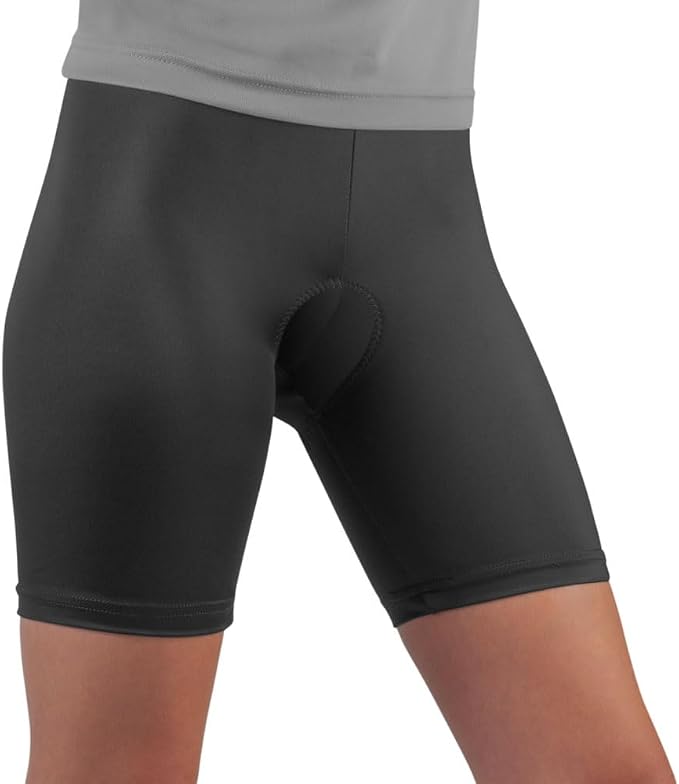
Best for Relaxed Fit & Wider Sizing
Aero Tech Designs Women’s Classic Cycling Shorts
Aero Tech Designs has quietly built a loyal following by solving problems the big brands ignore: sizing that genuinely extends beyond race-cut bodies, a classic silhouette that flatters rather than compresses every contour, and construction designed for comfort over distance rather than aerodynamics. The padded classic short is their signature — a straightforward, dependable design that fits real riders on real bikes.
- Multi-density chamois tuned for touring-distance comfort
- Classic cut with a longer, more relaxed inseam
- Inclusive sizing with true-to-size consistency
- Comfort-focused waistband and quality stitching
Pros
- One of the best size ranges available
- Comfort-first design philosophy
- Excellent for long, steady rides
- Understated look that works off the bike
Cons
- Less compression than performance shorts
- Fewer technical features like zip pockets
- Availability of certain sizes fluctuates
Fit Tips Specific to Women’s Shorts
The most common fit mistake we see is choosing a size that feels comfortable standing up in a fitting room. Cycling shorts should feel slightly too snug when you are upright — they are designed for a body bent over handlebars, where the fabric stretches across the hip and lower back. If the waistband gaps or slides when you are in the riding position, the short is too large, regardless of how the tag feels in the mirror.
The second mistake is ignoring inseam length. Longer inseams reduce the chance of thigh chafing on hot days and distribute leg-gripper pressure over a wider band. Shorter inseams are cooler and more traditional-looking. Neither is better — it is a genuine preference, and it is worth trying one of each before committing to a drawer full of the same.
See the full selection of women’s padded shorts, liners, and bibs on Amazon.
Premium and Brand-Name Shorts: Where the Extra Money Goes
Now we reach the shorts from companies with decades of textile engineering behind them. PEARL iZUMi, Bellwether, Canari, and Terry are not competing on raw pad thickness — they are competing on fabric technology, pattern refinement, quality control, and the kind of design iteration that only comes from sponsoring riders and collecting feedback over generations of products. Whether that is worth the premium depends entirely on how much you ride.

Best Premium All-Rounder
PEARL iZUMi Quest Cycling Shorts
The Quest is PEARL iZUMi’s gateway short, and “gateway” is relative — this is a properly engineered garment with a multi-density chamois refined over years of rider feedback, transfer fabric that manages moisture better than anything else in this guide, and a cut refined through countless fit sessions. Riders upgrading from budget shorts consistently describe the same sensation: the short disappears. That is the whole point.
- Proven multi-density chamois with a smooth, breathable top sheet
- Transfer fabric with best-in-class wicking and drying
- Anatomic multi-panel pattern for riding-position fit
- Reflective elements for visibility in low light
- Built to hold shape and compression over seasons of use
Pros
- Fabric quality immediately noticeable
- Chamois comfort extends deep into long rides
- Outstanding durability and wash resilience
- Refined fit from a heritage performance brand
Cons
- Higher price than value-focused competitors
- Fewer pockets than utility-oriented shorts
- Performance cut may feel snug to casual riders
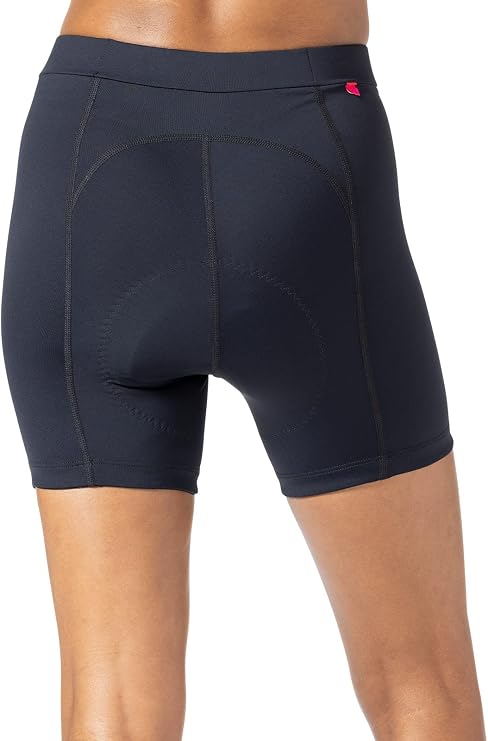
Best for Touring and All-Day Rides
Terry Bicycles Touring Short
Terry has spent decades focused on comfort in the saddle, and the Touring Short is the distillation of that mission. It is built for the rider who covers distance at a steady pace and wants pockets, coverage, and a chamois that is still comfortable at hour five. The design leans practical rather than racy — a slightly more relaxed cut, useful storage, and a pad tuned for endurance rather than aggressive positioning.
- Endurance-tuned multi-density chamois
- Practical pocket configuration for long days
- Relaxed performance cut with generous coverage
- Comfort-first waistband for all-day wear
Pros
- Genuinely comfortable at touring distances
- Storage where you need it
- Designs informed by real rider research
- Flattering, modest silhouette
Cons
- Less aerodynamic than race-cut shorts
- Premium pricing
- Style is function-first, not fashion-first

Best for Performance Road Riding
Bellwether O2 Cycling Short
Bellwether’s O2 line is aimed squarely at riders who train with intent. The short uses a performance-oriented cut that stays put through hard efforts, a multi-density chamois designed for aggressive riding positions, and fabric selected for compression support during sustained output. If your rides include intervals and tempo work rather than purely social miles, this is the design philosophy that matches.
- Multi-density performance chamois for aggressive positions
- Supportive compression fabric with excellent recovery
- Panelled construction that moves with the pedal stroke
- Secure leg grippers tested at higher cadences
Pros
- Locked-in feel during hard efforts
- Chamois supports aggressive, forward positions
- Strong brand reputation in performance cycling
- Durable through intensive training use
Cons
- Snug performance fit is not for everyone
- Less storage than utility designs
- Priced for committed riders

Best Classic Training Short
Canari Cyclewear Optime Short
Canari has been outfitting cyclists since long before “kit” became a lifestyle word, and the Optime embodies that no-nonsense heritage: a dependable multi-density pad, straightforward construction, and a fit that works for a broad range of riders without drama. It is the short you buy when you want to stop shopping and start riding.
- Dependable multi-density chamois for regular training
- Classic panelled construction with flatlock seams
- Forgiving fit across a wide range of builds
- Proven design refined over many generations
Pros
- Reliable, consistent fit and comfort
- Straightforward design with no gimmicks
- Good support for daily training miles
- Established brand with real cycling heritage
Cons
- Styling is traditional rather than modern
- Fewer tech features than newer competitors
- Pad favors moderate over ultra-long distances
Is Premium Worth It? A Fair Assessment
For rides under an hour and a half, the honest answer is that most riders will not feel a dramatic difference between a good value short and a premium one. The gap opens on longer days, in extreme heat, and over years of ownership. Premium fabric dries faster and holds compression longer; premium chamois stay comfortable in the fifth hour; premium stitching survives the twentieth wash. If you ride regularly and log meaningful distance, those differences compound. If you ride occasionally, the value picks in this guide deliver the same core experience for a fraction of the cost.
One thing worth noting: premium shorts integrate beautifully with a full kit. If you are building out gear for longer days in the saddle — where nutrition starts to matter as much as equipment — pairing good shorts with smart fueling makes a real difference, and we cover that in our guide to the best energy gels for cycling.
Explore heritage cycling brands and see how their pricing compares on Amazon right now.
Fit, Sizing, and How Cycling Shorts Should Actually Feel
You can buy the best short in the world and still be miserable if it fits wrong. Fit is where cycling gear separates from almost every other athletic apparel category, because the short has to work in a body position you never test in a store: bent forward, hips rotated, legs extended in a continuous arc. Here is how to get it right — including how your wider wardrobe decisions play into it, which we cover further in our guide on what to wear cycling.
The Standing Test Is the Wrong Test
Cycling shorts should feel almost uncomfortably snug when you are standing upright. That is not a sizing error — it is the design. When you lean forward into the riding position, the fabric stretches across the hips and lower back, the chamois settles into the correct position, and the compression that felt restrictive becomes supportive. If a short feels perfectly comfortable standing in a store, it will almost certainly be too loose on the bike.
The mirror test that actually works
Put the shorts on, then get into your riding position — hands on a table edge at roughly handlebar height, back flat, hips rotated forward. Now check: does the waistband stay put? Does the chamois sit flat against the saddle area without bunching? Are there wrinkles across the front of the hip? Wrinkles mean the short is too large.
Sizing by the Numbers
Ignore the letter on the tag and measure. Nearly every sizing dispute we have seen comes down to buying by habit rather than by chart. Take three measurements: natural waist, widest part of the hip, and upper thigh. Compare against the brand’s specific chart — not the retailer’s generic one — because sizing varies meaningfully between a race-cut European brand and a value brand designing for a broad customer base.
| Fit Sign | What It Feels Like | What It Means |
|---|---|---|
| Too tight | Digging at the waist, numbness in the thigh, visible bulging above grippers | Size up — compression should support, not restrict blood flow |
| Too loose | Wrinkles at the hip, chamois shifts while pedaling, waistband slides | Size down — movement of the pad causes chafing fast |
| Just right | Snug standing, smooth and supportive in the riding position, pad stays centered | Commit to this size and buy multiples |
Chamois Placement: The Detail Everyone Skips
The pad needs to sit where you contact the saddle — specifically, supporting the ischial tuberosities, the bony points most people think of as “sit bones.” The thickest, firmest part of the chamois should be directly under those points. If the pad is positioned too far forward, you will feel pressure in soft tissue; too far back, and the sit bones hang off the edge of the support. Adjust the short on your body before you get on the bike, and if the short consistently rides into the wrong position while pedaling, the fit or size is wrong.
It is also worth understanding what is happening under you from an anatomy standpoint. The muscles doing the work — and the ones the chamois is protecting you from sitting directly on — are covered in detail in our breakdown of what muscles cycling works. Understanding the machinery makes the gear choices more intuitive.
Common Fit Problems and Fast Fixes
- Thigh chafing: usually a gripper that is too tight or an inseam that is too short. Wider, softer grippers distribute pressure.
- Lower back gap: the short is too large, or the waistband style is wrong for your build. Look for higher-backed or crossover designs.
- Numbness: often chamois placement, saddle height, or a pad that is too thick in the center. Check position before replacing gear.
- Pad bunching: the short is too big. A chamois must be held firmly against the body to work at all.
- Grippers rolling: the leg opening is too narrow for your thigh. Size up or choose a short with a wider gripper band.
Most listings include detailed size charts — measure, compare, and order with confidence.
How to Wash and Care for Padded Cycling Shorts
Here is an uncomfortable fact: the way most people wash cycling shorts is quietly destroying them. The elastic fibers that give a short its compression, the adhesive and stitching that hold the chamois in place, and the silicone in the leg grippers all degrade faster when exposed to high heat, harsh detergents, and mechanical abuse in a tumble dryer. Care properly, and a good pair of shorts will last for years. Care badly, and even premium shorts will be baggy, saggy, and useless within a season.
The Washing Rules That Matter
- Wash after every ride. Sweat and skin oils break down elastic and chamois foam over time. This is not about hygiene alone — it is about the life of the garment.
- Cold water, gentle cycle. Heat is the enemy of spandex. Cold or lukewarm water cleans perfectly well with a sports-specific detergent.
- Use a mesh laundry bag. It protects the grippers and prevents the shorts from wrapping around the agitator or other garments.
- Skip fabric softener entirely. Softener coats fibers, kills moisture-wicking performance, and degrades elastic. This single rule matters more than any other.
- Avoid bleach and stain removers on the chamois. They break down the foam and the antimicrobial treatment on the top sheet.
- Hang dry in the shade. Air drying preserves elasticity dramatically better than machine drying. Direct sun fades colors and can overheat the fabric.
What About Odor?
Persistent odor is a real issue with synthetic cycling gear, and it comes from bacteria embedded in the fibers. Standard detergent often masks rather than removes it. The fix is an occasional soak — thirty minutes in a mixture of cold water and either a specialized sports detergent, a cup of white vinegar, or a small amount of baking soda, followed by a normal cold wash. Never soak in hot water, and never combine vinegar and bleach.
Travel tip
Rinsing shorts in a hotel sink with a drop of soap and hanging them overnight handles most multi-day trips without a washing machine. Synthetic cycling fabric dries remarkably fast when it is not wrung out aggressively — press the water out gently instead of twisting, which can distort the chamois.
How to Tell When a Short Is Retired
Even with perfect care, cycling shorts do not last forever. The signals are clear once you know what to look for: the fabric no longer snaps back after stretching, the chamois feels flat and hard rather than resilient, the grippers have lost their tackiness, or seams are beginning to separate. Riding in worn-out shorts is worse than riding in cheap new ones — the pad has stopped protecting you, and the fit has stopped holding the pad in place.
A practical approach many experienced riders use: rotate two or three pairs and retire them on a schedule rather than waiting for failure. Since you will be washing after every ride anyway, rotation dramatically extends the life of each pair because the elastic gets recovery time between uses.
Multi-pair options and bundles frequently appear in Amazon’s cycling shorts listings.
Matching Your Shorts to the Way You Ride
The best short for a two-hour weekend road loop is not necessarily the best short for a daily commute, a three-hour gravel adventure, or a winter session on the indoor trainer. Riding style changes what matters: how much you sweat, whether you need storage, how long you stay in the saddle, and how you look when you arrive. Match the short to the riding and comfort takes care of itself.
Commuting and Urban Riding
Prioritize liners, pockets, and anything that works under normal clothing. A good liner under casual shorts lets you ride to work, lock up, and walk into a meeting without changing — the entire value proposition of the liner category. Breathability matters more than aerodynamics, and a hidden pocket for keys is worth more than a shaved watt.
Road Fitness and Training
This is where a proper outer road short earns its keep: better pad-to-saddle contact, compression that supports sustained efforts, and a cut that stays put through tempo intervals. If your riding has structure — and there is real value in structure, as we explain in our guide to how to train for cycling — the fit and support of a performance short becomes noticeable precisely when the effort rises.
Serious training also means understanding your own numbers. Riders who dig into metrics like FTP in cycling tend to spend more time in the saddle at controlled intensities, which is exactly the scenario where a refined chamois and quality fabric separate from budget gear.
Long Distance, Touring, and Endurance
Distance is the ultimate short tester. Past the three-hour mark, pad density and positioning dominate everything else, and storage becomes a genuine need rather than a nice-to-have. Endurance-focused shorts — like the Terry Touring in this guide — typically use softer foam over a wider area, since the pressure profile on a long, steady ride differs from a short, aggressive one. Pair them with a fueling plan; nothing derails a long ride faster than running low on energy, and our roundup of the best energy gels for cycling is built for exactly this situation.
Indoor Trainers and Spin Sessions
Indoor riding is sweaty, stationary, and surprisingly hard on shorts — you shift less, so pressure stays concentrated in one area, and ventilation is limited. A breathable liner or a lightweight 3D-padded short is usually ideal; heavy 4D pads can feel clammy indoors. Wash immediately after every session: the combination of sweat and static heat is the fastest route to permanent odor.
Mountain Biking and Trail Riding
The liner system dominates here for good reason. Baggy outer shorts handle abrasion and crashes far better than Lycra, while a quality liner underneath handles comfort. Look for liners with flat, unobtrusive seams and grippers that will not roll under a padded trail short, and give the liner’s inseam length real thought — visible liner below the outer short is a look best avoided.
The Mistakes We See Most Often
- Wearing underwear underneath. The chamois is designed to be worn against the skin. Extra fabric creates seams that cause exactly the chafing the shorts exist to prevent.
- Choosing by pad thickness alone. Density, shape, and placement matter more than raw millimeters of foam.
- Ignoring riding position. A short fitted standing will always misbehave on the bike.
- Skipping the size chart. Sizing varies significantly between brands, especially between performance and value labels.
- One short for every discipline. A dedicated liner and a dedicated road short cover almost every riding scenario between them.
Whether it’s commuting, training, or touring — find the padded short built for your kind of miles.
Building the Rest of Your Cycling Kit Around Great Shorts
Shorts are the foundation, but they work as part of a system. Once your saddle comfort is solved, the next upgrades deliver outsized returns — and most of them cost less than you expect. Think of it as building outward from the contact points: hands, feet, saddle. Get those three right and everything else becomes optional refinement.
Feet First: Shoes and Socks
After the saddle, your feet take the most concentrated abuse on a bike. Proper cycling shoes stiffen the sole so power transfers into the pedal instead of flexing the shoe, and they hold the foot in a stable position that prevents hot spots and numbness. Even for casual riders, the difference between running shoes on flat pedals and a dedicated cycling shoe is immediately obvious.
Socks matter more than their price suggests. Cycling-specific socks manage moisture, resist bunching, and are cut to avoid interference with shoe closures — and a bad pair of socks can ruin a ride faster than almost any other equipment failure. We keep a running list of the best cycling socks for exactly this reason.
Layering and Temperature Management
Shorts do not exist in isolation from what goes above them. A breathable base layer under your jersey pulls sweat away from the skin, which keeps the shorts’ waistband drier and more comfortable. On cooler days, leg warmers paired with your favorite shorts extend their season far beyond summer. The full picture of layering strategy — what to wear at what temperature, and how to adapt as conditions change — is covered in our complete guide to what to wear cycling.
Bibs: The Natural Next Step
Many riders who start with waist shorts eventually try bibs and never go back. Bib straps eliminate the waistband entirely, holding the pad in place with a precision that even excellent waist shorts cannot match, and they remove any pressure around the midsection. When you are ready to explore that upgrade, our best cycling bibs guide walks through the options across every price range.
The Kit Mindset
It helps to think of cycling apparel as solving problems in order of pain — literally. Saddle discomfort first (shorts), foot discomfort second (shoes and socks), hand discomfort third (gloves and bar tape), temperature management fourth. Riders who follow that sequence spend their money where it changes their experience the most, and they avoid the classic trap of buying an expensive jersey while their shorts still hurt.
A Simple Starter Kit
- Two pairs of padded shorts — one liner, one outer — so you always have a clean pair
- One pair of cycling-specific socks with moisture management and a height you like
- Cycling shoes matched to your pedals — flat or clipless, both are legitimate choices
- Full-finger gloves for grip, vibration damping, and crash protection
- A breathable base layer for temperature regulation across seasons
That kit, chosen well, will serve you for thousands of miles. Everything after it is refinement, and refinement is where cycling gear becomes genuinely fun to shop for.
From padded shorts to shoes and socks — find everything you need to ride comfortably.
Frequently Asked Questions About Cycling Shorts
1. Do I really need padded cycling shorts as a beginner?
If your rides are longer than about twenty minutes, yes — and the difference is dramatic enough that most beginners wish they had bought them sooner. Even an inexpensive liner short eliminates the pressure and chafing that make early rides miserable. You do not need expensive shorts to start, but you almost certainly need padding.
2. Should I wear underwear under cycling shorts?
No. The chamois is designed to sit directly against your skin as your primary layer of protection. Underwear adds seams and fabric folds exactly where you need smoothness, which creates friction and causes the very chafing the shorts exist to prevent. It feels strange the first time and completely natural by the third ride.
3. What is the difference between 3D and 4D padding?
Generally, 3D refers to a chamois that is contoured in three dimensions — shaped rather than flat — often with a single foam density or light zoning. 4D typically adds multiple foam densities in distinct zones: firmer support under the sit bones, softer foam around the edges, and deeper anatomical channeling. 3D pads suit rides up to roughly two hours; 4D pads are engineered to stay comfortable well beyond that. Neither is universally better — it depends on your distance and sensitivity.
4. How tight should cycling shorts be?
Snugger than feels natural when you are standing up. In the riding position, the fabric stretches smooth across the hips and lower back, and the chamois stays firmly in place. Signs of a good fit: no wrinkles at the hip, no waistband sliding, no gripper digging. Signs of too tight: numbness, deep marks in the skin, restricted breathing at the waist.
5. Can I wear liner shorts under any shorts?
Almost any loose-fitting short works — mountain bike shorts, casual athletic shorts, even relaxed cargo shorts. The key requirement is enough room that the liner is not compressed against your body by a tight outer layer, which defeats the padding and creates pressure ridges. Avoid wearing liners under skinny jeans or anything restrictive.
6. How do I stop cycling shorts from riding up?
Usually it comes down to grippers and size. Wide silicone or printed gripper bands hold far better than thin elastic hems. If your shorts are riding up regardless, the leg opening is likely too narrow for your thigh or the short is slightly too large in the body. Inseam length matters too — longer shorts distribute grip over more surface area and are less prone to migration.
7. How often should I replace my cycling shorts?
When the fabric stops snapping back after stretching, the chamois feels flat and unresilient, or the grippers have lost their hold — typically after one to three seasons of regular use depending on quality and care. Rotating multiple pairs and washing properly extends this significantly. Riding in a worn-out pad is worse than riding in a cheap new one.
8. Can I put cycling shorts in the dryer?
You can, but you should not if longevity matters. Heat degrades spandex and elastic rapidly, which is what causes sagging and loss of compression. Cold wash and air drying preserves shorts dramatically longer. If you must machine dry, use the lowest heat setting and remove them while still slightly damp.
9. Why do I still get numb even with padded shorts?
Numbness is rarely a padding-only problem. Check saddle height and tilt first — a saddle that is too high, too low, or tilted forward concentrates pressure in soft tissue. Then check chamois position: the thickest zone should sit directly under your sit bones. Also consider a saddle with a central relief channel. Shorts help enormously, but they work within a system.
10. Are women’s cycling shorts really different from men’s?
Yes, meaningfully. Women’s shorts use a chamois shaped for a wider pelvic structure — typically broader at the rear and shorter in the front — and a cut that accounts for hip-to-waist proportions. Some women find certain unisex or men’s liner designs comfortable, but shorts built on a women’s pattern generally fit better and place the pad more accurately.
11. Are expensive cycling shorts worth the money?
For rides beyond about ninety minutes, for hot weather, and for riders logging consistent weekly mileage — yes, the differences in fabric, chamois refinement, and durability are real and noticeable. For occasional rides and shorter distances, a well-designed budget short delivers the overwhelming majority of the benefit. The worst value in cycling shorts is always poor fit, regardless of price.
12. Do padded shorts help on an indoor trainer?
Absolutely — arguably more than outdoors. Indoor riding keeps pressure concentrated in one position since you rarely shift or coast, and airflow is limited. A breathable short with a moderate 3D pad is usually ideal for trainer sessions. Wash them immediately afterward, since sweat plus indoor heat is the fastest path to permanent odor buildup.
Reading reviews from verified riders is the fastest way to break a tie — see what buyers say on Amazon.
Conclusion: The Right Shorts Make Every Ride Better
After working through fifteen shorts across every category and price point, the conclusion is reassuringly simple. You do not need to spend a fortune to be comfortable on a bike — you need to understand what you are buying. A well-shaped multi-density chamois, fabric with real compression, seams placed away from chafe zones, and a fit that stays locked in the riding position: those four things deliver ninety percent of the experience, and they are available at nearly every price tier.
If you want one recommendation, the Bikewa 3D Padded Bike Shorts are the pick we would make for most riders — comfortable, well-made, and priced low enough that buying a second pair makes sense. Riders who carry gear should step up to the baleaf 4D with zippered pockets. Women will find the Heathyoga 4D shorts the most complete package, and anyone logging serious distance should look hard at the PEARL iZUMi Quest or Terry Touring for the refinement that only shows up in the fifth hour.
Whichever you choose, remember the golden rules: no underwear underneath, snugger than feels natural standing up, washed cold after every ride, and hung to dry. Get those right and a pair of padded shorts will quietly improve every single ride you take — from the first uncomfortable mile of your new habit to the longest day in the saddle you have ever attempted.
Ready to make the saddle your friend again? Pick the short that matches your riding, check the current price, and get out there.
Shop the Best Cycling Shorts on AmazonDisclosure: This article contains affiliate links. If you purchase through links on this page, we may earn a commission at no additional cost to you. This helps support our gear testing and guides.
You May Also Like
Comfortable shorts are just the beginning. These guides cover everything that makes cycling more rewarding — from fitness and physiology to training and the rest of your gear.