
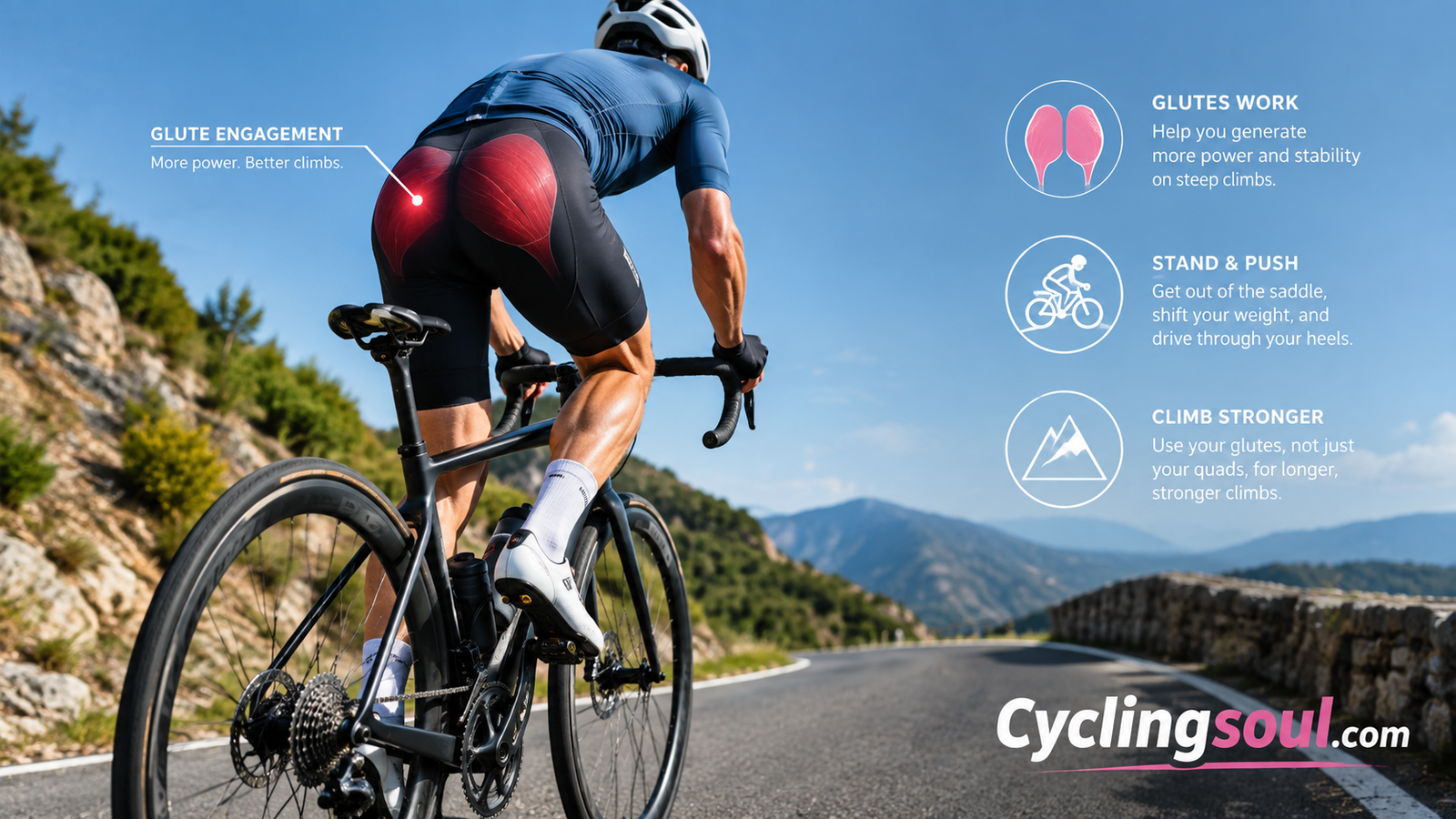
Does Cycling Build Glutes? What the Pedals Really Do for Your Backside
Short answer: yes, cycling works your glutes hard, but how much they grow depends on how you ride, how you fuel, and what you do off the bike. Here is the full picture.
If you have ever finished a long climb and felt your backside burning more than your thighs, you already suspect the answer. Cycling is a lower-body sport, and the glutes are one of the biggest engines in the pedal stroke. The real question is whether that work translates into visible shape and strength, or whether cycling just keeps your glutes busy without changing them much.
The honest answer sits in the middle. Cycling can tone, strengthen and modestly build your glutes, particularly if you are new to exercise or you ride with plenty of resistance. It will not usually replace heavy lower-body lifting if your goal is maximum size. In this guide we break down the muscles involved, the riding styles that help most, the role of bike fit and nutrition, and a practical weekly plan you can start using right away.
1. The Quick Answer: Does Cycling Build Glutes?
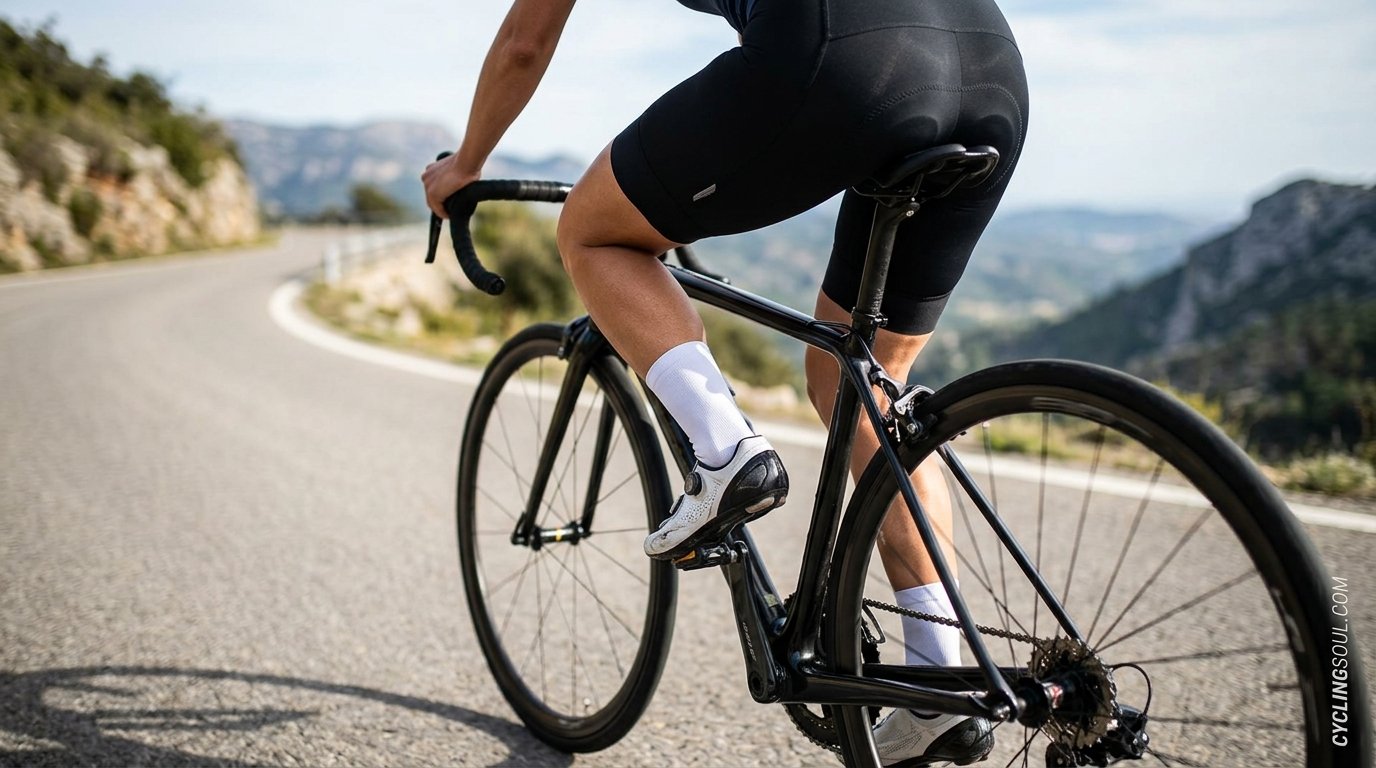
Yes, cycling does build glutes, but with caveats. Every pedal stroke asks the gluteus maximus to extend your hip, especially on the downstroke. When you add resistance through hills, heavy gears, sprints or standing efforts, that demand rises sharply. Over weeks and months, the muscle adapts by getting stronger and, in many riders, slightly larger and firmer.
What matters is the type of stimulus. Muscle growth is driven mainly by progressive tension: asking a muscle to work against a meaningful load, repeatedly, and then recovering well. Easy flat riding at a high cadence is a light load repeated thousands of times. That builds endurance and muscular stamina. Hard climbing, low-cadence strength intervals and sprints are a heavier load, which is closer to what the glutes need to grow.
Beginners usually see the fastest change. If you are coming from a sedentary lifestyle, the glutes are often underused and weak, so even moderate riding sends a strong signal. Experienced cyclists who already ride hundreds of kilometers a month may notice that their glutes feel capable but do not keep growing without a new stimulus.
If you are just getting started and want a plan for building the habit first, our guide on how to start cycling covers the basics step by step.
Ready to put in the miles?
Browse popular cycling essentials to support your glute-building rides.
2. Glute Anatomy 101: The Three Muscles at Work
Your backside is not one muscle. It is a group of three, and each plays a different role while you ride.
Gluteus Maximus
This is the largest muscle in the body and the main driver of hip extension. It does most of the heavy lifting when you push the pedal down, particularly when the effort is hard. When people talk about building glutes, they usually mean this muscle, because it gives your backside most of its size and shape.
Gluteus Medius
Sitting on the outer side of the hip, the gluteus medius stabilizes your pelvis. On the bike it keeps your hips level and your knees tracking in a straight line over the pedals. If it is weak, you may notice your knees wobbling inward, your pelvis rocking on the saddle, or tightness on the outside of your hip after long rides.
Gluteus Minimus
The smallest of the three, the minimus lies beneath the medius and assists with stability and hip rotation. It rarely gets attention, yet it helps you stay smooth and controlled, especially over rough roads or when you shift your weight out of the saddle.
| Muscle | Main job | Role in cycling |
|---|---|---|
| Gluteus maximus | Hip extension | Power on the downstroke, climbing, sprinting |
| Gluteus medius | Pelvic stability, hip abduction | Keeps hips level and knees aligned |
| Gluteus minimus | Stability, hip rotation | Fine control and balance |
The glutes do not work alone. Quadriceps, hamstrings, calves, hip flexors and core muscles all contribute, and you can read more about the full picture in our breakdown of what muscles cycling works.
Why the Smaller Muscles Deserve Attention
Most riders think only about the big gluteus maximus, yet the medius and minimus decide how efficiently your power reaches the pedals. When these stabilizers tire, your knees drift, your pelvis sways and your form falls apart late in a ride. Training them with side-lying raises, banded walks and single-leg work makes you more comfortable and more powerful over long distances. It also reduces the risk of the nagging hip and knee issues that sideline many keen cyclists.
Think of the glutes as a team. The maximus produces force, while the medius and minimus keep everything lined up so that force goes where you want it. Strengthening only one member leaves the others as weak links.
Support your hips and legs
Resistance bands are a simple way to wake up all three glute muscles.
3. How Pedaling Actually Uses Your Glutes
A single pedal revolution has several phases, and the glutes are most active in the first half of the downstroke, from roughly the top of the stroke until the pedal is about halfway to the bottom. In that window your hip extends powerfully while your knee also straightens, and the gluteus maximus works together with your quadriceps to drive the crank.
As the pedal passes the bottom, your hamstrings and calves take over to pull the foot back and through. During the upstroke the hip flexors lift the leg. Throughout the cycle the glutes also help hold the pelvis steady so that power is not wasted in side-to-side movement.
Why Effort Level Changes Everything
At a gentle pace the glutes contribute modestly. As power output rises, they contribute more. Studies of muscle activation in cyclists consistently show that gluteal involvement increases when the effort is harder, the gradient is steeper or the rider stands up. This is why a flat recovery spin feels completely different from a hard hill repeat.
Cadence and Muscle Load
Cadence is how fast you turn the pedals. Low cadence with a heavy gear means each stroke carries a greater force, which loads the glutes and quads more like a strength exercise. High cadence with a light gear reduces force per stroke and shifts the stress toward your cardiovascular system. Neither is better in absolute terms. They simply train different qualities.
- Low cadence, high force: more glute and quad strength stimulus
- High cadence, low force: more aerobic and coordination benefit
- Mixed training: the best option for most riders
The Role of Muscle Fiber Types
Muscles contain slow-twitch fibers, which resist fatigue, and fast-twitch fibers, which produce more force but tire quickly. Steady riding trains the slow-twitch fibers heavily. Sprints, short steep climbs and heavy-gear efforts recruit fast-twitch fibers, which have the greatest potential for growth. This is one more reason a varied riding week helps glute development more than a single repeated routine.
You do not need to turn every ride into a suffer-fest. One or two short, hard sessions among several easier ones gives your body the stimulus it needs without overwhelming your recovery.
Track your cadence
A cadence sensor shows whether you are really loading your muscles.
4. Strength vs. Endurance: Why Cycling Is Not Pure Hypertrophy
Skeletal muscle responds to the demands you place on it. Heavy loads for fewer repetitions tend to build size and maximal strength. Lighter loads for many repetitions build endurance and the ability to resist fatigue. Cycling, particularly steady riding, sits firmly on the endurance side of that spectrum.
There is another factor worth knowing: the interference effect. Large volumes of endurance training can blunt some of the signals for muscle growth, especially if you are not eating enough to support both. A rider who logs many hours a week while under-fueling may find their glutes stay lean and strong but do not get bigger. That is not a failure; it is simply specificity at work.
What cycling does well
- Builds glute endurance
- Improves muscle tone
- Low impact on joints
- Supports fat loss around the hips
- Easy to repeat several times a week
Where it falls short
- Limited maximal load on the glutes
- Small range of hip extension
- Hip movement stays mostly in one plane
- High volume can limit size gains
The limited range of motion is worth highlighting. In a deep squat or a hip thrust, your glutes work through a long range and under a very high load. In cycling the hip moves through a much smaller arc. Because muscles grow in response to both load and stretch, cycling alone has a ceiling for glute development.
That said, a ceiling is not a verdict. For most people who want firmer, stronger, better-shaped glutes, the amount of change available through cycling is meaningful, especially when you ride with intent.
Beginners Versus Experienced Riders
A newer rider has a lot of untapped potential. Almost any consistent cycling will challenge glutes that were previously underused, and strength and shape can improve quickly. An experienced rider has already adapted to a high volume of pedaling, so the same routes may no longer cause further change. For that rider, the next gains come from new stimuli: heavier gears, steeper climbs, sprint work and strength training off the bike.
Age, genetics, hormones and training history also play a role. Two people following the identical plan may see different results, and that is completely normal. Focus on your own progress rather than comparisons.
Add a little strength work
A mini-band set and a yoga mat make home glute workouts easy.
5. Riding Styles Compared: Which Builds Glutes Best?
Not every ride gives your glutes the same workout. Here is how common styles stack up.
| Riding style | Glute demand | Best for |
|---|---|---|
| Easy flat ride | Low | Recovery, base fitness |
| Steady endurance ride | Low to moderate | Stamina, fat burning |
| Hill climbing | High | Glute and quad strength |
| Sprint intervals | Very high | Power and muscle recruitment |
| Low-cadence strength intervals | High | Force development |
| Spin class with resistance | Moderate to high | Structured indoor effort |
| Mountain biking | High | Varied, explosive effort |
Road Cycling
Road riding offers the greatest flexibility. You can ride flat for recovery, tackle long climbs for strength, or do sprints for power. The glutes benefit most when the route includes sustained gradient or when you intentionally use heavier gears.
Indoor Cycling
A smart trainer or stationary bike lets you control resistance precisely. You can do repeatable strength intervals without worrying about traffic or terrain, which makes it an excellent tool for targeted glute work. Structured sessions based on your functional threshold are especially effective, and our explainer on what FTP is in cycling shows how to set the right intensity.
Mountain and Gravel Riding
Off-road riding constantly demands short, powerful efforts, standing climbs and active balance. That mix recruits the glutes, including the stabilizers, more than steady road riding in many cases.
Choosing Your Mix
Most people do best with a blend. A typical week might include one indoor strength-interval session, one outdoor ride with real climbing and one longer relaxed ride. The indoor session gives you precise, repeatable resistance, the hilly ride adds variety and standing practice, and the long ride builds the aerobic base that lets you recover between hard efforts. If weather or time limits you, even a short indoor session twice a week can keep your glutes progressing.
Whatever you choose, remember that the best plan is the one you will repeat. A ride you enjoy and complete beats a perfect session you skip, and enjoyment is a quiet driver of long-term results.
Train indoors with control
A quality indoor trainer makes resistance work easy to repeat.
6. Hills, Standing and Resistance: The Glute Multipliers
If you want one takeaway for building glutes on a bike, it is this: add resistance. Three tools do most of the work.
Climbing
A climb forces you to push harder on every stroke. The gluteus maximus works at a higher percentage of its capacity, and because the effort lasts minutes rather than seconds, the muscle accumulates meaningful time under tension. Seated climbing emphasizes the glutes and quads steadily, while standing climbing adds body-weight leverage.
Standing Out of the Saddle
When you stand, your hips open up and you can use your full body weight to push the pedal. The glutes and hamstrings join in more strongly, and the pelvis must be stabilized by the medius and minimus. Alternating between seated and standing during a climb is a great way to spread the load and keep the effort sustainable.
Heavy Gears and Strength Intervals
A classic session is a set of low-cadence efforts, typically around 50 to 60 revolutions per minute, in a gear that feels hard but still lets you keep a smooth pedal stroke. Repeat several efforts of a few minutes each with easy spinning between them. This mimics resistance training on the bike.
- Warm up for 15 minutes with easy spinning.
- Shift to a harder gear and ride at low cadence for 4 minutes.
- Spin easy for 3 minutes.
- Repeat 4 to 6 times, then cool down.
If you are planning a full progression, our guide to how to train for cycling explains how to build intensity safely over time.
Pedal Technique That Helps the Glutes
Think about pushing the pedal forward and down at the start of the stroke rather than stomping straight down. Keep your hips steady, avoid bouncing in the saddle and imagine driving through your sit bones. Many riders find that a slight rearward shift of weight on climbs lets the glutes fire more strongly. Practice this at moderate effort first so it becomes automatic when the road gets steep.
Climb stronger
Comfortable, supportive shoes help you transfer power from your glutes to the pedals.
7. Bike Fit and Glute Activation: Why Setup Matters
Two riders can pedal the same route and use their glutes very differently. The reason is often bike fit. Small changes to saddle height, saddle position and crank length alter how your hip and knee move, which changes which muscles do the work.
Saddle Height
A saddle that is too low increases knee bend and pushes the effort onto the quadriceps. A saddle that is too high forces you to reach for the pedals, which can rock your pelvis and reduce glute involvement while irritating your hamstrings and lower back. A well-set saddle allows a slight bend in the knee at the bottom of the stroke and lets your hips stay level.
Saddle Fore-Aft Position
Sliding the saddle back generally encourages more hip extension and posterior chain use. Sliding it forward tends to load the quads more. Small adjustments, made one at a time, can make a noticeable difference to where you feel the work.
Posture and Hip Hinge
Sitting tall with a rounded lower back reduces the ability of the glutes to contribute. A relaxed hip hinge with a neutral spine lets the glutes engage more naturally. Core strength and flexible hips make this posture easier to hold.
Glute Activation Before Riding
Many people who sit all day have glutes that do not switch on quickly, a pattern often called sleepy glutes. A few minutes of activation work before a ride can help:
- Glute bridges, 2 sets of 12
- Banded lateral walks, 2 sets of 10 steps each way
- Clamshells, 2 sets of 12 per side
- Bodyweight squats, 1 set of 15
Activation does not replace a proper warm-up, but it gives the muscles a head start so that your quads are not doing everything.
Signs Your Glutes Are Not Pulling Their Weight
If your quads burn long before anything else, your lower back aches on climbs or one side of your body feels stronger than the other, your glutes may be underactive. Short activation drills, a stronger core and attention to your setup often help. Filming yourself from behind on a trainer can reveal a rocking pelvis or a collapsing knee that you cannot feel.
Dial in your fit
A small saddle upgrade can change how comfortably your hips move.
8. Cycling vs. Squats, Lunges and Hip Thrusts
It helps to compare cycling honestly with the exercises most people associate with glute growth. Each has strengths.
| Factor | Cycling | Weighted lower-body lifts |
|---|---|---|
| Load on glutes | Low to moderate | Moderate to very high |
| Range of motion | Small | Large |
| Joint impact | Very low | Low to moderate |
| Cardio benefit | Excellent | Modest |
| Hypertrophy potential | Modest | High |
| Accessibility | High | Needs weights or equipment |
Hip thrusts, squats, deadlifts and lunges let you add weight steadily and move through a longer range, which is a powerful combination for size. Cycling cannot match that mechanical load. However, cycling brings something that lifting does not: huge aerobic capacity, high weekly training volume with little joint stress and a sport you may enjoy far more than the gym.
Complementary, Not Competing
The smartest approach is to use both. Riders who add two short strength sessions a week often climb better, sprint harder and see more glute development than riders who only ride. Lifters who add cycling improve their conditioning and recovery. The two methods fill each other’s gaps.
A Simple Glute Strength Menu
- Hip thrusts or glute bridges: the best isolation for the gluteus maximus
- Goblet or back squats: a strong overall lower-body builder
- Romanian deadlifts: glutes and hamstrings through a long range
- Walking lunges or split squats: single-leg strength and stability
- Side-lying leg raises or banded walks: gluteus medius work
Two sessions of 30 to 40 minutes, with 3 sets of 8 to 12 repetitions per exercise, is plenty for most cyclists.
How to Fit Lifting Around Your Riding
Place your heaviest leg session on a day when you are not doing hard intervals, ideally with an easy day or rest day after it. Avoid heavy squats the day before a major climbing effort, because tired legs reduce the quality of the ride. On busy weeks, a short 20-minute session of bridges, split squats and banded walks still maintains your progress. Over time, you will learn how your body responds and can fine-tune the timing.
Build a home glute station
Adjustable dumbbells and a bench are enough for most of the exercises above.
9. Fueling Glute Growth: Nutrition and Recovery
Muscle does not grow on the bike. It grows afterwards, while you recover and eat. If you ride hard but under-eat or under-sleep, your glutes will have little reason to get bigger.
Protein
Protein supplies the amino acids needed to repair and build muscle. Spreading intake across the day, with a serving after harder rides, supports recovery. Good sources include eggs, dairy, fish, poultry, lean meat, tofu, beans and lentils. A registered dietitian can help you set a target that fits your body and training.
Carbohydrates
Hard efforts rely heavily on stored carbohydrate. If you are chronically low on fuel, your ability to complete quality climbing and strength intervals suffers, which reduces the very stimulus you need. Eat enough carbohydrate before and after demanding sessions.
Total Energy Intake
To build muscle you generally need adequate energy. Riders who burn many calories and eat too little often lose muscle or stall. If your goal is both fat loss and firmer glutes, a modest deficit combined with resistance work and adequate protein is more effective than aggressive restriction. Our article on cycling for weight loss goes deeper into balancing the two goals.
Sleep and Rest Days
Sleep is when much of your repair happens. Aim for consistent, sufficient sleep and schedule easy days or full rest days so that your muscles can adapt. More riding is not always better; better recovered riding usually is.
Hydration and Electrolytes
Staying hydrated supports performance and recovery. On long or hot rides, replacing sodium and other electrolytes helps you keep the quality of your efforts high.
Putting It Together on a Real Ride Day
Eat a carbohydrate-rich meal a few hours before a hard session, carry fuel for anything over an hour, and have a protein-containing meal or snack within a couple of hours afterward. This simple rhythm keeps your energy high during the work and gives your glutes the raw material they need to repair. Small habits repeated every week matter far more than a perfect single day.
Recover smarter
A good protein powder makes post-ride refueling simple.
10. Gear That Helps You Ride Stronger and Longer
No product will build your glutes for you, but the right equipment makes hard, consistent training more comfortable, and consistency is what drives results.
Cycling Shoes and Pedals
Stiff-soled shoes with clipless pedals reduce wasted energy and let you pull as well as push, which can recruit the hamstrings and glutes more evenly. They also keep your foot position consistent, which protects your knees. Take a look at our roundup of the best cycling shoes if you are ready to upgrade.
Padded Shorts
Saddle discomfort cuts rides short. Quality padded shorts reduce friction and pressure, so you can stay on the bike long enough to train effectively. They matter even more on climbs where you sit and push for extended periods.
Indoor Trainer or Smart Bike
For precise resistance work, a trainer lets you set exact power targets for strength intervals. That repeatability is hard to match on the road.
Resistance Bands and Foam Roller
Bands for activation and a foam roller for post-ride soreness cost little and make a real difference to how your hips and glutes feel.
Heart Rate or Power Meter
Data helps you progress sensibly. Power in particular tells you whether the climbing and interval work is getting harder over time, which is the heart of progressive overload.
| Gear | Why it helps glute training |
|---|---|
| Cycling shoes and clipless pedals | Efficient power transfer, stable foot position |
| Padded cycling shorts | Comfort on long climbs and sustained efforts |
| Indoor trainer | Repeatable resistance intervals |
| Resistance bands | Glute activation and off-bike strength |
| Foam roller | Recovery and mobility |
| Power meter | Tracks progressive overload |
Do Not Forget Comfort Basics
Chafing, numbness and saddle pain are common reasons people stop riding before their glutes have had time to adapt. Well-fitting shorts, a suitable saddle, properly laced shoes and a good chamois routine let you focus on the training rather than the discomfort. Small comfort upgrades often unlock more weekly riding time, and more riding time is what builds results.
Ride comfortably
Quality padded shorts help you stay in the saddle for longer climbs.
11. A Weekly Plan for Stronger, Fuller Glutes
Here is a flexible week that combines riding and strength work. Adjust the volume to your fitness, and increase effort gradually.
| Day | Session | Focus |
|---|---|---|
| Monday | Rest or gentle walk | Recovery |
| Tuesday | Strength intervals on the bike, 45 to 60 minutes | Low cadence, high force |
| Wednesday | Lower-body strength session, 35 minutes | Hip thrusts, squats, lunges |
| Thursday | Easy spin, 30 to 45 minutes | Active recovery |
| Friday | Hill repeats or sprint intervals | Power and glute recruitment |
| Saturday | Long endurance ride with a few climbs | Stamina |
| Sunday | Short strength session or rest | Mobility and maintenance |
Progression Principles
- Add resistance gradually: a slightly harder gear, one more repeat or a slightly longer climb each week or two.
- Keep form first: a smooth pedal stroke and steady pelvis beat grinding with poor posture.
- Deload periodically: every fourth week, reduce volume so your body can absorb the work.
- Be patient: visible changes usually take weeks to months, not days.
What Results Look Like
Most riders first notice improved strength and endurance, then firmer-feeling glutes, and later, if nutrition and training support it, some added shape. Photos and measurements taken every few weeks are more reliable than a daily mirror check.
Many people also wonder whether this work changes fat distribution. Cycling burns energy and supports overall fat loss, but you cannot choose where fat comes off. If midsection fat is on your mind, see our answer on whether cycling burns belly fat.
Plan your week
A foam roller keeps hips and glutes loose between hard sessions.
12. Common Mistakes That Hold Back Glute Development
Riding Only Easy Miles
Comfortable steady rides are great for fitness, but they provide a light stimulus to the glutes. Without some hills, intervals or heavy-gear work, your glutes have little reason to adapt further.
Ignoring Strength Training
Skipping the gym entirely caps your potential. A couple of focused sessions each week dramatically improves what the bike alone can do.
Under-Eating
Training hard in a large energy deficit can leave you tired, slow to recover and unable to build muscle. Fuel your riding.
Poor Bike Fit
If your saddle is too high or too low, or you rock on the saddle, you shift work away from the glutes and may cause discomfort. Revisit your setup.
Quad-Dominant Pedaling
Some riders rely almost entirely on the thighs. Focusing on pushing through the hip, sitting slightly back and using standing efforts helps the glutes participate.
Skipping Recovery
Muscles adapt when they rest. Constant hard riding without easy days leads to fatigue, not growth.
Expecting Overnight Results
Glute change is gradual. Consistency across months beats short bursts of extreme effort.
Do more of this
- Climb and sprint weekly
- Lift twice a week
- Eat enough protein
- Sleep well
Do less of this
- Only riding flat and easy
- Chronic under-fueling
- Constant maximal efforts
- Ignoring discomfort
Why Consistency Beats Intensity
Many riders try a brutal plan for two weeks, burn out and stop. A moderate plan you can maintain for months produces far greater change than a heroic burst. Pick sessions you will actually do, protect your rest days and let the gains accumulate. When your routine feels easy, add a small challenge, then repeat.
Finally, listen to your body. Soreness that fades in a day or two is a sign you are working. Pain that lingers, sharpens or affects how you walk deserves rest and, if it persists, a professional opinion.
Support every ride
Quality socks prevent hot spots and keep long sessions comfortable.
Frequently Asked Questions
Does cycling build glutes?
Yes. Cycling strengthens and tones the glutes and can build them modestly, especially when you add resistance through hills, heavy gears, sprints and standing efforts.
Can cycling make your butt bigger?
It can for some people, particularly beginners and those who climb or do strength intervals. Easy flat riding mostly builds endurance and tone, so size gains are usually more limited without added strength training.
Does cycling make your butt flat?
Not in itself. Riding does not shrink the glutes. Very high endurance volume with low food intake can reduce overall muscle, which may make the glutes look flatter, so fueling and strength work matter.
Which is better for glutes, cycling or walking?
Cycling with resistance generally loads the glutes more than casual walking, though walking uphill or with a brisk pace also helps. Combining both is perfectly fine.
Does stationary cycling work the glutes?
Yes. With enough resistance, a stationary bike works the glutes well. Standing intervals and a higher resistance setting increase the demand.
Does cycling tone the glutes?
Yes, regular cycling improves muscle tone and, combined with fat loss, can give the glutes a firmer appearance.
How long does it take to see glute changes from cycling?
Strength and endurance improve within a few weeks. Visible shape changes usually take a couple of months of consistent, progressive training, along with good nutrition.
Is it better to stand or sit when cycling for glutes?
Both help. Seated climbing builds steady glute and quad work, while standing increases hip extension and engagement. Mixing the two is ideal.
Does saddle height affect glute activation?
Yes. A saddle that is too low emphasizes the quads, and one that is too high can cause rocking and reduce glute contribution. A well-set saddle helps the glutes work effectively.
Do I need to lift weights if I cycle?
You do not have to, but two short strength sessions a week significantly improve glute development, climbing power and injury resilience.
How many times a week should I ride to build glutes?
Three to five rides a week works for most people, including at least one or two sessions with climbing, intervals or heavy-gear work, plus rest days for recovery.
Can cycling cause glute soreness?
Yes, especially after hard climbs, new intervals or long rides after time off. Mild soreness is normal. Sharp or persistent pain is not, and you should speak with a healthcare professional.
Conclusion: So, Does Cycling Build Glutes?
It does. Cycling works all three glute muscles, strengthens them, improves their endurance and can add shape, especially if you push against resistance on hills, in heavy gears and during sprints. It is not the most powerful tool for maximum glute size, because the load and range of motion are limited, but it is an enjoyable, joint-friendly way to train them consistently.
To get the most from your rides, climb regularly, use low-cadence strength intervals, set your bike up well, eat and sleep enough to recover, and add two short strength sessions each week. Give it time, track your progress and enjoy the process. Your glutes, and your cycling, will thank you.
Start building stronger glutes today
Explore the gear that makes every climb and every session better.