
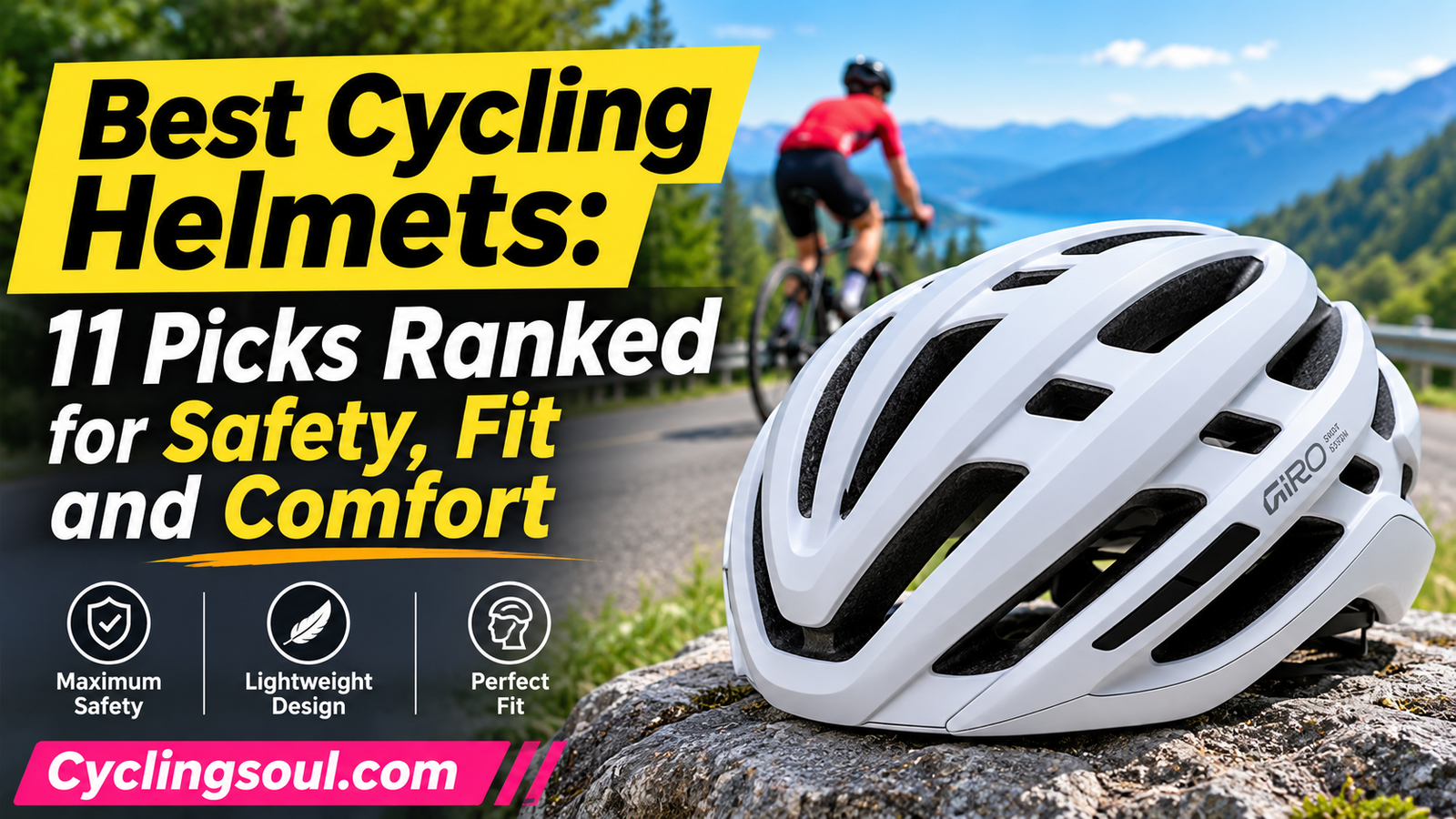
Best Cycling Helmets: 11 Picks Ranked for Safety, Fit and Comfort
From lightweight race lids to urban commuter designs — what safety standards actually mean, how rotational protection works, and which helmets earn their place on your head.
The Complete Guide
A cycling helmet is the one piece of kit where the buying decision genuinely matters beyond comfort. Jerseys, shorts and gloves make riding nicer; a helmet is what stands between your head and the road on the worst day you’ll have on a bike. And yet it’s often bought in fifteen minutes, sized by guesswork and worn for years longer than it should be.
That’s a shame, because helmets have never been better. Modern designs use sophisticated foam structures, rotational-impact technologies and fit systems that make them lighter, cooler and more secure than the lumps many of us grew up with. The challenge isn’t finding a good helmet — it’s knowing which one suits your riding and making sure it actually fits.
Because fit is everything. A poorly adjusted helmet sits too high, too loose or too far back, and it simply cannot do its job in a crash. A correctly fitted helmet that sits level, snug and strapped securely is the single biggest factor in whether protection works. That’s why this guide spends real time on measurement and adjustment alongside the product reviews.
We’ll cover what safety certifications actually certify, how rotational-impact systems like MIPS and KinetiCore work, how to size and adjust a helmet properly, and how ventilation and weight affect comfort. Then we apply all of it to eleven popular helmets spanning performance road designs, comfortable all-rounders and urban commuter styles.
Before any of that, the good news about cycling itself: it’s one of the most accessible and sustainable forms of exercise there is, and it scales to any starting point. Our guide to how to start cycling covers the basics, and our look at why cycling is good for you explains what regular riding does for your body. The helmet is what makes all of it safer. Let’s find you the right one.
Quick Comparison: Our Top Picks
All eleven helmets in this guide, side by side. The ranking reflects protection, fit, comfort and how well each design serves the rider it’s built for. Every product links to its exact listing.
| # | Image | Product | Key Specs | Verdict | Check Price |
|---|---|---|---|---|---|
| 1Top Pick |  |
Giro Agilis MIPS Cycling HelmetBest Overall |
|
Race-bred fit and cooling in a versatile package. | Check Price on Amazon |
| 2 |  |
POC Ventral Air MIPS Road HelmetBest Ventilation |
|
Cool-headed helmet for hot days and hard efforts. | Check Price on Amazon |
| 3 |  |
KASK Protone Icon Bike HelmetBest Premium |
|
Refined, premium fit that feels exceptional on. | Check Price on Amazon |
| 4 |  |
SMITH Signal Cycling HelmetBest Coverage |
|
Serious protection with generous rear coverage. | Check Price on Amazon |
| 5 |  |
Lazer Tonic KinetiCore Road HelmetBest Value Performance |
|
Built-in rotational protection without the premium. | Check Price on Amazon |
| 6 |  |
Bell Avenue MIPS Road HelmetBest Comfort Road |
|
Easy, comfortable road helmet that just works. | Check Price on Amazon |
| 7 |  |
OutdoorMaster Gem MIPS HelmetBest Value Airflow |
|
Lots of cooling and MIPS protection for less. | Check Price on Amazon |
| 8 |  |
Findway Pro Cycling HelmetBest for Everyday Riders |
|
A practical, comfortable helmet for everyday riding. | Check Price on Amazon |
| 9 |  |
Thousand Chapter Adult MIPS HelmetBest Commuter |
|
Stylish city protection you’ll happily wear off the bike. | Check Price on Amazon |
| 10 |  |
Retrospec Lennon Adult Bike HelmetBest Casual Style |
|
Laid-back looks with everyday practicality. | Check Price on Amazon |
| 11 |  |
Schwinn Thrasher Road Bike HelmetBest Budget |
|
Certified protection that costs very little to own. | Check Price on Amazon |
Ready to protect your head?
Compare fit, ventilation and safety features side by side.
Check Cycling Helmets on Amazon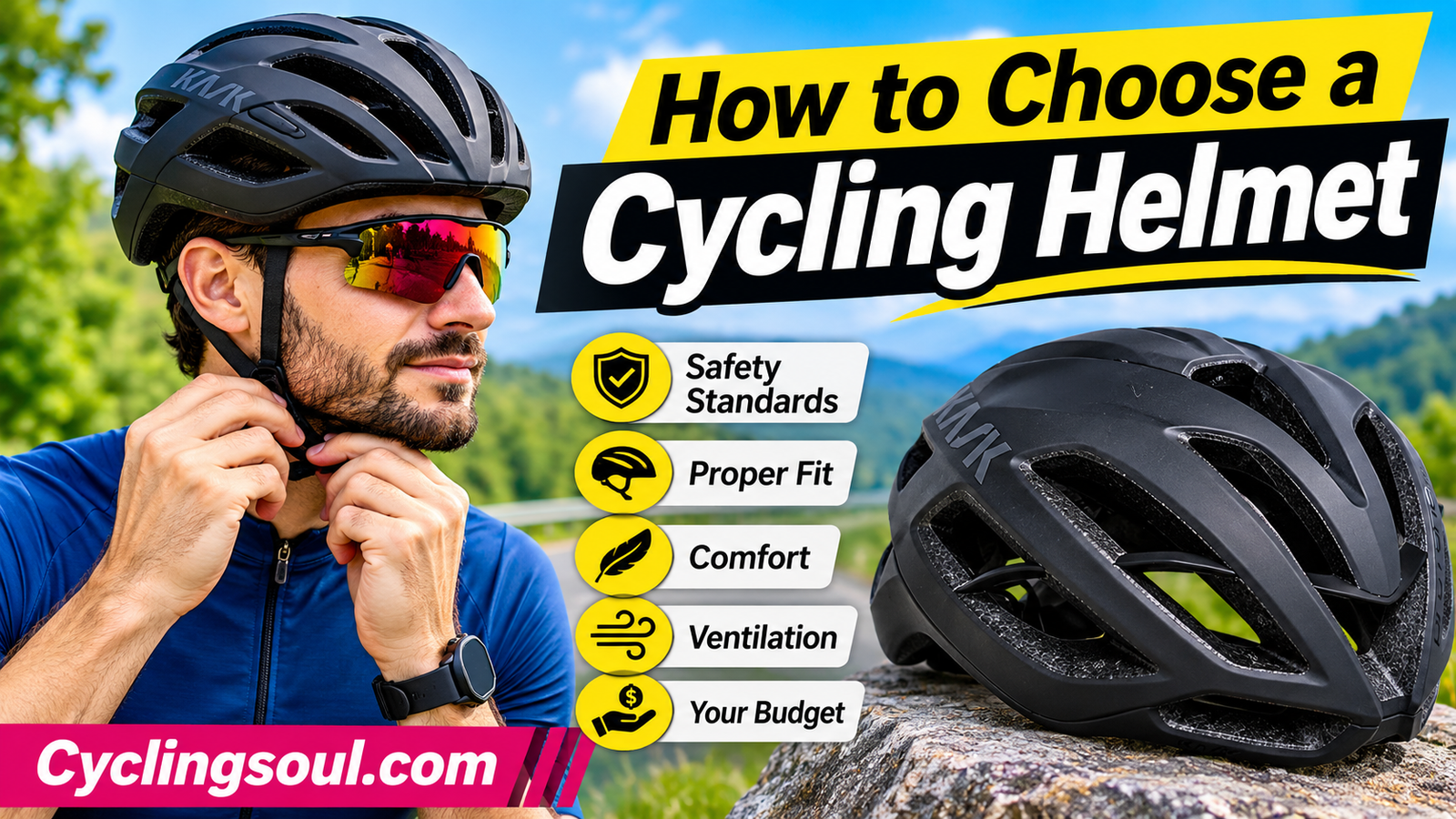
How to Choose a Cycling Helmet
Choosing a helmet boils down to four questions: how you ride, what protection it offers, whether it fits your head, and how it feels after two hours in the saddle. Everything else — colours, features, brand prestige — is secondary.
Match the helmet to your riding
A commuter stopping and starting through traffic has different needs from a rider doing long weekend road miles, and different again from someone riding gravel trails. Road helmets prioritise ventilation and low weight. Trail and mountain helmets extend coverage lower at the back of the skull. Commuter designs favour looks you’ll happily wear off the bike and practical touches for city use. Choosing the right category first narrows the field immediately.
Protection comes before everything
Every legitimate helmet sold for cycling meets an established safety standard, and that certification should be the baseline — not a selling point. Beyond it, look at coverage: how far the helmet wraps around and down the back of your head. More coverage generally means more protection in the kind of awkward, sideways falls that real crashes involve.
Then consider rotational-impact protection. Most real-world crashes don’t hit the head straight on — they strike at an angle, which makes the brain rotate inside the skull. Technologies designed to reduce that rotational motion are the most meaningful safety development in helmets in decades. We explain them properly in the next section.
Fit beats features
The best-ventilated, most advanced helmet in the world is worse than a simpler one that fits you properly. Fit determines whether the helmet stays in the right position during a crash — and no amount of technology compensates for a helmet that slides or sits wrongly. Budget real time for sizing and adjustment, and don’t buy on looks alone.
Comfort decides whether you wear it
This is underrated. If a helmet is hot, heavy or fiddly, you’ll wear it less, and an unworn helmet protects nobody. Ventilation, weight, strap comfort and a fit system you can adjust one-handed all matter more than spec-sheet prestige. The full wardrobe matters too — see our guide to what to wear cycling for how it all fits together.
The short version
Choose your category · confirm the safety certification · prioritise fit and coverage · add rotational protection if you can · make sure it’s comfortable enough that you’ll wear it every single ride.
Compare helmets across categories
Filter by style, protection and fit system.
Shop Cycling Helmets on AmazonHelmet Safety Standards and Certifications
Helmet certifications are the least glamorous and most important part of buying one. They’re the reason a £15 helmet and a £250 helmet both protect your head — the difference between them lies in fit, comfort, weight and advanced protection, not in whether they’re safe to wear at all.
What certification actually tests
Certification bodies put helmets through standardized testing: dropping them onto flat and angled anvils at set speeds and measuring the force transmitted to a headform inside. Helmets that keep those forces below defined thresholds pass. The tests cover a range of impact locations and, in some cases, different temperatures and strap configurations.
The practical takeaway: any helmet legally sold as a cycling helmet and carrying a recognized certification has passed meaningful impact testing. What certification doesn’t do is tell you how a helmet performs beyond that threshold, how it handles angled impacts, or whether it fits your head.
The standards you’ll encounter
- CPSC — the mandatory safety standard for bicycle helmets sold in the United States. If you’re buying in the US market, this is the baseline every helmet must meet.
- EN 1078 — the European standard for cycling helmets, covering impact absorption, retention systems and field of vision.
- Snell certification — a voluntary, more demanding standard some manufacturers pursue beyond the legal minimum.
- WG11 — a protocol specifically evaluating rotational impact performance, used by brands such as KASK to assess and communicate how their helmets behave in angled impacts.
What the labels don’t tell you
Passing a standard is binary — a helmet passes or it doesn’t. It doesn’t tell you by how much margin, and it doesn’t capture comfort, strap quality, retention-system durability or how the helmet behaves in the messy, off-axis crashes that make up most real incidents. Two certified helmets can feel completely different to wear and offer meaningfully different levels of coverage.
Buying safety, not marketing
Look for the certification, then look past it: at coverage, at rotational protection, at fit quality and at how the straps and retention system feel. That combination — certified protection that actually fits and stays put — is what saves heads.
Visibility is the other half of staying safe. A helmet helps when things go wrong; being seen helps stop them going wrong at all. See our guide to the best bike lights for what actually keeps you visible in traffic.
A quick check before you buy
Confirm the helmet lists its certification on the product page, label or manufacturer’s documentation. Legitimate helmets carry certification markings inside the shell — be wary of anything that doesn’t.
Shop certified helmets
Compare protection standards across popular models.
Check Certified Helmets on AmazonMIPS and Other Rotational Impact Technologies
Ask any helmet engineer what actually injures brains in cycling crashes and the answer is rarely a clean, vertical impact. It’s angled, glancing blows that make the head — and the brain inside it — rotate. That’s why rotational-impact protection has become the defining helmet technology of recent years.
The physics, briefly
Your skull can handle straight-line impact reasonably well — that’s what foam is for. But when a helmet catches the road at an angle during a fall, the friction between shell and surface grabs and twists the head. The brain, floating in fluid, lags behind that rotation, creating shear forces in the tissue. Reducing that rotation is the goal of every rotational protection system.
How the main systems work
- MIPS (Multi-directional Impact Protection System). A low-friction layer inside the helmet that allows a small amount of relative movement between shell and head during an angled impact, reducing rotational motion transferred to the brain. Widely used across price points and helmet categories.
- MIPS Air Node. An integrated, more streamlined MIPS implementation designed to sit closer to the head and work well with highly ventilated helmets — the approach used in the POC Ventral Air MIPS below.
- Koroyd. A structure of coiled tubes that crushes uniformly on impact to absorb energy while allowing strong airflow. In the SMITH Signal it’s used alongside MIPS for combined protection and ventilation.
- KinetiCore. Built-in protection zones formed directly in the helmet’s foam structure rather than added as a separate layer — an approach that reduces weight and complexity while addressing rotational impact.
- WG11. Not a system but a test protocol: a set of rotational-impact criteria a helmet is evaluated against. KASK’s Protone Icon is designed and assessed around this protocol.
Does it matter which system a helmet uses?
They’re all serious, well-researched approaches to the same problem, and any of them adds meaningful protection over a helmet without rotational technology. What matters more is that the helmet fits and stays in place — a rotational system can only work if the helmet is where it should be during an impact. Treat these technologies as the best available insurance, not as a licence to fit a helmet badly.
What it costs you
Less than you’d think. Rotational protection adds minimal weight and, in good designs, no real penalty to ventilation. Helmets in every category and at nearly every price now offer it, which makes it a feature worth seeking out rather than paying a premium for.
Helmet choice is one part of a much bigger riding picture. If you’re still working out what kind of riding you’ll do, our guide on how to choose a road bike covers the fundamentals of matching equipment to the riding you actually enjoy.
Shop helmets with rotational protection
Compare MIPS and alternative impact technologies.
Shop MIPS Helmets on AmazonFit and Sizing Guide
Fit is where helmets are won and lost. A helmet that fits well feels like part of your head; one that doesn’t shifts, pinches and — most importantly — fails to protect properly in a crash. Here’s how to get it right.
What a properly fitting helmet feels like
Level on your head, sitting roughly two fingers above your eyebrows. Even pressure all the way around your skull, without one tight spot or one loose gap. The retention system holds snugly at the back without pinching. The straps form a clean “V” under each ear, and the chin strap leaves just enough room for one finger between strap and jaw. No rocking forward, backward or sideways when you move your head.
How helmet sizing works
Helmets are sized by head circumference in centimetres, and each manufacturer’s sizing chart is specific to its own range. A “medium” from one brand is not a “medium” from another. Always measure — which we cover step by step later in this guide — and compare against the exact chart for the helmet you’re considering.
Head shape matters as much as size
Two heads with identical circumference can be shaped very differently: some rounder, some longer front-to-back. Helmet brands have their own fit characteristics, and the same size can suit one head shape and not another. This is why trying before buying — or buying from somewhere with straightforward returns — is genuinely worth the effort.
Retention systems and adjustment
- Dial-based systems that tighten a cradle around the back of the head. Giro’s Roc Loc 5 and KASK’s OCTO FIT are refined examples — quick to adjust and precise to set.
- Height adjustment that lets you move the rear cradle up or down to cradle the skull correctly rather than sitting too high or low.
- Strap dividers that let you tune where the straps meet under the ear, so the “V” sits cleanly without slack.
Fit also interacts with the rest of your kit. A properly adjusted helmet, good eyewear and comfortable contact points make long rides far more pleasant — and comfort is what keeps you riding consistently. If you’re building out your kit wardrobe, our guides to cycling shoes and cycling socks cover the contact points below.
Between sizes?
Go with the measurement, not the label. If you sit exactly between two sizes, the smaller size with a well-adjusted retention system usually holds more securely than a larger helmet cinched to its limit.
Find your size across brands
Compare fit notes and size charts before you order.
Browse Cycling Helmets on AmazonVentilation and Weight
Comfort is what makes a helmet get worn on every ride instead of just the big ones — and ventilation and weight are the two biggest comfort factors. Both are worth understanding before you buy.
How helmet ventilation works
Vents aren’t just holes. In a well-designed helmet, they work as a system: large intake ports at the front scoop air in, internal channels run that air over the scalp toward the back, and exhaust ports at the rear draw it out. It’s a pressure-driven airflow system, and it’s why two helmets with the same number of vents can feel completely different — channel design matters as much as vent count.
That’s the principle behind designs like the Giro Agilis with its wind-tunnel-developed venting and the POC Ventral Air with its emphasis on high airflow. Both prioritise moving air over the head rather than simply removing material.
Weight: where it matters and where it doesn’t
Weight is the number most riders obsess over, and honestly it’s less important than fit and ventilation. A few grams on your head are far less noticeable than a helmet that doesn’t breathe or that shifts when you move. What weight does affect is fatigue over very long days and general comfort when you’re climbing slowly or riding in heat.
Where weight comes from matters too. Additional coverage, rotational protection layers and more robust retention systems all add grams — and each of them adds protection or comfort. A slightly heavier helmet with good coverage and proper rotational protection is usually the smarter choice than a featherweight with bare-minimum safety.
The ventilation trade-off
Every helmet balances cooling against coverage and protection. More vents mean more airflow but also more shell interruption; more material means more protection and better rain and sun coverage but more heat. Match the balance to your riding: hot-climate riders and racers want maximum airflow; commuters and cold-weather riders can afford — and benefit from — a little more coverage.
Layering plays a part here too. A lightweight, wicking base layer under the helmet moves sweat away from your scalp, which keeps you more comfortable than any extra vent. Our guide to the best cycling jerseys covers how upper-body layers work with your headwear.
The heat test
Before buying, look at where the internal channels run. Helmets that channel air directly over the scalp feel dramatically cooler than those that merely perforate the shell — regardless of what the vent count says.
Shop lightweight, ventilated helmets
Compare airflow designs for warm-weather riding.
Check Ventilated Helmets on AmazonRoad vs. MTB vs. Commuter Helmets
Helmets fall into a handful of families, and the differences are more than styling. Each category makes deliberate trade-offs around coverage, ventilation and appearance based on how it’s used.
| Feature | Road Helmets | MTB / Trail Helmets | Commuter Helmets |
|---|---|---|---|
| Priorities | Ventilation, low weight, speed. | Coverage, durability, rugged use. | Looks, practicality, everyday comfort. |
| Head coverage | Minimal, high and airy. | Extended rear and side coverage. | Moderate, often lower at the back. |
| Typical shape | Sleek, highly vented. | Rugged, visor-ready. | Rounder, more urban styling. |
| Best for | Road riding, long distances, warm days. | Trails, gravel, rough terrain. | City riding, commuting, casual use. |
| Trade-offs | Less coverage at the rear. | Warmer and heavier. | Less airflow than road designs. |
Road helmets
Designed for speed and long days in the saddle. They prioritise ventilation and low weight, with sleek profiles and generous channeling. The trade-off is reduced coverage at the rear of the head. The Giro Agilis, POC Ventral Air and KASK Protone Icon in this guide all sit in this category at different price points.
MTB and trail helmets
Built for rougher ground and messier crashes. They extend further down the back of the skull, handle abuse better and often take a visor. If you ride gravel, trails or anything loose and steep, the extra coverage is worth the modest weight and warmth penalty. Some all-round designs, like the SMITH Signal with its generous coverage, blur the line nicely.
Commuter and urban helmets
Style matters here, because the best commuter helmet is the one you’re happy to wear to the shops and lock up at your destination. These designs favour looks, practical details and easy adjustment over pure ventilation. The Thousand Chapter, Retrospec Lennon and Schwinn Thrasher all live in this world, in different ways.
Choosing by how you actually ride
Most riders fit one category clearly. If you’re genuinely split between road and commuting, buy for whichever you do more often — and remember that any certified helmet is far better than no helmet. Mixed-surface riders should lean toward better coverage and more robust construction.
Helmet and kit choice works hand in hand with technique too. If you ride clipless pedals, clean entries and exits keep you composed and in control — see our guide on how to clip into pedals. And good eyewear protects eyes from glare, wind and debris; our picks for the best cycling sunglasses cover that side.
Shop helmets by riding style
Compare road, trail and commuter designs.
Compare Helmet Styles on AmazonBest Performance and Road Helmets
These four are built for riders who care about airflow, fit precision and how a helmet feels after three hours in the heat. Each takes a different approach to the balance between protection and performance.
| # | Image | Product | Key Specs | Check Price |
|---|---|---|---|---|
| 1 | |
Giro Agilis MIPSBest Overall |
|
Check Price |
| 2 | |
POC Ventral Air MIPSBest Ventilation |
|
Check Price |
| 3 | |
KASK Protone IconBest Premium |
|
Check Price |
| 4 | |
Lazer Tonic KinetiCoreBest Value Performance |
|
Check Price |
Giro Agilis MIPS Cycling Helmet
Race-bred fit and cooling in a helmet you can ride every day.
The Agilis sits in the sweet spot most riders actually need: performance features without the fragility or fuss of a pure race lid. It carries MIPS rotational protection, Giro’s Roc Loc 5 fit system for precise one-handed adjustment, and wind-tunnel-developed venting that genuinely moves air over your scalp rather than just perforating the shell.
What makes it our top overall pick is how well it works across conditions. It’s cool enough for hot climbs, secure enough for fast descents and comfortable enough that you forget it’s there after the first few minutes. Whether you’re riding a sportive, a fast group ride or simply commuting with more speed than most, it does everything asked of it.
Key Features
- MIPS rotational impact protection
- Roc Loc 5 fit system for precise, quick adjustment
- Wind-tunnel-developed ventilation channels
- Versatile road-focused shape suited to everyday performance riding
Pros
- Excellent ventilation for hot-weather riding
- Precise, secure fit system
- Genuinely versatile across riding types
Cons
- Road-focused shape — less suited to heavy trail use
- Performance features priced accordingly
Who it’s best for: Riders who want one high-quality helmet for everything from daily rides to big weekend efforts.
POC Ventral Air MIPS Road Helmet
A cool head on the hottest, hardest days of your riding year.
Some helmets are built to win weight arguments. The Ventral Air is built to win airflow ones. Every part of its design is oriented around moving air over your head — and on a long summer climb or a hard interval session, that’s the difference between staying composed and overheating.
The MIPS Air Node system brings rotational protection into that highly ventilated structure without compromising the airflow, and the Eye Garage — dedicated internal storage for sunglasses — is one of those small touches that you use constantly once you have it. If you ride hard in warm conditions, this is the helmet that keeps you comfortable.
Key Features
- MIPS Air Node rotational protection integrated into a ventilated design
- High-airflow structure with internal cooling channels
- Eye Garage internal sunglasses storage
- Performance-focused fit for road riding
Pros
- Outstanding ventilation in hot conditions
- Rotational protection without airflow penalty
- Thoughtful details like the Eye Garage
Cons
- Highly vented design offers less cold-weather coverage
- Performance positioning, not a commuter helmet
Who it’s best for: Riders in warm climates and anyone who overheats easily on hard efforts.
KASK Protone Icon Bike Helmet
Premium fit and finish that you notice every time you ride.
The Protone Icon is a refined evolution of one of the most recognisable road helmets in the sport. Its defining feature is the OCTO FIT adjustment system — a dial-and-cradle setup that holds the helmet precisely and comfortably without pressure points — and it’s assessed against the WG11 rotational impact protocol, reflecting the brand’s approach to angled-impact protection.
What separates it in daily use is the quality of everything. Straps that lie flat and stay put, padding that feels considered rather than adequate, and a shape that sits close and composed at speed. It’s a helmet for riders who notice the difference between good and exceptional.
Key Features
- Designed and assessed around the WG11 rotational impact protocol
- OCTO FIT adjustment system for precise, comfortable hold
- Race-informed shape and fit
- Premium materials and finishing throughout
Pros
- Exceptional fit and comfort
- Refined straps and retention system
- Serious approach to rotational protection
Cons
- Premium pricing
- Best value for riders who’ll use the refinements
Who it’s best for: Experienced riders who want top-tier fit, finish and protection.
Lazer Tonic KinetiCore Road Helmet
Built-in rotational protection at a price that makes sense.
KinetiCore takes a different route to rotational protection: instead of adding a separate layer, protection zones are built directly into the helmet’s foam structure. That approach reduces weight and complexity, and in the Tonic it comes together in a road helmet that costs meaningfully less than many rivals.
The result is a helmet that rides like a performance road lid — comfortable, reasonably cool and secure — while offering built-in rotational protection. For riders who want modern safety technology without stretching the budget, it’s the smartest value in this guide.
Key Features
- KinetiCore built-in rotational impact protection
- Road-focused shape and profile
- Comfortable fit with straightforward adjustment
- Lightweight construction from the integrated design
Pros
- Rotational protection without a premium price
- Comfortable, secure fit
- Clean, road-appropriate styling
Cons
- Fewer premium refinements at this price
- Road-focused — not designed for trail use
Who it’s best for: Riders who want modern rotational protection without premium pricing.
Performance helmets come into their own when the riding gets serious. If you’re training toward a goal, understanding your numbers helps — see our explainer on what FTP is in cycling and our guide on how to train for cycling.
Compare performance helmets
Find the airflow and fit that match how you ride.
Shop Performance Helmets on AmazonBest All-Round and Value Helmets
Not everyone needs a race helmet — and plenty of riders are better served by a comfortable, well-ventilated all-rounder. These four cover everything from generous coverage to remarkable airflow at sensible prices.
| # | Image | Product | Key Specs | Check Price |
|---|---|---|---|---|
| 1 | |
SMITH Signal HelmetBest Coverage |
|
Check Price |
| 2 | |
Bell Avenue MIPSBest Comfort Road |
|
Check Price |
| 3 | |
OutdoorMaster Gem MIPSBest Value Airflow |
|
Check Price |
| 4 | |
Findway Pro HelmetBest Everyday |
|
Check Price |
SMITH Signal Cycling Helmet (MIPS, Koroyd Coverage)
Generous coverage and layered protection for riders who want insurance.
The Signal combines two serious protection approaches: MIPS for rotational impacts and Koroyd coverage — the tube-structured material that crushes uniformly to absorb energy while still letting air pass through. Together with a design that covers more of the head than a pure road race helmet, it’s a reassuringly well-protected option.
It also ventilates well despite that coverage, thanks to how Koroyd is structured, and it’s comfortable enough for long rides. For riders who commute, ride mixed surfaces or simply want to feel properly looked after, it’s an excellent choice.
Key Features
- MIPS rotational impact protection
- Koroyd coverage for energy absorption and airflow
- Generous head coverage compared with minimal race designs
- Comfortable fit suited to varied riding
Pros
- Layered protection approach
- Good coverage without excessive heat
- Comfortable for long rides
Cons
- Slightly more coverage means more material
- Not the most minimal-feeling option
Who it’s best for: Riders who prioritise protection and coverage, especially commuters and mixed-surface riders.
Bell Avenue MIPS Adult Road Bike Helmet
Easy to fit, easy to live with — the helmet that just works.
Some helmets try to impress on the spec sheet. The Avenue MIPS tries to disappear on your head, and that’s exactly what most riders want. It offers MIPS rotational protection in a comfortable road shape that’s straightforward to size, adjust and wear for hours at a time.
The simplicity is the strength. There’s nothing fussy here — just a well-made, comfortable road helmet with modern protection and a fit that most people get right quickly. It’s a particularly good choice for riders returning to cycling or buying their first serious helmet.
Key Features
- MIPS rotational impact protection
- Road-focused shape suited to everyday riding
- Comfort-oriented fit that’s easy to adjust
- Straightforward design with no unnecessary complexity
Pros
- Genuinely comfortable from the first ride
- Easy to size and adjust
- Modern protection in a simple package
Cons
- Fewer premium touches than top-end options
- Balanced design, not ultra-minimal
Who it’s best for: Riders who want comfort and modern protection without overthinking the choice.
OutdoorMaster Gem MIPS Adult Cycling Helmet (25 Vents)
Serious ventilation and MIPS protection at a price that surprises.
Ventilation usually costs money. The Gem MIPS breaks that pattern with an abundance of vents that give it a light, airy feel on the head, alongside MIPS rotational protection — a combination you’d normally expect to pay considerably more for.
It’s an easy helmet to wear in warm weather and a sensible choice for riders who want modern safety features without stretching the budget. If you ride in the heat and want to feel the air moving, this delivers remarkable cooling for the outlay.
Key Features
- MIPS rotational impact protection
- 25-vent design for generous airflow
- Light, airy feel on the head
- Comfortable, adjustable fit for everyday riding
Pros
- Excellent airflow for warm riding
- MIPS protection at a budget-friendly price
- Light and comfortable for long days
Cons
- Heavily vented design offers less weather coverage
- Fewer refinements than premium helmets
Who it’s best for: Warm-climate riders and budget-conscious buyers who want MIPS and real airflow.
Findway Pro Cycling Helmet for Men & Women
A practical, comfortable helmet for the riding most people actually do.
Most riders don’t need race technology. They need a helmet that fits comfortably, adjusts easily, breathes adequately and can be worn day after day without complaint. That’s precisely the territory the Findway Pro occupies — a well-judged, unisex all-rounder built for everyday riding.
The fit is comfortable and easy to dial in, the design suits a wide range of riders and riding styles, and it does the fundamental job without fuss. It’s the kind of helmet that makes sense as a first purchase or as a dependable second helmet for the household.
Key Features
- Unisex sizing suited to a wide range of riders
- Comfortable fit that’s easy to adjust
- All-round design suited to everyday riding
- Practical, straightforward construction
Pros
- Versatile across riding styles
- Comfortable, easy-to-use adjustment
- Sensible option for shared or first-time use
Cons
- Fewer performance features than specialist designs
- Best suited to everyday riding
Who it’s best for: Everyday riders, families and anyone wanting a comfortable, versatile helmet.
All-round helmets suit riders who simply want to ride more and feel better for it. Regular cycling builds fitness steadily and is genuinely sustainable long term — see our look at cycling as cardio for what consistent riding does for your heart and lungs.
Compare all-round helmets
Find comfortable, versatile protection at every price.
Shop All-Round Helmets on AmazonBest Commuter and Urban Helmets
City riding asks different things of a helmet: it should look good enough that you’ll wear it to the café, adjust easily over a cap or with gloves on, and be practical enough for daily use. These three balance style and substance very differently.
| # | Image | Product | Key Specs | Check Price |
|---|---|---|---|---|
| 1 | |
Thousand Chapter MIPSBest Commuter |
|
Check Price |
| 2 | |
Retrospec LennonBest Casual Style |
|
Check Price |
| 3 | |
Schwinn ThrasherBest Budget |
|
Check Price |
Thousand Chapter Adult MIPS Road Bike Helmet
City-ready protection you’ll genuinely want to wear off the bike.
For urban riders, the barrier to wearing a helmet is often simply how it looks. The Thousand Chapter solves that with a considered commuter aesthetic that works as well in a café as on the bike — and backs it up with MIPS rotational protection and a road-informed design.
It’s the kind of helmet that changes habits. When a helmet looks good and feels comfortable, you wear it every trip, not just the long ones. For commuters, city riders and anyone who cares about how their kit looks, it’s an excellent choice.
Key Features
- MIPS rotational impact protection
- Commuter-focused styling designed for everyday use
- Urban-informed design and proportions
- Comfortable fit for frequent, short trips
Pros
- Style that encourages consistent wear
- Modern protection in a commuter design
- Comfortable for everyday city riding
Cons
- Less venting than performance road helmets
- Urban-focused rather than speed-oriented
Who it’s best for: Commuters and city riders who want protection that looks the part.
Retrospec Lennon Adult Bike Helmet
Laid-back looks with everyday practicality and easy adjustment.
The Lennon is designed for riders who want a helmet that feels relaxed rather than technical. Its casual styling suits neighborhood rides, café trips and general urban use, and the fit is simple to adjust without any learning curve.
It’s a helmet that removes friction from the decision to wear one. Comfortable, uncomplicated and easy to live with, it does the essential job well — and at a price that makes owning it for occasional use entirely reasonable.
Key Features
- Casual urban styling suited to everyday life
- Comfortable fit for relaxed riding
- Easy, straightforward adjustment
- Practical design for general use
Pros
- Approachable, casual looks
- Simple to size and adjust
- Comfortable for everyday riding
Cons
- Less technical than performance options
- Built for casual riding rather than speed
Who it’s best for: Casual riders and urban cyclists who value relaxed style.
Schwinn Thrasher Road Bike Helmet
Certified protection that costs remarkably little to own.
Everyone deserves a properly certified helmet, whatever their budget. The Thrasher delivers exactly that — a legitimate, adjustable helmet for general road and casual use at a price that removes every excuse for riding unprotected.
It’s not competing with premium helmets on ventilation or refinement, and it doesn’t try to. What it does is fit comfortably, adjust easily and meet the certification requirements that make it genuinely protective. For occasional riders, kids’ bikes getting handed up to teenagers and anyone buying their first helmet, that’s more than enough.
Key Features
- Budget-friendly pricing with legitimate protection
- Adjustable fit system for a range of head sizes
- Suited to general road and casual riding
- Straightforward design that’s easy to live with
Pros
- Extremely accessible pricing
- Comfortable, easy adjustment
- A sensible first helmet
Cons
- Basic feature set at this price
- Less ventilation than performance designs
Who it’s best for: Budget-conscious riders, occasional cyclists and anyone buying a first helmet.
Commuting by bike is one of the easiest ways to build daily activity into a busy life — the ride becomes part of the day rather than another task on the list. It also adds up: see how much energy you actually use in our guide to how many calories cycling burns.
How to Measure Your Head for a Helmet
Measuring takes thirty seconds and eliminates the most common cause of badly fitting helmets. Here’s how to do it properly.
What you need
A soft tape measure is ideal. If you don’t have one, use a piece of string or a charging cable and hold it against a ruler afterwards. You’re measuring around the widest part of your head.
The measurement, step by step
- Position the tape correctly. Wrap it around your head about 2cm above your eyebrows — roughly where the helmet’s brow line will sit — and around the widest point at the back of your skull.
- Keep it level all the way around. A tape that dips at the back or rides high at the front gives a misleading number.
- Snug but not tight. The tape should sit comfortably against your skin without compressing anything.
- Measure twice. Small errors matter at these sizes. Take the measurement again and check you get the same result.
- Record it in centimetres and compare it against the manufacturer’s own sizing chart for the specific helmet you want.
Reading the sizing chart
Helmet charts express a size range in centimetres, and each brand’s ranges are specific to its own fit. Always use the chart for the exact model — sizing can vary between models from the same brand. If you fall between two sizes, the smaller with a well-adjusted retention system typically holds more securely.
Beyond the number
Measurement tells you the size; it doesn’t tell you about shape. If you can, try the helmet on and check the three fit points: even pressure around the whole head, no rock when you move, and straps that sit cleanly. Those checks are what separate a good measurement from a good fit.
Buying online?
Measure, compare to the brand’s chart, and buy from a retailer with straightforward returns. Fit varies between models, so knowing your exact number makes exchanges far more likely to succeed first time.
Find your exact size
Compare charts across helmet brands and models.
Browse Helmets by Size on AmazonHow to Adjust a Cycling Helmet Properly
Even the best helmet fails if it’s adjusted badly. The good news is that a correct setup takes about two minutes and becomes second nature after the first few times.
Set the position first
The helmet should sit level on your head — not tipped back exposing your forehead, not pulled low over your eyes. Roughly two fingers of space between your eyebrows and the helmet’s front edge is the standard check. A helmet that sits too far back leaves the front of your skull exposed in the most common fall direction.
Tune the retention system
- Dial it in. Turn the rear dial until the cradle holds snugly around the back of your head — firm enough that the helmet doesn’t shift, loose enough to be comfortable.
- Adjust the cradle height. Move the rear cradle up or down so it cradles the curve of your skull rather than sitting on top of it or slipping below it.
- Check for even pressure. The helmet should feel uniform around your head, without one tight spot.
Strap the strap correctly
This is where most riders go wrong. The side straps should form a clean “V” that meets just below each ear — adjust the dividers until they sit symmetrically. The chin strap should be snug enough that you can fit one finger between strap and jaw, and no more. When everything is right, open your mouth wide: the helmet should pull down slightly on your head. If it doesn’t, tighten.
The shake test
When you think it’s set, shake your head side to side and nod forward and back. The helmet should move with your head, not against it. If it shifts independently, tighten the retention system and check the strap dividers before riding.
Proper setup makes everything on the bike feel better — and small adjustments at the contact points matter more than riders expect. The same goes for the saddle; our guide on how long it takes to get used to a bike seat covers getting those details right too.
Adjust every ride
Retention dials creep, straps stretch and padding compresses. A ten-second check before you set off takes no time and guarantees your helmet is doing its job.
Shop helmets with precise fit systems
Compare dial, cradle and strap adjustment designs.
Check Adjustable Helmets on AmazonHow Often Should You Replace a Cycling Helmet?
Helmets don’t last forever. The foam that protects you is a single-use material in the truest sense — it absorbs energy by deforming, and once deformed it can’t do it again. Here’s when and why to replace yours.
Replace immediately after a significant impact
This is the non-negotiable one. If a helmet has taken a real hit — a crash, a hard drop onto concrete, being driven over in a car boot — replace it, even if you can’t see damage. The foam can crush internally while the outer shell looks fine. That hidden damage is precisely what the helmet absorbed to protect your head, and it’s why the helmet can’t be trusted again.
Replace on age
Helmets have a working life. Foam, adhesives, straps and retention systems all degrade with time, UV exposure and sweat. Most manufacturers state a replacement interval for their helmets — commonly several years of use — and following that guidance is the safest approach regardless of how the helmet looks.
Replace on visible wear
- Cracked or brittle foam anywhere in the structure.
- A shell that’s separated from the liner or shows bubbling or delamination.
- Frayed or stiffened straps that no longer adjust cleanly.
- A retention system that slips, skips or no longer holds tension.
- Compressed or flattened padding that no longer cushions.
The case for retiring helmets early
Helmets are consumable safety equipment, not durable goods. Given how much protection they provide and how much they cost relative to the consequences of failure, replacing on schedule is cheap insurance. And if you ride frequently, an old helmet becomes the perfect backup rather than going to waste.
The same “replace before it fails” mindset applies to the rest of your kit. Worn contact points make riding uncomfortable and less safe — see our guide to how to prevent saddle sores for how to keep the other end comfortable.
Time for a new helmet?
Compare current models and upgrade your protection.
Shop New Helmets on AmazonHow to Clean and Care for Your Helmet
Looking after a helmet is mostly about avoiding damage. It needs far less cleaning than most kit, and the wrong care does more harm than good. Here’s the simple routine.
Regular cleaning
- Remove the padding and straps where the design allows it, so you can reach everything.
- Wash with mild soap and lukewarm water. A soft cloth or sponge for the shell and gentle hand-washing for the padding is all that’s needed.
- Rinse thoroughly to remove all soap residue.
- Air dry fully in shade before reassembling or storing.
What to avoid
- Harsh chemicals, solvents and degreasers. They degrade foam and adhesives — the very materials doing the protecting.
- Heat. Never use a dishwasher, tumble dryer, radiator or hot car dashboard. Heat warps foam and shell and can quietly destroy a helmet’s protective structure.
- Submerging for long periods. Quick washing is fine; soaking can compromise adhesives.
- Paints, stickers and aftermarket add-ons. Many adhesives and solvents attack helmet materials. Decorate with manufacturer-approved accessories only.
Storage and daily habits
Store your helmet somewhere cool and dry, out of direct sunlight — UV exposure degrades both shell and straps over time. Don’t leave it baking on a car parcel shelf or hanging in a south-facing window. Carry it by the straps rather than dropping it into a bag with tools and locks, because knocks and drops accumulate into hidden foam damage.
After a sweaty ride
Take the padding out and let everything air dry separately. Drying the helmet with the padding in place traps moisture against the foam and accelerates both odour and material breakdown.
Care applies to the rest of your wardrobe too. Well-looked-after kit lasts dramatically longer and rides better — see our guides to the best cycling shorts and best cycling bibs for the pieces that benefit most from careful washing.
Care for your kit properly
Find gentle wash products suited to technical fabrics.
Shop Kit Care Products on AmazonFAQs
Do I really need to wear a helmet every ride?
It’s the single most effective piece of protective equipment you can wear on a bike. Most head injuries in cycling happen at low speed and in everyday riding — not just on fast group rides. Wearing one consistently is the habit that matters most.
How do I know if my helmet fits correctly?
Three checks: it sits level roughly two fingers above your eyebrows, it applies even pressure all the way around your head, and it stays put when you shake your head. The straps should form a “V” under each ear with one finger of space at the chin.
What does MIPS actually do?
It adds a low-friction layer that allows a small amount of relative movement between the helmet and your head during an angled impact, reducing rotational motion transferred to the brain. It’s designed for the glancing blows that make up most real-world crashes.
Are more vents always better?
No. Vent design matters more than vent count. Helmets with well-designed internal channels that route air over your scalp feel cooler than helmets with more but poorly placed vents. Look at channel design, not just numbers.
How often should I replace a cycling helmet?
Immediately after any significant impact, and otherwise according to the manufacturer’s stated lifespan — commonly several years of regular use. Foam, adhesives and straps degrade over time even without a crash.
Can I use a helmet that’s been in a crash but looks fine?
No. Foam absorbs energy by crushing internally, and that damage is often invisible. Any helmet that has taken a real impact should be retired regardless of how the shell looks.
Do expensive helmets protect better than cheap ones?
All properly certified helmets meet the same safety standard. What more expensive helmets buy is better fit, lower weight, superior ventilation, rotational protection and more refined materials. A cheap certified helmet that fits is far better than an expensive one that doesn’t.
Should I buy a road or commuter helmet?
Buy for the riding you do most. Road helmets prioritise ventilation and weight; commuter helmets prioritise looks, practicality and everyday comfort. Any certified helmet is a good helmet — the right category just makes you more likely to wear it.
Can I wear a cap or beanie under my helmet?
A thin cycling cap designed for it is generally fine and won’t affect fit significantly. Thick hats or beanies change how the helmet sits and can prevent it from being adjusted properly, which compromises protection.
How should I clean my helmet?
Mild soap, lukewarm water and a soft cloth, then air dry in shade. Never use harsh chemicals, dishwashers, tumble dryers or radiators — heat and solvents damage the foam and shell quietly and permanently.
Is a heavier helmet less safe?
Not at all. Weight often reflects added coverage, rotational protection and more robust construction. Fit and certification matter far more than grams — a properly fitting, well-protected helmet that weighs slightly more is the safer choice.
What else should I wear to ride safely?
Good lights and bright, visible clothing make a real difference, especially at dawn, dusk and in traffic. Gloves protect your hands in a fall and improve grip. See our guides to the best bike lights and best cycling gloves for more.
Still deciding?
Browse helmets and compare fit, coverage and protection.
Browse Cycling Helmets on AmazonFinal Verdict: Which Cycling Helmet Should You Buy?
For most riders, the Giro Agilis MIPS is the easiest recommendation in this guide — MIPS protection, a precise Roc Loc 5 fit and genuinely effective ventilation in a helmet that works for everything from daily rides to big weekend efforts. If you ride in serious heat, the POC Ventral Air MIPS keeps you cooler than anything else here, and the KASK Protone Icon is the premium choice for riders who value exceptional fit and finish.
On a tighter budget, the Lazer Tonic KinetiCore offers built-in rotational protection at a sensible price, while the OutdoorMaster Gem MIPS gives you MIPS and plenty of airflow for remarkably little. Riders who want maximum coverage should look at the SMITH Signal, and city riders who care about style will get on best with the Thousand Chapter.
Whichever you choose, the fundamentals don’t change: buy a certified helmet, measure your head properly, adjust it before every ride, and replace it after any impact or when it reaches the end of its life. Do those four things and you’ve got the protection part of riding well and truly covered.
Find your next helmet
Compare prices across every option in this guide.
Check Cycling Helmets on AmazonYou May Also Like
More guides to help you ride further, safer and more comfortably.
Cycling vs Running
Calories, joint impact, fitness gains and convenience — which suits you?
FitnessWhat Muscles Does Cycling Work?
The complete picture of what an hour in the saddle actually trains.
StrengthDoes Cycling Build Muscle?
Where cycling adds strength, where it doesn’t, and how to complement it.
StrengthDoes Cycling Build Glutes?
What hours in the saddle actually do for your backside.
FitnessDoes Cycling Burn Belly Fat?
What actually happens to body fat when you ride regularly.
TrainingCycling for Weight Loss
A practical plan for using time in the saddle to reach your goals.
TrainingHow Often Should You Cycle to Lose Weight?
Realistic weekly frequency and how to build a routine that sticks.
NutritionBest Energy Gels for Cycling
What to carry, when to use it and how to fuel longer rides.
Affiliate disclosure: some links in this article are affiliate links, meaning we may earn a commission if you make a purchase — at no extra cost to you. Product availability and details can change, so always confirm current specifications on the retailer’s page before ordering.