

Best Cycling Bibs: 14 Bib Shorts Ranked for Comfort, Fit and Value
From budget first bibs to race-day performance — how bib straps actually work, how bibs should fit, and which pairs are genuinely worth the upgrade.
The Complete Guide
Ask an experienced cyclist what single piece of kit transformed their riding and the answer is almost always the same: their first pair of bib shorts. Bibs take the padded cycling short and remove its weakest link — the waistband — replacing it with shoulder straps that hold everything exactly where it belongs. The result is a garment that disappears the moment you clip in and stays comfortable long after a regular short would have started creeping, rolling and chafing.
That sounds like a small change. It isn’t. On a short spin around the block you’d never notice the difference. Over three hours, the difference is everything. No elastic digging into your stomach while you’re bent over the bars, no shorts sliding down as the fabric relaxes, and a chamois pad that sits in precisely the same position on mile one and mile sixty. Once you’ve ridden in a good pair, going back to a waistband feels like going back to a dial-up modem.
The problem is that “bibs” covers an enormous range of products. There are entry-level bibs that cost less than a decent jersey and premium race bibs built with the kind of engineering usually reserved for aerospace. Between them sit dozens of options with different strap designs, pad constructions, fabric weights and cuts — and marketing language that makes them all sound identical. Terms like “4D padding,” “compressive fit” and “pro-level construction” appear on almost every listing, and none of them tell you what the bib will feel like at hour three.
This guide cuts through that. We start with how bibs actually work — the chamois, the fit, the fabrics and the strap systems — then apply those principles to fourteen of the most popular bib shorts available, from budget all-rounders to heritage performance models across men’s and women’s fits. If you’re newer to the sport and still working out how to start cycling, think of this as the kit lesson the shop counter rarely has time to give you.
Why does it matter so much? Because cycling rewards consistency, and consistency depends on comfort. Whether you’re riding for fitness or simply for the pleasure of it, the hours you spend in the saddle are what drive results — from the aerobic conditioning discussed in our guide to why cycling is good for you, to the specific muscle work covered in our breakdown of what muscles cycling works. None of that happens if you’re in pain.
Below you’ll find the full buying framework, then the reviews, then answers to the questions riders ask most — including the one everybody wonders and nobody likes to ask out loud about bathroom stops. Let’s get into it.
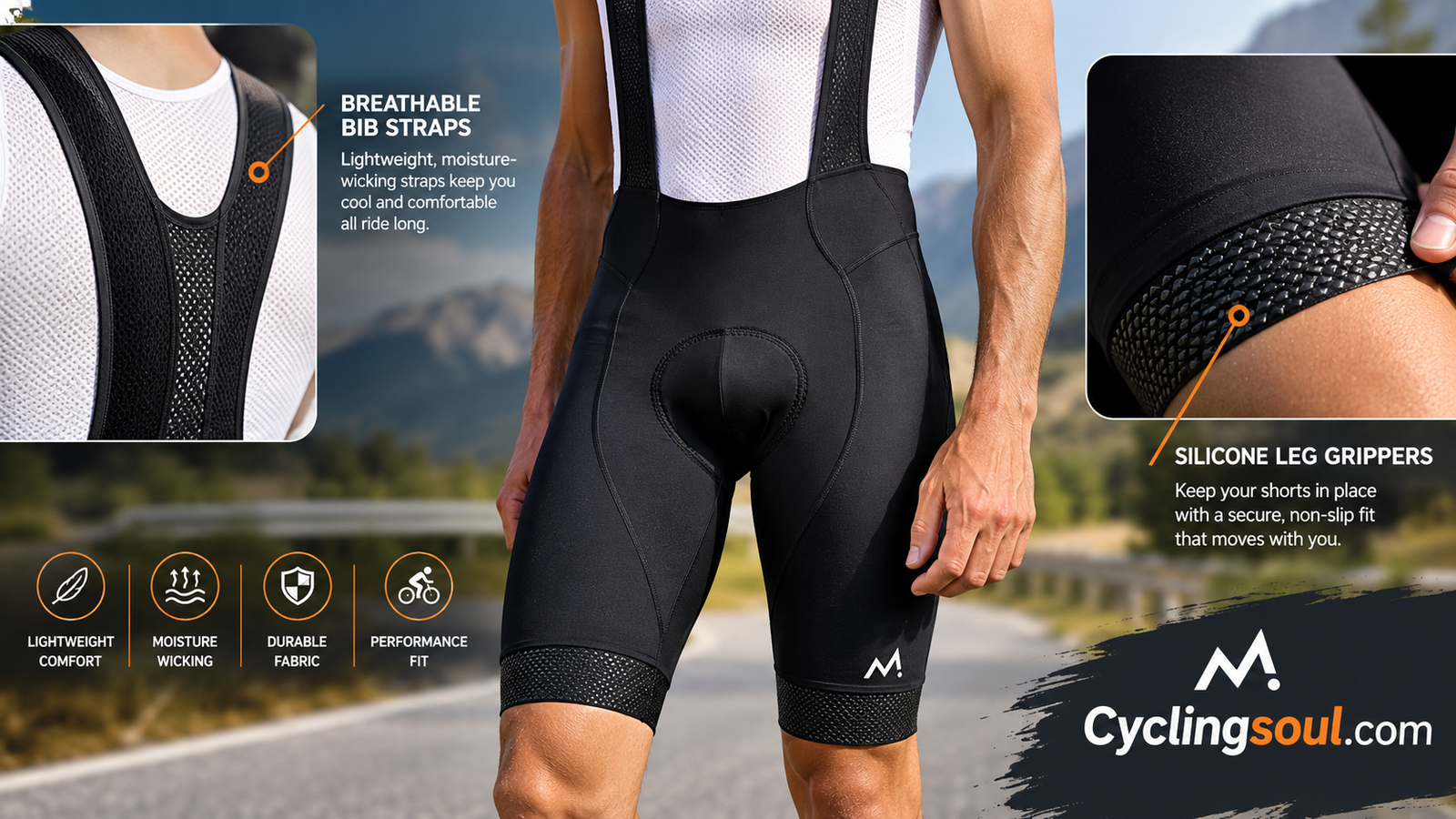
Quick Comparison: Our Top Picks
All fourteen bib shorts in this guide, side by side. The ranking reflects how well each pair balances chamois quality, strap comfort, fabric performance and durability for the rider it’s aimed at — not how expensive it is. Every product links to its exact listing.
| # | Image | Product | Key Specs | Verdict | Check Price |
|---|---|---|---|---|---|
| 1Top Pick |  |
GOREWEAR C5 Cycling Bib ShortsBest Overall |
|
The do-everything bib that gets long rides right. | Check Price on Amazon |
| 2 |  |
Castelli Entrata Bib ShortsBest Premium Value |
|
Heritage Italian fit without the top-tier price. | Check Price on Amazon |
| 3 |  |
PEARL iZUMi Attack Bib ShortsBest for Training |
|
Built for the weekly miles that actually build fitness. | Check Price on Amazon |
| 4 |  |
baleaf Men’s 4D Padded Cycling Bib ShortsBest Budget Bib |
|
Real bib comfort at a price that invites a second pair. | Check Price on Amazon |
| 5 |  |
Przewalski Men’s 3D Padded Cycling Bib ShortsBest Value Entry |
|
The smartest first bib for riders making the switch. | Check Price on Amazon |
| 6 |  |
CEROTIPOLAR Men’s 4D MaxCool Cycling Bib ShortsBest for Hot Weather |
|
Keeps things airy when the temperature and effort climb. | Check Price on Amazon |
| 7 |  |
LAMEDA Women’s Padded Cycling Bib ShortsBest Women’s Bib |
|
A proper women’s bib without the premium-brand price. | Check Price on Amazon |
| 8 | |
Castelli Competizione Bib ShortsBest for Racing |
|
Fast, supportive and built for riders who pin numbers on. | Check Price on Amazon |
| 9 |  |
PEARL iZUMi PRO Cycling Bib ShortsBest High-Performance |
|
When you want the brand’s best thinking under you. | Check Price on Amazon |
| 10 |  |
GOREWEAR C7 Racing Bib ShortsBest Race Fit |
|
Precision fit for riders who live in an aero tuck. | Check Price on Amazon |
| 11 |  |
GOREWEAR Spinshift Bib ShortsBest Comfort-Focused |
|
Easy-going comfort for riders who ride for the joy. | Check Price on Amazon |
| 12 |  |
Santic Men’s 4D Padded Cycling Bib ShortsBest Mid-Range |
|
A balanced step up that suits road and mixed riding. | Check Price on Amazon |
| 13 |  |
Bikewa 3D Padded Cycling BibBest First Bib |
|
The gentle, affordable introduction to riding in bibs. | Check Price on Amazon |
| 14 |  |
Canari Men’s Cycling Bib ShortsBest No-Fuss Starter |
|
Everything essential, nothing fussy — a reliable first pair. | Check Price on Amazon |
Ready to try your first pair of bibs?
Compare fit notes and current prices across the range.
Check Cycling Bibs on AmazonHow to Choose Cycling Bibs
Choosing bib shorts is easier than it looks, because there are only five things that matter: the chamois, the fit, the fabric, the straps, and how those four elements match the riding you actually do. Everything else — branding, colourways, “pro-level” claims — is decoration.
Start with how you ride
Before comparing anything, get honest about your riding. How long are your typical rides? How often do you ride each week? Do you ride in an aggressive, low position or a more upright one? Do you care about racing, or are you riding for fitness, adventure and the café stop? These questions determine where your budget should go far more than any spec sheet does.
If most of your rides are under an hour and you’re still deciding whether bibs are for you, an entry-level pair will teach you almost everything a premium pair would. If you routinely ride three hours or more, the chamois and the strap comfort deserve your money. If you’re training for something specific — building threshold, following a structured plan — durability and pad stability become critical because you’ll be wearing them constantly.
The five checks that separate good bibs from great ones
- Chamois first. A shaped, multi-density pad that matches your anatomy and your ride length. This is the component you feel, and the one worth paying for.
- Fit second. Bibs should feel firm and supportive with no bunching, no digging straps and no movement when you’re in a riding position.
- Straps third. The best straps are wide, soft and forgettable. If you notice them after an hour, they’re wrong.
- Fabric fourth. A four-way stretch knit with good recovery that wicks sweat and holds its shape over time.
- Details last. Leg grippers that hold without pinching, flat seams near the pad, and construction that survives regular washing.
Where to spend and where to save
Spend on the chamois and the fit. Those two things decide whether you finish a ride smiling, and they’re the hardest parts of the garment to get right. Save on graphics, exotic fabric claims that don’t translate into felt comfort, and features you won’t use. A thoughtfully designed mid-price bib will beat a poorly cut premium one every single time.
It’s also worth remembering that bibs are part of a system. A saddle that suits your sit bones, properly fitted cycling shoes so your feet stay stable, and thin technical cycling socks all change how the whole package feels. For a complete wardrobe view, see our guide to what to wear cycling.
A quick buying checklist
Multi-density chamois shaped for your anatomy · snug, supportive fit · wide soft straps that don’t dig · four-way stretch knit with good recovery · flat seams and gentle leg grippers · a design matched to your ride length and position.
Compare bib shorts at every price
Filter by pad type, strap style and fit.
Shop Cycling Bibs on AmazonChamois Pad Types and Thickness
The chamois — the padded insert stitched into the seat of the bib — is the most important component in any cycling garment. Straps hold it in place; everything else is packaging. Understand the pad and you understand the product.
What a chamois actually does
A modern chamois performs three jobs at once. It cushions the sit bones against the saddle, spreading pressure so no single point takes the whole load. It manages moisture, pulling sweat away from skin so you’re not sitting in a damp patch for three hours. And it reduces friction, giving skin a smooth surface to move against instead of letting fabric rub raw. That last job is exactly why the pad is designed to sit directly against the skin — a point we return to later.
The main pad constructions
- Single-density foam. One uniform layer of foam. Light, inexpensive and perfectly fine for short rides or a first pair of bibs.
- Multi-density foam (the “3D” and “4D” language you see everywhere). Zones of foam with different thicknesses and firmness — more cushioning under the sit bones, thinner and more flexible at the edges so the pad doesn’t feel like a nappy. These labels come straight from the product names and describe this kind of shaped, zoned construction.
- Gel-infused pads. Gel sections combined with foam to damp vibration and road buzz. Popular with riders on rougher surfaces and those who feel every crack in the tarmac.
- Perforated and channelled pads. Ventilation holes or a central relief channel that reduce heat build-up and soft-tissue pressure. Worth prioritising if you ride in heat or struggle with numbness.
Thickness: more is not automatically better
Thicker pads feel impressive in the living room and can be a mistake on the bike. Excess bulk creates pressure at the edges, holds more sweat and can push you forward off the sweet spot of the saddle. What matters is where the thickness sits and how smoothly it tapers. A well-shaped moderate pad that matches your sit bones will outperform a thick one that doesn’t, every time.
As a rough guide: short rides tolerate simpler pads; long rides reward zoned, multi-density construction with a relief channel; riders on rough surfaces benefit from vibration-damping designs. Rider position matters too. If you sit relatively upright, you may want a pad with more rear coverage, because more of your weight lands behind the sit bones. An aggressive, forward-leaning position concentrates pressure further forward.
Gender-specific padding
Men’s and women’s chamois are shaped differently because pelvic anatomy differs. Women’s pads are generally wider at the rear and shorter front-to-back with pressure relief placed accordingly; men’s pads tend to be narrower and longer. Choosing the shape that matches your anatomy is one of the cheapest comfort upgrades available — see our guide to the best women’s cycling shorts for more detail on fit and pad shape.
How to judge a pad before committing
Wear the bibs for a ride at least as long as your normal outing, on your actual saddle. Check for pressure points at the pad edges and note whether you can feel the stitching where the chamois is attached. The right pad disappears within the first ten minutes.
It’s worth appreciating how much work the pad does. Cycling is famously kind to joints compared with impact sports — see our cycling vs running comparison — but “low impact” describes your knees, not your soft tissue. The chamois is genuinely protective equipment down there.
Shop bibs by pad construction
Compare 3D, 4D and gel-padded designs side by side.
See Padded Bibs on AmazonFit and Sizing Guide
Bibs are supposed to feel strange the first time you put them on. Standing in front of a mirror, you’ll think they’re too tight and too long. On the bike, everything changes: the straps relax over your shoulders, the fabric settles, and the chamois moves into exactly the right place. Judging bibs standing up is like judging a wetsuit on land.
Snug is correct — tight is not
A properly fitted pair of bibs feels firm around the hips and thighs with no loose fabric anywhere, and the straps should rest on your shoulders without pulling or leaving deep marks. If you feel compression without pressure points, you’ve got it right. If the straps dig, the leg grippers pinch, or your stomach feels squeezed while you’re riding, the size or the cut is wrong.
How to measure yourself properly
- Measure your natural waist at the narrowest point, tape relaxed.
- Measure your hips at the widest point of the seat — this is the number that matters most for bib sizing.
- Measure your height and weight and compare all three against the brand’s own chart. Bib sizing varies noticeably between brands and is rarely the same as your jeans size.
- Consider torso length. Taller riders need more strap length; riders with longer torsos may find some bibs pull at the shoulders even when the hips fit.
The four fit failure points
- Straps that dig or roll. Usually a sign the bib is too small overall or the strap is narrow and elasticated rather than wide and soft.
- Chamois migration. If the pad slides during the ride, the bib is too large or the cut is wrong for your build.
- Leg grippers that bite. A good gripper holds gently across a wide band. Pinching means size up or choose a different gripper design.
- Bunching at the hip crease. Fabric folds here mean the bib is too long in the body or too large in the hip.
Riding position changes the fit
Performance bibs are often cut for a forward-leaning position. If you ride more upright — on a hybrid, a commuter or a touring setup — a race-cut bib may feel short at the front and pull on the straps. Comfort-oriented bibs with a more relaxed cut suit those riders better. Fit also interacts with the rest of your setup: a saddle that pushes you out of position creates discomfort that travels up the chain, which is why riders with joint concerns should read our guide on whether cycling is good for your knees.
And if you’ve ever wondered whether all that pedalling shapes your backside as much as it feels like it should, the answer is genuinely interesting — see our explainer on whether cycling builds your glutes. Good-fitting bibs let you put the work in comfortably, which is the whole point.
Between sizes?
For long-distance riding, size for comfort over compression. A slightly roomier bib that stays in place beats a race-tight bib that creates pressure points at hour three.
Find your size across brands
Compare fit notes and size charts before you order.
Browse Cycling Bibs on AmazonFabric and Compression
If the chamois is the engine of a bib, the fabric is the chassis. It holds everything in place, manages heat and sweat, and determines how the garment feels after fifty washes. Almost all performance bibs use a blend of polyester or nylon with elastane, but the ratio, the knit and the finishing make a world of difference.
What the main fibres do
- Polyester is the workhorse: durable, quick-drying and excellent at wicking moisture away from skin.
- Nylon feels smoother and tougher, and resists abrasion well — useful for riders who are hard on kit.
- Elastane (spandex) delivers stretch and, crucially, recovery. Cheap fabric stretches out; good fabric springs back.
Compression: what it does and doesn’t do
Compression in cycling kit serves three practical purposes. It holds muscles steady, reducing the small oscillations that add up over thousands of pedal strokes. It keeps the chamois pressed firmly in position instead of letting it float. And it improves the aerodynamic profile of the leg by keeping fabric smooth against skin. What it doesn’t do is turn you into a stronger rider — compression supports the work you’re already doing.
Levels of compression vary enormously. Race-oriented bibs feel like a firm handshake; endurance bibs feel like a supportive hug. Neither is objectively better. Riders who dislike a restrictive feel should choose a softer knit and accept a small trade-off in muscle support; riders chasing performance usually prefer the firmer option once they’ve adapted to it.
Moisture management and breathability
Wicking pulls sweat across the fabric and spreads it out so it evaporates quickly; breathability is how easily heat escapes through the knit. They’re different properties and both matter. A very open knit breathes beautifully but may not wick as effectively; a dense compression knit wicks superbly and can feel warmer. The best fabrics balance the two, often with more open panels in high-heat zones.
Finishing details worth paying for
- Flatlock or bonded seams that sit flush against skin, especially anywhere near the chamois.
- Wide, gentle leg grippers — silicone-free woven bands or soft silicone prints that hold without restricting circulation.
- Odour-control treatments that help kit stay fresher between washes, though they never replace proper washing.
- Sun-protective fabric for riders who spend long hours in exposed conditions.
Fabric weight is personal preference as much as technical choice. Lighter knits feel faster and cooler; denser knits feel more supportive and tend to last longer. And if your riding has a fitness goal attached, the fabric matters less than consistency — the hours are what count, whether you’re focused on general conditioning or on cycling as cardio.
The stretch test
Pinch the fabric at the thigh and pull. Good bibs resist slightly and snap back instantly. Fabric that stays stretched — or goes sheer when you do — is telling you everything you need to know.
Shop supportive, breathable bibs
Look for four-way stretch knits and flatlock seams.
Check Fabric Options on AmazonBib Strap Styles: Standard vs. Mesh vs. Cargo
Straps are what make a bib a bib, and they’re the feature most riders notice first — usually because they’ve tried a pair with bad ones. Good straps vanish. Bad straps haunt you for the entire ride. Here’s how the main designs compare.
| Strap Type | Standard Elastic | Wide Mesh | Cargo / Pocket |
|---|---|---|---|
| Feel | Firm, traditional hold; familiar to most riders. | Soft, breathable, spreads pressure over the shoulder. | Mesh or elastic with added storage panels. |
| Breathability | Moderate — depends on the knit used. | Excellent; the coolest option in hot weather. | Good, though pockets add some coverage. |
| Storage | None. | Usually none. | Extra pockets for phone, food or radio. |
| Best for | All-round riding, race-cut bibs. | Hot weather and long-distance comfort. | Gravel, endurance and self-supported riding. |
Standard elastic straps
The classic design: two elastic bands running over each shoulder, usually stitched to the front and back of the bib. Done well, this is still an excellent system — narrow enough to sit under a jersey unnoticed and firm enough to keep the shorts anchored. Done badly, it rolls, digs and leaves marks. The tell is the width and the edge finish: flat, wide straps distribute pressure; narrow round elastic concentrates it.
Wide mesh straps
The current favourite for endurance bibs. Broad, soft mesh panels spread load across a larger area of the shoulder and let heat escape, which is a genuine advantage on long summer rides. They also tend to sit better across different shoulder shapes, making them a safer bet for riders who’ve struggled with strap comfort before.
Cargo and pocket straps
A newer approach aimed at gravel and endurance riders: strap panels with integrated pockets that sit against your chest or upper back under the jersey. They turn dead space into usable storage for gels, a phone or a radio, and they’re a genuine advantage on self-supported rides where you’re carrying food for hours. If that’s your kind of riding, pair them with the right fuel — see our pick of the best energy gels for cycling.
Strap comfort test
Put the bibs on and sit in a riding position for five minutes. If you can still feel the straps on your shoulders, try a different design before blaming your body. Strap comfort is a construction issue, not a rider issue.
Compare strap styles
Find mesh, elastic and cargo-strap bibs in one search.
Shop Bib Strap Styles on AmazonBib Shorts vs. Regular Shorts
Every rider eventually hits this crossroads. Regular padded shorts are simpler and cheaper; bib shorts are more comfortable and more expensive. Both work. Here’s the honest comparison so you can pick the right tool — or, as most experienced riders end up doing, own both.
| Feature | Regular Shorts | Bib Shorts |
|---|---|---|
| Waist comfort | Elasticated or wide waistband; can dig in when riding low. | No waistband at all; straps hold everything in place. |
| Pad stability | Good, though it can drift on very long rides. | Excellent — the chamois stays precisely positioned. |
| Convenience | Easy on and off; simple nature breaks. | Straps must be managed; slower at stops. |
| Layering | Works under baggy or casual outer shorts. | Straps complicate layering; better as a standalone. |
| Cost | Lower entry price for equivalent padding. | More fabric and construction; higher price. |
| Best for | Commuting, short rides, mixed use, beginners. | Long rides, frequent riding, comfort priorities. |
The real advantage of bibs
It isn’t the padding — many shorts use exactly the same chamois. It’s the stability. Because the straps anchor the garment at the shoulders, the chamois can’t migrate and the fabric can’t sag. That single change eliminates the two most common sources of chafing: fabric movement and pad misplacement. On short rides you won’t notice. On long ones it’s the difference between thinking about the scenery and thinking about your seat.
The real advantage of shorts
Convenience and versatility. Shorts go on and off quickly, work under loose outer layers, and cost less for equivalent padding. For commuting, errand runs, indoor training and casual rides, they’re simply more practical — and they’re the reason we recommend keeping at least one good pair alongside your bibs. Our full guide to the best cycling shorts covers the strongest options.
So which should you buy?
If you ride mostly under an hour, commute, or want kit that doubles as general activewear, buy shorts first. If you ride regularly, ride long, or you’ve fought with waistband discomfort and pad movement, go straight to bibs — you’ll wonder why you waited. And if budget allows, own both: bibs for the big days, shorts for everything else.
Compare bibs and shorts side by side
See both styles in one search before you decide.
Compare Bibs and ShortsBest Men’s Cycling Bibs for Every Budget
These six pairs represent the smart money in men’s bib shorts: value-focused all-rounders that deliver genuine bib comfort without premium-brand pricing. If you’re buying your first or second pair, start here.
| # | Image | Product | Key Specs | Check Price |
|---|---|---|---|---|
| 1 | |
baleaf Men’s 4D Padded Bib ShortsBest Budget |
|
Check Price |
| 2 | |
Przewalski Men’s 3D Padded Bib ShortsBest Value Entry |
|
Check Price |
| 3 | |
CEROTIPOLAR 4D MaxCool Bib ShortsBest for Hot Weather |
|
Check Price |
| 4 | |
Santic Men’s 4D Padded Bib ShortsBest Mid-Range |
|
Check Price |
| 5 | |
Bikewa 3D Padded Cycling BibBest First Bib |
|
Check Price |
| 6 | |
Canari Men’s Cycling Bib ShortsBest No-Fuss Starter |
|
Check Price |
baleaf Men’s 4D Padded Cycling Bib Shorts
The pair that proves you don’t need to spend big to ride in bibs.
baleaf has quietly become the default recommendation for riders who want proper cycling comfort at a sensible price, and these bibs explain why. The 4D-shaped chamois gives you zoned cushioning where the sit bones land and a thinner, more flexible edge elsewhere, so the pad supports without feeling bulky. The straps are soft and breathable enough to disappear under a jersey, and the knit holds its shape wash after wash.
What makes these such a good entry point is that nothing feels like a compromise you’ll regret. The leg grippers hold without pinching, the seams are flat where it matters, and the overall cut is supportive without being aggressively race-tight. For riders still working out what they want from a bib, this is the safest place to learn.
Key Features
- 4D multi-density chamois shaped to reduce pressure and friction
- Soft, breathable bib straps that sit comfortably under a jersey
- Wicking, quick-drying stretch knit with good recovery
- Leg grippers that hold position without restricting circulation
Pros
- Outstanding comfort for the money
- Straps stay comfortable on longer rides
- Fit works across a wide range of builds
Cons
- Minimal storage features
- Brand-specific sizing — check the chart
Who it’s best for: Riders buying their first bibs, and experienced cyclists who want an inexpensive second pair for the rotation.
Przewalski Men’s 3D Padded Cycling Bib Shorts
A genuine step up from shorts, at a price that takes the risk out of switching.
Moving from padded shorts to bibs is the upgrade most riders delay far too long, usually because they’re not sure it’ll be worth it. The Przewalski makes that decision easy. Its 3D shaped chamois is a real step up from the flat foam pads in budget shorts, contouring to the body rather than sitting on top of it, and the stretch construction keeps the whole package anchored through the pedal stroke.
It’s a straightforward, unfussy design that does the fundamentals properly: comfortable straps, grippers that stay put, and a cut that works for both road riding and general fitness use. Nothing about it is trying to be a race bib, which is exactly why it works so well as a first pair.
Key Features
- 3D contoured chamois with cushioning concentrated under the sit bones
- Stretch bib construction that holds position through the pedal stroke
- Grippy leg hems that prevent ride-up without pinching
- Versatile cut suited to road, fitness and mixed riding
Pros
- Approachable price for a first bib
- Forgiving fit across different body types
- Comfortable enough for mid-length rides
Cons
- Pad is best suited to shorter and mid-length outings
- Fewer refinements than premium options
Who it’s best for: Riders making the move from padded shorts to bibs who want to keep the investment sensible.
CEROTIPOLAR Men’s 4D MaxCool Cycling Bib Shorts
Built around airflow for riders who spend their summers melting.
Heat is the great enemy of long rides, and most of it builds up exactly where you don’t want it. CEROTIPOLAR’s MaxCool design attacks the problem from both ends: a 4D chamois with ventilation built into the pad, and a lightweight knit that moves air rather than trapping it. On hot days that combination is genuinely noticeable.
The pad itself is zoned like the better multi-density designs, with the cushioning where the sit bones need it and a lower profile at the edges. Because the whole bib is built to be light, it also feels less restrictive in high effort — useful whether you’re climbing in the heat or grinding through a humid commute.
Key Features
- 4D chamois with ventilation designed to reduce heat and moisture build-up
- Lightweight, highly breathable knit for warm-weather riding
- Zoned cushioning that stays comfortable on longer efforts
- Low-bulk construction that feels free on the bike
Pros
- Genuinely cooler in hot conditions
- Comfortable pad that suits longer rides
- Light, unrestricted feel when working hard
Cons
- Lightweight fabric rewards careful washing
- Less warm-weather insulation in cooler months
Who it’s best for: Riders in hot climates, summer event riders and anyone who overheats easily on long efforts.
Santic Men’s 4D Padded Cycling Bib Shorts
The balanced middle ground — noticeably nicer without jumping to premium pricing.
There’s a sweet spot in cycling kit where you stop paying for the brand and start paying for the refinement, and Santic’s 4D bib sits squarely in it. The chamois is properly zoned for varied ride lengths, the knit feels more supportive than entry-level options, and the cut is versatile enough for road riding, fitness sessions and mixed-surface days.
What you notice over cheaper bibs is the consistency. Everything holds its place for the whole ride, the grippers distribute pressure evenly, and the straps stay comfortable even when you’re riding hard. It’s the kind of bib that quietly makes you ride more because you stop thinking about kit.
Key Features
- 4D zoned chamois designed for varied ride lengths
- Supportive stretch knit with a firm, confidence-inspiring feel
- Versatile cut suited to road and general performance riding
- Evenly loaded leg grippers for stable all-ride hold
Pros
- Noticeable step up in stability and support
- Comfortable across a wide range of ride lengths
- Strong quality-to-price ratio
Cons
- Supportive fit feels snugger than relaxed alternatives
- Minimal storage options
Who it’s best for: Regular riders ready to step up from entry-level bibs without moving to premium pricing.
Bikewa 3D Padded Cycling Bib
A gentle, affordable introduction to life without a waistband.
Some riders want to try bibs without a big commitment — maybe they’re not sure about the straps, or they ride infrequently enough that premium kit feels unjustified. The Bikewa 3D is perfect for exactly that. It’s comfortable, simple and inexpensive, with a contoured pad that does the essential job of putting proper cushioning between you and the saddle.
The design is deliberately unfussy: clean lines, a comfortable fit, and nothing that needs explaining. For newer riders especially, that simplicity is a feature. You put them on, you ride, you forget about them — which is the highest compliment you can pay a pair of bibs.
Key Features
- 3D contoured chamois for targeted sit-bone cushioning
- Comfort-first fit that’s forgiving on sizing
- Simple, clean design that works with any jersey
- Straightforward construction that’s easy to care for
Pros
- Very accessible way to try bibs
- Comfortable for everyday riding
- Easy to live with and wash
Cons
- Less technical than performance bibs
- Pad is best for moderate ride lengths
Who it’s best for: Newer riders and occasional cyclists buying their first bib at a comfortable price.
Canari Men’s Cycling Bib Shorts
Reliable, durable and refreshingly uninterested in hype.
Canari has been making cycling apparel for decades, and the brand’s philosophy has always been to do the fundamentals well without charging for decoration. These bibs are a perfect example: dependable padding, durable everyday fabric and a clean build that works with whatever jersey you already own.
They’re an ideal choice for riders replacing worn-out kit without agonising over specifications, or for building a two- or three-pair rotation so you’re never scrambling for clean bibs mid-week. Reliability is the headline feature here, and reliability is seriously underrated in cycling apparel.
Key Features
- Straightforward padded construction with dependable cushioning
- Durable everyday knit built for repeat wear and washing
- Clean, understated styling with no unnecessary extras
- Practical fit suited to a wide range of riders
Pros
- Tough enough for regular riding
- Simple to choose and live with
- Great for building a kit rotation
Cons
- Fewer comfort features than premium bibs
- Basic design without technical extras
Who it’s best for: Practical riders who want a dependable bib without overthinking the purchase.
Compare the full value range
See every budget and mid-range bib in this guide.
Shop Value Cycling BibsBest Premium and Performance Bib Shorts
Premium bibs are where decades of race experience, better foam and more careful pattern-cutting show up in felt comfort. These seven come from established performance brands and are aimed at riders who spend serious time in the saddle and want the details done properly.
| # | Image | Product | Key Specs | Check Price |
|---|---|---|---|---|
| 1 | |
GOREWEAR C5 Cycling Bib ShortsBest Overall |
|
Check Price |
| 2 | |
Castelli Entrata Bib ShortsBest Premium Value |
|
Check Price |
| 3 | |
PEARL iZUMi Attack Bib ShortsBest for Training |
|
Check Price |
| 4 | |
Castelli Competizione Bib ShortsBest for Racing |
|
Check Price |
| 5 | |
GOREWEAR Spinshift Bib ShortsBest Comfort-Focused |
|
Check Price |
GOREWEAR C5 Cycling Bib Shorts
Our top pick overall — the bib that gets the whole equation right.
If we could only recommend one pair of bib shorts, it would be this one. The C5 is built around the idea that a bib should work for everything — training rides, long weekend days, the odd event — without leaning too far toward race minimalism or plush comfort. The multi-density chamois is tuned for sustained riding, the straps are supportive without being intrusive, and the knit sits in the sweet spot between compression and ease.
What separates it from cheaper bibs is the consistency. The chamois stays exactly where it’s positioned from the first kilometre to the last; the fabric holds its shape over repeated washes; and the fit flatters a wide range of builds without being unforgiving. It’s the bib you buy once and stop thinking about.
Key Features
- Multi-density chamois designed for sustained comfort over long rides
- Supportive bib straps that stay comfortable in and out of the drops
- Performance knit balancing compression, wicking and breathability
- Durable finishing built for regular use and washing
Pros
- Excellent across short training and long endurance rides
- Straps and pad stay put all day
- Built to last through heavy use
Cons
- Costs more than entry-level alternatives
- Performance fit demands accurate sizing
Who it’s best for: Serious riders who want one premium pair that handles everything and doesn’t need replacing next season.
Castelli Entrata Bib Shorts
Heritage performance fit at the sensible end of the range.
Castelli’s name carries real weight in cycling, and the Entrata is where that experience becomes accessible. The cut is unmistakably performance-oriented — close, clean and shaped around a riding position rather than a standing one — while the chamois delivers the kind of consistent comfort the brand built its reputation on.
What you’re paying for here is refinement rather than exotic materials: seams that sit exactly where they should, grippers that hold cleanly, and a pattern that stays composed as you move between the hoods and the drops. For riders who want the feel of serious cycling kit without the very top-tier price, this is the one to look at.
Key Features
- Proven brand chamois designed around long-standing race experience
- Clean, performance-oriented cut shaped for a riding position
- Refined leg grippers that hold without pinching
- Quality finishing that endures regular use
Pros
- Genuine performance-bib feel
- Excellent seam placement and finishing
- Strong value within premium brands
Cons
- Race-derived fit is snug — size carefully
- Not designed for casual, upright riding
Who it’s best for: Road riders who want authentic performance kit without paying flagship prices.
PEARL iZUMi Attack Bib Shorts
Built for the weekly miles that actually make you fitter.
Training bibs have a different job from race bibs. They need to be comfortable on every session, durable enough to be worn constantly, and unfussy enough that you never think about them. The Attack is designed exactly around that remit, with an endurance-tuned pad and a balanced level of compression that supports without feeling restrictive.
PEARL iZUMi’s experience shows in the details — seam placement that avoids high-friction zones, a pad that sits correctly from the first mile, and fabric that keeps its shape through a heavy washing schedule. If you’re following a structured plan and putting in real volume, this is the kind of bib that quietly enables it.
Key Features
- Endurance-tuned chamois designed for repeated long sessions
- Balanced compression that supports without restricting
- Durable knit that handles frequent use and washing
- Refined seam placement to minimise friction
Pros
- Excellent for high-mileage training blocks
- Durable enough to be worn several times a week
- Comfort that stays consistent over months
Cons
- Less minimal than dedicated race bibs
- Priced above entry-level options
Who it’s best for: Riders training consistently — whether you’re building toward an event or following a plan to improve your FTP.
PEARL iZUMi PRO Cycling Bib Shorts
When you want the brand’s best thinking underneath you.
The PRO is the expression of everything the brand has learned about keeping riders comfortable at speed. The pad platform is its most refined, the fit is deliberately precise, and every detail — from strap width to gripper tension — has been tuned rather than assembled. It’s a bib for riders who notice the difference.
That precision does ask something in return: accurate sizing and a willingness to wear kit that fits like a second skin. Get it right and the reward is a bib that genuinely disappears, leaving you free to think about the effort instead of the equipment.
Key Features
- Top-tier chamois platform designed for sustained high effort
- Refined compressive fit shaped around a performance position
- Premium finishing throughout the straps, seams and grippers
- Construction designed to hold its characteristics over time
Pros
- Exceptional comfort under sustained effort
- Fine, precise fit that stays composed
- Top-level finishing and durability
Cons
- Premium pricing
- Demands careful sizing
Who it’s best for: Enthusiast and competitive riders who want the best a performance brand offers and ride accordingly.
GOREWEAR C7 Racing Bib Shorts
Precision-cut for riders who spend their lives in an aero tuck.
Race bibs are pattern-cut for a position most people only hold on a bike: low, forward and stretched out. The C7 is built for exactly that, with a cut that stays smooth and composed when you’re in the drops and a chamois tuned for aggressive riding. On the road it feels exceptionally composed.
The design is deliberately minimal — fewer panels, cleaner lines, less fabric where it isn’t needed. That simplicity is the point. Everything is there to support speed and stability, and nothing is there to look impressive on a hanger.
Key Features
- Race-position cut that stays smooth in an aggressive riding posture
- Multi-density chamois tuned for high-intensity efforts
- Minimal panel construction for clean, low-drag lines
- Stable, precise fit that holds under hard efforts
Pros
- Superb composure in a race position
- Clean, minimal construction
- Supportive under hard efforts
Cons
- Race fit is unforgiving of sizing mistakes
- Less comfortable for upright, casual riding
Who it’s best for: Racing riders and fast group-ride regulars who live in an aggressive position.
GOREWEAR Spinshift Bib Shorts
Easy-going comfort for riders who ride for the joy of it.
Not every ride is a training session. The Spinshift is built for the rides that are their own reward — the long loop with friends, the exploratory Sunday, the spin that turns into an afternoon. The pad leans comfortably cushioned rather than firm and racey, and the straps are soft enough to forget about entirely.
That comfort bias doesn’t mean it’s basic. The construction is still precise and the fabric still manages sweat properly; it simply prioritises how the bib feels over how it might rank in a wind tunnel. For riders who measure success in enjoyment rather than watts, it’s a genuinely lovely thing to wear.
Key Features
- Comfort-biased chamois designed for relaxed, longer rides
- Soft-touch straps that stay comfortable all day
- Versatile construction suited to varied riding
- Supportive fabric with a gentle rather than aggressive feel
Pros
- Immediate, out-of-the-package comfort
- Great for long, unstructured rides
- Forgiving fit and feel
Cons
- Less race-oriented than performance siblings
- Softer feel won’t suit riders chasing maximum support
Who it’s best for: Recreational and endurance riders who prioritise comfort over outright performance.
Castelli Competizione Bib Shorts
Fast, supportive and built for riders who line up on start lines.
The Competizione sits in the racing end of the range, where every design decision is filtered through the question “does this help you go fast and stay comfortable doing it?” The chamois is tuned for high-intensity riding, the knit is compressive and smooth-surfaced, and the panel layout is kept deliberately clean.
It’s the kind of bib that rewards riders who ride hard and often. The compression supports the muscles through sustained efforts, the pad stays composed in an aggressive position, and the whole garment holds together beautifully when you’re deep in the red. If you race or ride with people who do, this belongs in your drawer.
Key Features
- Race-tuned chamois designed for high-intensity efforts
- Compressive, smooth-panel construction for a clean profile
- Stable fit that holds in aggressive riding positions
- Performance finishing built for repeated hard use
Pros
- Excellent support under hard efforts
- Clean, fast-feeling construction
- Composed fit in race positions
Cons
- Race fit is snug — size carefully
- Less plush than comfort-focused bibs
Who it’s best for: Racers and fast riders who want supportive, race-ready bibs for hard efforts.
Riding at this level usually means training with intent. If you’re building a structured plan — intervals, threshold work, periodised blocks — our guide on how to train for cycling lays out the approach that makes good kit genuinely worth owning.
Compare premium performance bibs
Find the fit and pad that match how you ride.
Shop Performance Bibs on AmazonBest Women’s Cycling Bib Shorts
Women’s bibs are not men’s bibs in different colours. The chamois shape, the hip-to-waist ratio, the rise and the strap geometry are all designed around different anatomy, and choosing a properly women’s-specific pair is one of the most effective comfort decisions a female rider can make. Here’s our top pick from this guide’s selection.
LAMEDA Women’s Padded Cycling Bib Shorts
A properly women’s-shaped bib without the premium-brand price.
Finding a women’s bib that’s genuinely designed for women — rather than adapted from a men’s pattern — can be harder than it should be. The LAMEDA gets the fundamentals right: a chamois shaped for wider pelvic anatomy, straps that sit comfortably without pulling, and a supportive knit through the hip and thigh.
What riders appreciate most is the stability. Because the bib is anchored at the shoulders, the pad stays positioned correctly through the whole ride — which is exactly why so many women who switch to bibs say they can’t go back to a waistband. Add a fit that flatters rather than fights, and you have an excellent first or second pair.
Key Features
- Women’s-shaped chamois with anatomically placed cushioning
- Comfortable bib straps designed to sit well on female shoulders
- Supportive stretch knit through the hip and thigh
- Stable design that keeps the pad positioned all ride
Pros
- Genuinely women’s-specific pad shape
- Comfortable straps on longer rides
- Accessible price for a proper bib
Cons
- Check the brand’s size chart carefully
- Fewer technical extras than premium women’s bibs
Who it’s best for: Women moving from padded shorts to bibs, and riders who want women’s-specific comfort at a sensible price.
For a much wider selection of women’s-specific options — including shorts, bibs and different lengths — we have a complete guide to the best women’s cycling shorts that goes deeper on fit, pad shape and body-type considerations.
Shop women’s bibs and shorts
Compare pad shapes, straps and lengths side by side.
Shop Women’s Cycling BibsDo Bib Shorts Have Pee Break Options?
This is the question every new bib rider wonders and few ask out loud. The honest answer is that bibs do make bathroom stops less convenient than regular shorts — but how much less convenient depends on the design, your physiology and a bit of technique. Here’s the full picture, handled practically.
Why bibs are trickier
The straps anchor the garment at the shoulders, which is precisely what makes it comfortable. It also means you can’t simply pull the shorts down. To remove a standard pair of bibs, the straps come off the shoulders and the whole garment comes down — fine at home, more complicated in a roadside lay-by, and genuinely awkward in a jersey and arm warmers.
The practical options
- Standard bibs, straps down. The classic method: helmet and glasses off, jersey up, straps down over the arms, then lower the bib. Slow but reliable. Practise it at home once and it becomes second nature.
- Drop-seat and accessible designs. Some bibs are specifically designed to be pulled down without removing the straps — often with stretchy straps or a cut that allows the seat to lower while the straps stay on the shoulders. If bathroom stops are a priority for you, this is the feature to shop for.
- Elastic, non-elasticated straps. Wider, stretchier mesh straps are much easier to pull down and off one shoulder than tight elastic, which makes a real practical difference.
- Women’s-specific drop-seat bibs. Many women’s bibs are designed around this exact problem, since bibs are proportionally more inconvenient for women. The LAMEDA above and the wider options in our women’s guide cover this ground.
Techniques that help
Wear a jersey you can pull up easily rather than a tight race top. If you layer, keep the base layer loose enough to move out of the way. On long group rides, plan stops so you’re not negotiating kit at the roadside in a hurry. And if you ride in situations where quick stops matter constantly — commuting, errands, family rides — bibs may genuinely be the wrong tool, and padded shorts or padded underwear will serve you better.
A note on hygiene
Whatever you wear against the saddle, wash it after every sweaty ride. Clean kit is the single most effective defence against saddle sores and irritation — more effective than any cream or powder.
One thing worth saying plainly: none of this affects what cycling does for your body. Whether you ride for health, fitness or simply to clear your head, the benefits are well established — our guide to why cycling is good for you covers the research. Comfortable kit just helps you ride more often.
Find bibs that work for your routine
Compare strap styles and accessible-fit designs.
Shop Practical Bib DesignsHow to Wash and Care for Cycling Bibs
Most bibs don’t die — they’re washed to death. The good news is that proper care is genuinely easy, takes almost no extra time, and dramatically extends the life of both the fabric and the chamois. Here’s the routine we follow.
After every ride: the immediate steps
- Get them out of your bag. Never leave damp bibs crumpled in a kit bag or laundry basket. Sweat degrades elastic and foam, and stale moisture is where odour bacteria thrive.
- Rinse if you can’t wash straight away. A quick cold rinse in the sink removes most of the salt and residue that shortens fabric life.
- Turn them inside out. The chamois and inner face collect the most residue, and washing inside out cleans exactly where it matters.
The washing routine
- Cold or lukewarm water only. Heat breaks down elastane and degrades pad foam.
- Gentle or delicate cycle. Short, slow, low-spin.
- Mild detergent, no fabric softener. Softener coats technical fibres and permanently ruins wicking performance.
- Wash with similar fabrics. Towels and denim produce lint and abrasion that shorten a bib’s life.
- Use a mesh laundry bag. It protects the straps from stretching and stops gripper silicone from snagging other garments.
Drying: the part everyone gets wrong
Always air dry. Hang by the straps or lay flat in shade, away from direct heat and radiators. A tumble dryer is the fastest way to destroy elastic, crisp the leg grippers and flatten a chamois — damage that can’t be reversed. If you ride daily, two or three pairs rotated between washes will always outlast one pair washed and hurriedly dried every night.
What never to do
- Don’t iron the fabric or the pad.
- Don’t bleach — it eats elastic and foam.
- Don’t dry clean.
- Don’t sit on rough surfaces in your best bibs; the outer fabric pills and tears long before the pad wears out.
Odour that won’t shift?
Soak the bibs in cold water with a specialist sports-fabric soak, then wash as normal. Avoid hot water to “kill the smell” — heat sets odour into the fibres instead of removing it.
Care applies to the rest of your kit too. Base layers, socks and pads all last longer with the same cold-wash, air-dry approach — and if you’re rebuilding a wardrobe from scratch, our guide to what to wear cycling covers the whole system by season and ride type.
Look after your kit properly
Find gentle sports detergents and mesh wash bags.
Shop Kit Care Products on AmazonHow Often Should You Replace Cycling Bibs?
There’s no expiry date stitched into the hem. Bibs wear out gradually, and because the change is slow, most riders adapt to deteriorating comfort without realising it. The trick is knowing the signs rather than counting months.
The five signs it’s time for a new pair
- The pad has lost its loft. Press it. If the foam feels flat and slow to rebound, it’s no longer absorbing pressure — you are.
- Chafing has returned. Rides that were comfortable suddenly producing hot spots usually means the pad structure or fabric has degraded.
- Straps have gone slack. Elastic that no longer holds means the bib moves, and movement means friction.
- Fabric has thinned or bagged out. Sheer panels, permanent stretch at the seat and heavy pilling are all end-of-life signals.
- Stitching has failed or the chamois has shifted. A pad that no longer sits correctly can’t do its job, and damaged seams are a chafing risk.
What determines how long they last
- Washing method. The single biggest factor — heat and tumble drying shorten life dramatically.
- Distance and frequency. Bibs worn several times a week for long rides age far faster than occasional-use pairs.
- Fit. Bibs that are too small are stretched beyond their design, and stretched elastic doesn’t recover.
- Build quality. Better foam, better knit and better grippers all degrade more gracefully.
- How you treat them off the bike. Sitting on rough concrete is a fast track to a hole in the seat panel.
How to make them last longer
Rotate at least two pairs so neither is worn on consecutive days — foam rebounds fully when given time. Follow the wash routine without shortcuts. Store them hung or laid flat rather than compressed in a bag. And keep an older or cheaper pair for indoor training and short commutes so your best bibs are reserved for the rides that justify them.
Think of bibs as consumable kit rather than a one-off purchase. Buy the best you can justify for your main pair, keep a rotation, and replace based on how the ride feels rather than on a calendar. And if you’re refreshing kit anyway, it’s a good moment to look at your contact points — fresh cycling socks and correctly fitted cycling shoes cost little and change a lot.
Build a rotation that lasts
Compare bibs at every price point and buy two.
Shop Cycling Bibs on AmazonFAQs
Are bib shorts really worth it over regular shorts?
For regular and long-distance riding, yes. The absence of a waistband and the strap-anchored chamois eliminate the two most common causes of discomfort: fabric movement and pad misplacement. For short, casual rides and commuting, regular padded shorts are perfectly good and more convenient.
Should bib shorts feel tight?
They should feel snug and supportive — firmer than regular clothing, never painful. Standing up, they may feel slightly restrictive; on the bike in a riding position, everything should relax into place. Pressure points, numbness or digging straps mean the size or cut is wrong.
Do you wear underwear under cycling bibs?
No. The chamois is designed to sit directly against skin — it manages moisture and friction, and an extra layer of underwear introduces seams and absorbency exactly where you don’t want them. Treat the pad as your underwear and wash it after every sweaty ride.
What’s the difference between 3D and 4D padding?
Both terms come from product naming and describe shaped, zoned chamois construction — 4D usually refers to a more complex multi-zone design with varied thickness across the pad. What matters in practice is where the cushioning sits and how smoothly it tapers, not the label on the listing.
How do I stop my bib straps from digging in?
First check the size — tight straps usually mean the bib is too small overall. If the size is right, choose wider, softer mesh straps rather than narrow elastic, and look for flat strap edges. Straps should disappear within minutes of riding; if they don’t, the design is wrong for your shoulders.
Can I use bib shorts for indoor training?
Absolutely, and many riders keep an older pair specifically for the turbo. Indoor riding produces more sweat and less airflow, so bibs that manage moisture well are especially valuable — just wash them promptly afterwards.
How many pairs of cycling bibs should I own?
Two is the practical minimum and three is comfortable. Rotation gives the foam time to recover between rides and means you’re never waiting for a pair to dry. Many riders keep one premium pair for long days and one or two value pairs for everything else.
Why do my bibs give me saddle sores?
Usually one of three things: the chamois isn’t positioned correctly, the fit is letting the pad move, or the kit isn’t being washed after sweaty rides. Check your saddle position too — sliding around on the saddle creates friction no pad can fix.
Are women’s bibs different from men’s?
Yes, and it matters. Women’s bibs use pads shaped for wider pelvic anatomy, different hip-to-waist proportions and strap geometry designed for female shoulders. Wearing a correctly gendered pad is one of the most effective comfort upgrades available.
Do compression bibs make you faster?
Not directly. Compression supports working muscles, keeps fabric smooth against skin and holds the chamois in place — all of which help you ride comfortably for longer. Real speed gains come from training, which is where a structured approach helps. See our guide on how to train for cycling.
How long should a pair of bib shorts last?
It depends entirely on how often you ride and how you wash them. Riders who wash cold, air dry and rotate pairs often get several seasons of heavy use; daily riders who tumble dry can wear a pair out far faster. Replace based on the signs, not a set timeframe.
What should I wear with bib shorts?
A wicking jersey, thin technical socks and properly fitted shoes cover most situations. Add a base layer and leg warmers in cooler weather, and a light shell plus enough food on longer rides. Our complete guide to what to wear cycling breaks it down by season and ride type.
Still deciding?
Browse bib shorts and compare options by fit and padding.
Browse Cycling Bibs on AmazonFinal Verdict: Which Cycling Bibs Should You Buy?
If you want one pair that suits almost every kind of riding, the GOREWEAR C5 is the easiest recommendation here — a properly zoned chamois, straps that stay comfortable all day and fabric that holds up to heavy use. Riders shopping at the sensible end of premium should look hard at the Castelli Entrata, which brings a genuine performance-bib feel without the flagship price.
On a budget, the baleaf Men’s 4D delivers real bib comfort at a price that makes owning two pairs realistic, while the Przewalski 3D is the smartest first bib for riders stepping up from padded shorts. Women should look at the LAMEDA, hot-weather riders at the CEROTIPOLAR MaxCool, and anyone training seriously at the PEARL iZUMi Attack.
Whatever you choose, remember the fundamentals: chamois first, fit second, straps third. Wear them against the skin, wash cold, air dry, and rotate at least two pairs. Do that and your bibs will disappear into the background of your riding — which is exactly what the best cycling kit should do.
Find your next pair of bib shorts
Compare prices across every option in this guide.
Check Cycling Bibs on AmazonYou May Also Like
More guides to help you ride further, faster and more comfortably.
Does Cycling Burn Belly Fat?
What actually happens to body fat when you ride regularly — and what the evidence says.
TrainingCycling for Weight Loss
A practical plan for using time in the saddle to reach your body composition goals.
NutritionHow Many Calories Does Cycling Burn?
Realistic numbers by ride type, intensity and duration, without the guesswork.
StrengthDoes Cycling Build Muscle?
Where cycling adds strength, where it doesn’t, and how to complement it off the bike.
ComparisonCycling vs Running
Calories, joint impact, fitness gains and convenience — which one suits you?
Kit GuideBest Cycling Shorts
The strongest padded shorts for every budget, discipline and ride length.
Affiliate disclosure: some links in this article are affiliate links, meaning we may earn a commission if you make a purchase — at no extra cost to you. Product availability and details can change, so always confirm current specifications on the retailer’s page before ordering.