

Best Cycling Shorts: 15 Padded Shorts Tested for Comfort, Fit and Value
From budget liners to long-distance touring shorts — how the chamois really works, how a cycling short should fit, and which pairs are actually worth wearing.
The Complete Guide
Nothing ruins a good ride faster than a bad seat — and in most cases the problem isn’t the saddle at all. It’s the shorts. A proper pair of padded cycling shorts spreads pressure across the sit bones, wicks sweat away from skin, and moves with you through every pedal stroke instead of bunching, creeping and chafing. Once you’ve ridden in a genuinely good pair, going back to gym shorts feels like riding in sandpaper.
That’s the quiet magic of cycling shorts: they’re unglamorous, oddly expensive to the uninitiated, and completely transformative. But the market is noisy. Every listing shouts about “4D padding,” “professional grade” fabric and “ergonomic” fits, and those words mean very little without context. A thick pad isn’t automatically better. A compression fit isn’t automatically uncomfortable. And the most expensive pair on the shelf is not automatically the one that will suit your riding.
This guide is built to cut through that noise. We look at what actually determines comfort on the bike — the chamois pad, the fit, the fabric, the grippers and the cut — and then apply those criteria to fifteen of the most popular padded shorts and liners available, covering men’s and women’s models, road and mountain bike styles, budget options and heritage cycling brands. If you’re completely new to the sport and still working out how to start cycling, treat this as the kit lesson nobody gives you in the shop.
Why does it matter so much? Because cycling is a repetitive-motion activity where contact points define your experience. Anyone who has looked into what muscles cycling works knows the legs do the heavy lifting, but the saddle interface is where the ride is either pleasant or punishing. And the benefits of riding are too good to give up over a sore seat — cycling is one of the most efficient ways to build aerobic fitness there is, and if you’ve ever wondered whether cycling is good for you, the answer is an emphatic yes, provided you’re not in pain while doing it.
Below you’ll find the buying framework first — how to choose, what a chamois actually is, how cycling shorts should fit, and what fabrics do — followed by the full reviews, care advice, and answers to the questions riders ask most. Let’s get into it.
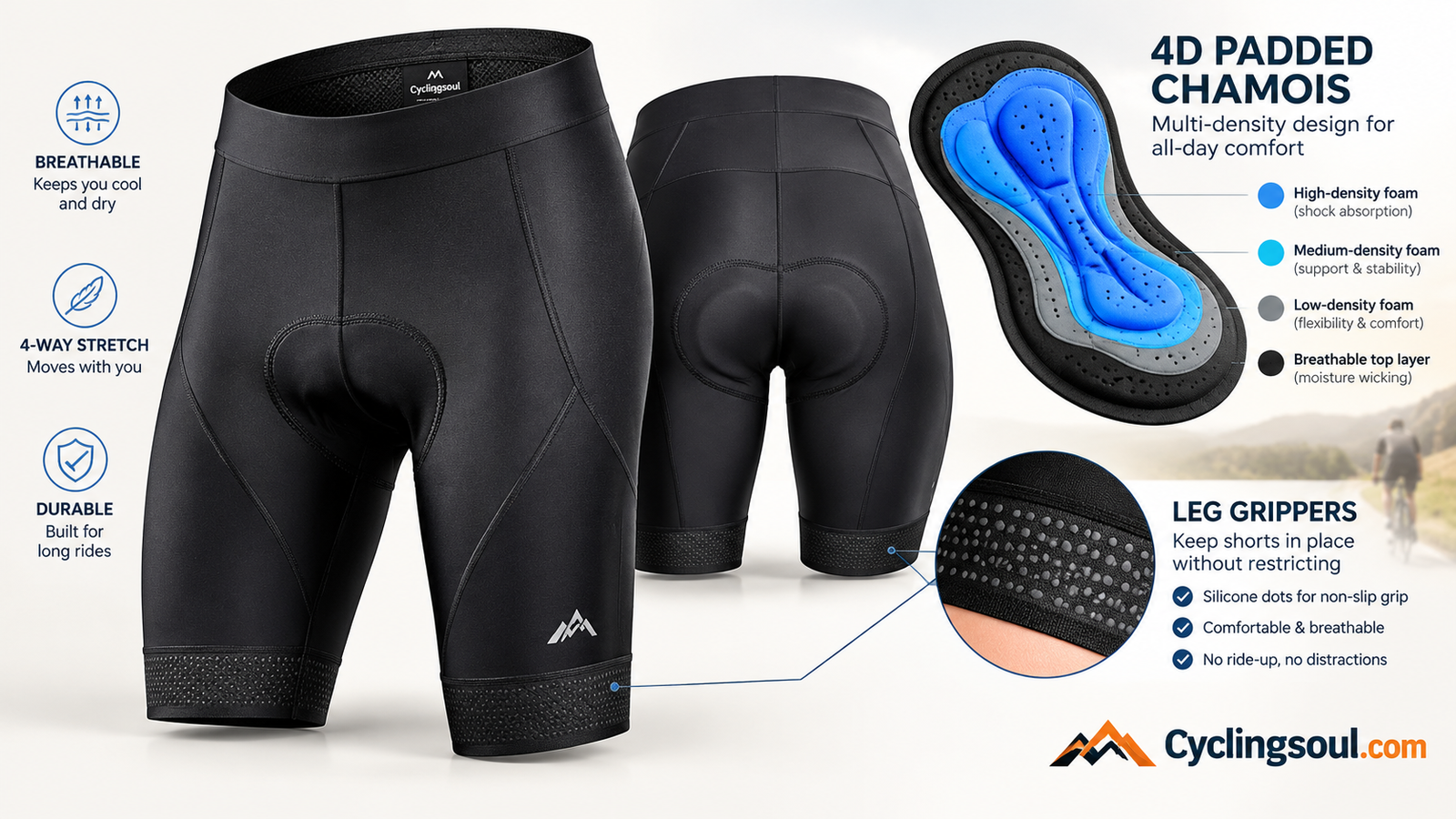
Quick Comparison: Our Top Picks
All fifteen shorts in this guide, side by side. The ranking reflects how well each pair balances pad quality, fit, fabric, durability and price for its intended rider — not how expensive it is. Rows are ordered by our overall ranking; every product links to the exact listing.
| # | Image | Product | Key Specs | Verdict | Check Price |
|---|---|---|---|---|---|
| 1Top Pick |  |
baleaf Men’s 4D Padded Bike ShortsBest Overall |
|
Secure storage plus a proven pad for everyday miles. | Check Price on Amazon |
| 2 | |
Bikewa Men’s 3D Padded Bike ShortsBest Value |
|
Hard to beat as a first proper pair of padded shorts. | Check Price on Amazon |
| 3 |  |
Sportneer 4D Padded Cycling ShortsBest for Beginners |
|
Forgiving fit and comfort-first padding for new riders. | Check Price on Amazon |
| 4 |  |
NICEWIN Men’s 4D Padded Cycling ShortsBest for Long Rides |
|
Supportive fit that stays put over bigger days out. | Check Price on Amazon |
| 5 |  |
baleaf Women’s 4D Padded Bike ShortsBest Women’s Overall |
|
Balanced women’s fit with a pad built for longer rides. | Check Price on Amazon |
| 6 |  |
Heathyoga Women’s 4D Padded Bike ShortsBest Women’s Value |
|
Comfort-first shorts at a price that invites buying two. | Check Price on Amazon |
| 7 |  |
Souke Sports Men’s 4D Padded Cycling Liner ShortsBest Liner |
|
The invisible upgrade for baggy-shorts riders everywhere. | Check Price on Amazon |
| 8 |  |
baleaf Men’s 3D Padded Bike Shorts LinerBest Budget Liner |
|
A simple, honest liner that does exactly what it should. | Check Price on Amazon |
| 9 |  |
Ohuhu Men’s 3D Padded Cycling UnderwearBest Underwear Style |
|
For commutes and casual rides where lycra feels like too much. | Check Price on Amazon |
| 10 |  |
Sponeed Men’s Padded Cycling ShortsBest Entry-Level Road Short |
|
A traditional road short for riders who want the classic look. | Check Price on Amazon |
| 11 |  |
PEARL iZUMi Quest Cycling ShortsBest Brand-Name Pick |
|
The safe, well-finished choice from a heritage cycling brand. | Check Price on Amazon |
| 12 | 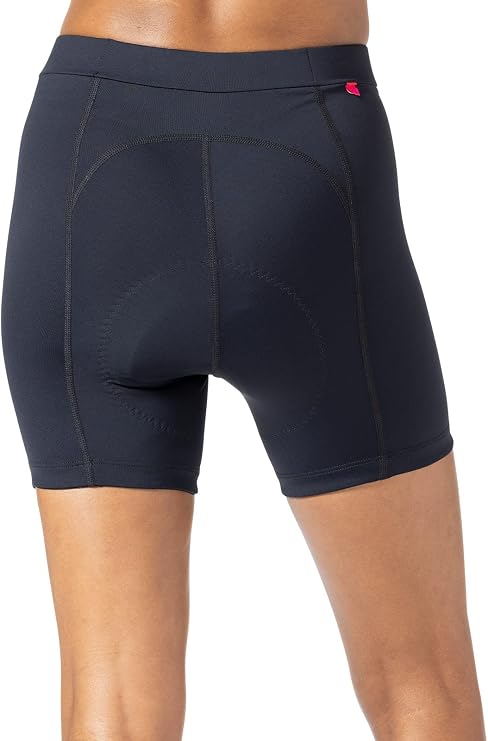 |
Terry Bicycles Touring ShortBest for Touring |
|
Built for all-day distance rather than podium photos. | Check Price on Amazon |
| 13 | 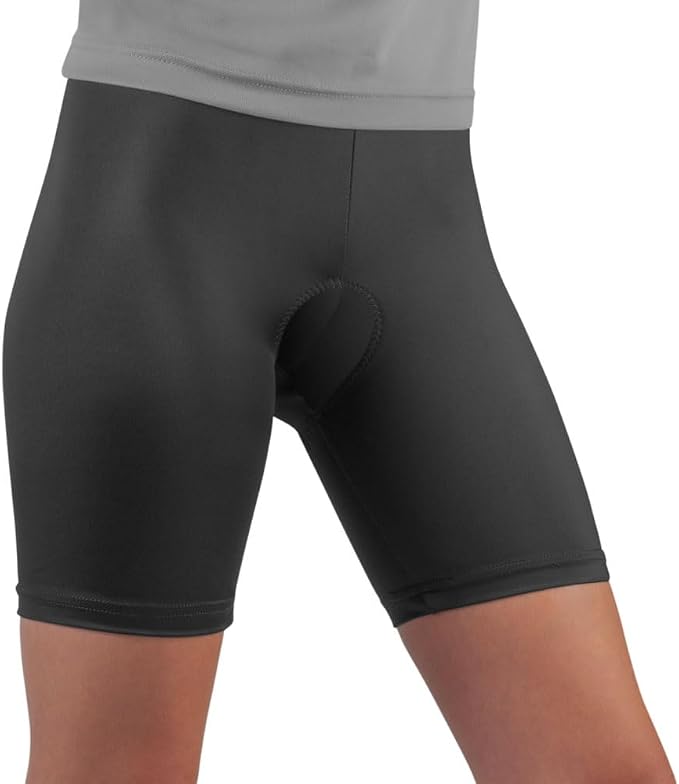 |
Aero Tech Designs Women’s Classic Cycling ShortsBest Women’s Fit Range |
|
A no-drama classic for riders who want coverage and comfort. | Check Price on Amazon |
| 14 |  |
Bellwether O2 Cycling ShortBest Comfort-First Pick |
|
Puts ride comfort ahead of race-day minimalism. | Check Price on Amazon |
| 15 |  |
Canari Cyclewear Optime ShortBest No-Fuss Starter |
|
Everything you need, nothing you don’t — a solid first short. | Check Price on Amazon |
Ready to upgrade your ride comfort?
Browse the full range of padded cycling shorts and compare fits.
Check Cycling Shorts on AmazonHow to Choose Cycling Shorts
Choosing cycling shorts looks complicated and feels easy once you know what to look for. Strip away the marketing language and only five things really matter: the pad, the fit, the fabric, the finishing details, and how those four things match the riding you actually do. Get those right and price becomes a secondary conversation.
Start with your riding, not the product
The single biggest mistake riders make is buying shorts designed for someone else’s ride. A racer’s minimal, low-volume short feels wonderful for ninety minutes and punishing at hour five. A plush touring short feels luxurious at hour five and slightly overbuilt for a fast group ride. Before you compare anything, answer three questions honestly: how long are your typical rides, what surfaces do you ride on, and do you prefer the classic close-fitting look or do you want to wear baggy outer shorts?
If you ride mostly under an hour — commuting, errands, short fitness loops — a well-made liner or padded underwear-style short is plenty. If you regularly ride two hours or more, the pad deserves your budget. If you ride mixed terrain, durability and pocket placement start to matter as much as outright comfort.
The five checks that separate good shorts from great ones
- Pad first. Look for a multi-density chamois that is shaped for your anatomy, not a single slab of foam. We cover this in detail below.
- Fit second. Cycling shorts should feel snug and supportive with no bunching at the hip crease and no pressure points at the waist.
- Fabric third. You want a four-way stretch synthetic knit that wicks moisture and rebounds after washing.
- Finishing details. Flatlock or bonded seams, wide leg grippers that hold without pinching, and a waistband that doesn’t roll.
- Features that match your ride. Pockets for gravel and commuting, minimalism for road, liner compatibility for trail riding.
Budget: where to spend and where to save
Spend on the pad and the fit. Those two things determine whether you finish a ride smiling, and they are the most expensive parts of the garment to get right. Save on branding, graphics and exotic fabric claims that don’t translate into felt comfort. A thoughtfully designed mid-price short will beat a poorly cut premium one every single time.
It also pays to think beyond the shorts themselves. A complete comfort system includes a saddle that suits your sit bones, decent cycling shoes so your feet stop moving, and thin, wicking cycling socks. If you’re building a full wardrobe, our guide to what to wear cycling ties the whole kit together.
A quick buying checklist
Multi-density pad shaped for your gender and ride length · snug but never restrictive fit · wicking four-way stretch fabric · flat seams near the chamois · grippers that hold without a sausage effect · features (pockets, length, liner style) that match your terrain.
Compare cycling shorts in every price range
Filter by pad type, fit and length to find your match.
Shop Cycling Shorts on AmazonChamois Pad Types and Thickness
The chamois — the padded insert stitched into the seat of the short — is the single most important component in cycling apparel. Everything else is packaging. Understand the pad and you understand the product.
What a chamois actually does
A modern chamois performs three jobs simultaneously. It cushions the sit bones against the saddle, reducing peak pressure. It manages moisture, pulling sweat away from skin so you don’t sit in a damp patch for three hours. And it reduces friction, giving skin a smooth surface to move against rather than letting fabric rub raw. That last job is why the chamois is designed to sit directly against the skin — an idea we’ll come back to in the underwear section.
The main pad constructions
- Single-density foam. One layer of uniform foam. Light, inexpensive and perfectly fine for short rides. Found in budget liners and entry-level shorts.
- Multi-density foam (the “3D” and “4D” you see everywhere). Different zones of foam with different thicknesses and firmness — thicker and softer under the sit bones, thinner and more flexible at the edges so the pad doesn’t feel like a nappy. The “3D” and “4D” labels come straight from the product names and describe this kind of shaped, zoned construction.
- Gel-infused or gel-panel pads. Gel sections combined with foam to damp vibration. Popular with riders who feel road buzz, and often favoured on rougher surfaces.
- Perforated and channelled pads. Ventilation holes or a central relief channel that reduce heat build-up and soft-tissue pressure. Worth prioritising if you ride in hot conditions or struggle with numbness.
Thickness: more is not automatically better
Thicker pads feel impressive in the shop and can be a mistake on the bike. Excess bulk creates pressure at the edges, holds more sweat, and can push you forward off the sweet spot of the saddle. What matters is where the thickness sits and how smoothly it tapers. A well-shaped moderate pad that matches your sit bones will outperform a thick one that doesn’t.
As a rule of thumb: shorter rides tolerate thinner, simpler pads; longer rides reward zoned, multi-density pads with a relief channel; and riders on rough surfaces benefit from vibration-damping constructions. If you sit relatively upright — on a hybrid, a commuter or a touring bike — you may want a pad with more rear coverage, because more of your weight lands behind the sit bones. Aggressive, forward-leaning road positions concentrate pressure further forward.
Gender-specific padding
Women’s and men’s chamois are shaped differently because pelvis anatomy differs. Women’s pads are generally wider at the rear and shorter front-to-back, with pressure relief placed accordingly; men’s pads tend to be narrower and longer. Buying the shape that matches your anatomy is one of the cheapest comfort upgrades available — see our dedicated women’s cycling shorts guide for more on this.
How to test a pad before committing
Wear the shorts for a ride at least as long as your usual outing, not just around the living room. Sit on your actual saddle. Check for pressure points at the pad edges, and note whether you feel the seams where the chamois is stitched in. The right pad disappears within the first ten minutes.
It’s worth remembering how much load the saddle carries. Pedalling is famously low-impact compared with running — see our cycling vs running comparison — but “low impact” refers to your joints, not your soft tissue. The pad is doing genuinely important work down there.
Shop shorts by pad construction
Compare 3D, 4D and gel-padded options side by side.
See Padded Shorts on AmazonFit and Sizing Guide
Cycling shorts are supposed to feel slightly strange the first time you put them on. They are engineered as a second skin: snug enough to stay in place through thousands of pedal revolutions, compressive enough to support working muscles, and stretchy enough to move without restriction. The confusion starts when riders mistake “snug” for “tight,” and buy a size that fights them.
Snug is correct — tight is not
A properly fitted pair of cycling shorts should feel firm around the hips and thighs with no loose fabric anywhere. When you stand up they may feel slightly restrictive; when you get into a riding position, everything should relax into place. If you have deep pressure marks, numbness, or the waistband digging in while you’re riding, the size or cut is wrong — not your body.
How to measure yourself properly
- Measure your natural waist at the narrowest point, keeping the tape relaxed.
- Measure your hips at the widest point of the seat — this is the number that matters most for shorts sizing.
- Compare with the brand’s own chart, not with the size you wear in jeans. Cycling apparel sizing is notoriously inconsistent between brands.
- Decide on length. Shorts come in shorter and longer leg options; longer legs distribute gripper pressure over more fabric and suit taller riders, while shorter cuts feel cooler and lighter.
The three fit failure points
- Waistband roll. Usually a sign the shorts are too small in the hip or that the waistband is narrow and elasticated rather than wide and supportive.
- Leg grippers that dig. A good gripper holds gently over a wide band. If it pinches, size up or choose a short with a softer gripper.
- Chamois migration. If the pad slides out of position during the ride, the short is too large or the leg length is wrong for your build.
Riding position changes everything
Fit is best judged on the bike, not in front of a mirror. Stand tall in cycling shorts and the front may pull; lean into a riding posture and the geometry works. This is also why knee and hip comfort is connected to kit — a saddle or short that pushes you out of position can create problems that travel up the chain. If joint comfort is a concern, our guide on whether cycling is good for your knees covers fit, cadence and saddle height in depth.
And don’t overlook the rest of your contact points. Well-fitting cycling shoes keep your feet stable, and a properly dialled cockpit keeps your weight balanced so the saddle isn’t doing all the work.
Between sizes?
If you fall between two sizes and you ride long distances, size for comfort rather than compression — a slightly roomier short that stays put beats a race-tight short that creates pressure points at hour three.
Find your size across brands
Compare fit notes and size charts before you order.
Browse Cycling Shorts on AmazonFabric and Breathability
If the chamois is the engine of cycling shorts, the fabric is the chassis. It holds everything in place, manages heat and sweat, and determines how the shorts feel after fifty washes. Almost all performance cycling shorts use some blend of polyester or nylon with elastane, but the ratio, the knit and the finishing make an enormous difference.
What the main fibres do
- Polyester is the workhorse: durable, quick-drying and excellent at wicking moisture away from skin.
- Nylon feels smoother and tougher, and stands up well to abrasion — a good sign in shorts designed for gravel or trail use.
- Elastane (spandex) provides the stretch and, crucially, the recovery. Cheap shorts stretch out; good shorts spring back.
Four-way stretch and why recovery matters
You want fabric that stretches in every direction and returns to shape. Two-way stretch fabric feels fine in the shop and sags at the end of a long ride, which means the pad stops sitting exactly where it should. Recovery is also what keeps the leg hem from creeping upward and the waistband from loosening over time.
Moisture management and breathability
Wicking is the ability to pull sweat across the fabric and spread it out so it evaporates quickly. Breathability is how easily heat escapes through the knit. Both matter, but they’re different. A very open, airy knit breathes beautifully and may not wick as well; a tightly woven compression knit wicks superbly and can feel warmer. The best fabrics balance the two, often with body-mapped panels that are more open in high-heat zones.
Finishing details worth paying for
- Flatlock or bonded seams sit flush against skin and are the first thing to look for anywhere near the chamois.
- Silicone or wide elastic leg grippers that hold position without restricting circulation.
- Odour-control treatments that help shorts stay fresher between washes — helpful, though no substitute for washing after sweaty rides.
- Sun-protective fabric for riders who spend long hours in exposed conditions.
Fabric weight is a personal preference as much as a technical one. Lighter knits feel faster and cooler; slightly denser knits feel more supportive and tend to last longer. If you’re riding partly for body composition goals, the difference matters less than consistency — plenty of riders find that the comfort of good kit keeps them in the saddle longer, which supports aims like using cycling as cardio.
The stretch test
Pinch the fabric at the thigh and pull. Good shorts resist slightly and snap back instantly. Fabric that stays stretched, or feels thin enough to go see-through, is telling you everything you need to know.
Shop breathable, quick-drying shorts
Look for four-way stretch knits and flatlock seams.
Check Fabric Options on AmazonBib Shorts vs. Regular Shorts
Ask a group of experienced riders what they wear and most will say “bibs.” Ask a beginner what bib shorts are and they’ll point at the straps and look confused. Here’s the honest breakdown of which one you should buy.
What makes a bib short different
Bib shorts replace the waistband with shoulder straps — usually mesh or elastic — that hold the shorts and the chamois in place without anything gripping your midsection. Because there’s no waistband, there’s nothing to dig in when you’re bent over the bars, and nothing to roll down at the back. The chamois is held in a more consistent position throughout the ride, which is exactly what you want on longer days.
| Feature | Regular Shorts | Bib Shorts |
|---|---|---|
| Waist comfort | Elasticated or wide waistband; can dig in when riding low. | No waistband at all; straps hold everything in place. |
| Pad stability | Good, but can shift slightly over very long rides. | Excellent — the pad stays exactly positioned. |
| Convenience | Easy on and off; simple nature breaks. | Straps must be removed; slower on stops. |
| Layering | Works well under baggy or casual outer shorts. | Straps complicate layering; better as a standalone. |
| Best for | Commuting, short rides, new riders, mixed use. | Long rides, racing, all-day comfort priorities. |
The practical downside of bibs
Convenience. Bib straps mean removing a layer for bathroom stops, which is genuinely annoying mid-ride and can be a decisive factor depending on your circumstances. Bibs also tend to cost more for equivalent pad quality, and they can’t be worn under loose outer shorts without visible strap lines.
So which should you buy?
If your rides are under two hours, you commute, or you want one pair of shorts that works on and off the bike, buy regular shorts and never look back. If you ride long, ride often, or you’ve struggled with waistband discomfort and pad movement, bibs are worth the extra. Many riders end up owning both — shorts for everyday riding, bibs for the big days.
For a deeper dive into strap designs, sizing and the best options available, see our full guide to cycling bibs.
Not sure yet? Start with a versatile pair
Compare regular padded shorts and bib shorts side by side.
Compare Bibs and Shorts on AmazonRoad vs. MTB vs. Gravel Shorts
“Cycling shorts” is really three different garments wearing the same name. The short you want for a fast road ride is not the short you want for a rocky descent, and gravel has quietly invented its own middle ground.
| Style | Road | Mountain Bike | Gravel |
|---|---|---|---|
| Fit | Close, aerodynamic second skin. | Baggy shell with an inner padded liner. | Trim but less race-tight; roomier than road. |
| Padding | Zoned chamois tuned for sustained seated riding. | Lighter pad — riders stand and move more. | Comfort-focused pad for long hours in the saddle. |
| Durability | Light fabric, minimal abrasion resistance needed. | Tougher panels, reinforced where you brush trailside. | Durable knit with some dirt and spray tolerance. |
| Storage | Rare; usually none. | Shell pockets common and useful. | Pockets expected — food, phone, layers. |
| Best for | Fast group rides, fitness, racing. | Trails, technical terrain, casual styling. | Mixed surfaces, all-day adventure riding. |
Road shorts: minimal and focused
Road shorts exist to disappear. Everything about them is designed around a sustained, forward-leaning position: the pad is tuned for continuous seated pedalling, the fabric is light and compressive, and pockets are deliberately omitted for aerodynamics and clean lines. If you ride on pavement and care about feeling fast, this is the category for you.
Mountain bike shorts: the liner-and-shell system
Trail riding means moving on the bike — standing on descents, shifting weight over obstacles, occasionally picking the bike up. Baggy shells handle that better than lycra, and they take knocks from branches and the ground. The padded liner underneath is where the comfort lives, and it’s the component worth spending money on. This is exactly where the liner products reviewed further down this page shine.
Gravel: the everything short
Gravel riding combines long seated hours with unpredictable surfaces and a need to carry food and layers. Gravel shorts are typically close-ish but not race-tight, with a comfort-biased pad, tougher fabric and pockets. They’re also the category that has drawn the most riders into proper cycling apparel for the first time.
Whichever discipline you ride, training structure changes what you need from kit. Riders following structured plans — working on threshold, or figuring out what FTP means in cycling — spend long hours at steady intensity and are the least forgiving of poor fit. If you’re building toward events, our guide on how to train for cycling covers the work that makes comfortable kit even more worthwhile.
Shop by discipline
Find road, trail and gravel shorts built for your terrain.
Shop Shorts by Terrain on AmazonBest Men’s Cycling Shorts
These five pairs are the core of the men’s market: full-length padded shorts designed to be worn as the primary layer, from value-focused all-rounders to supportive long-distance options. We’ve ranked them by how well each delivers comfort per dollar for the rider it’s aimed at.
| # | Image | Product | Key Specs | Check Price |
|---|---|---|---|---|
| 1 | |
baleaf Men’s 4D Padded Bike ShortsBest Overall |
|
Check Price |
| 2 | |
Bikewa Men’s 3D Padded Bike ShortsBest Value |
|
Check Price |
| 3 | |
Sportneer 4D Padded Cycling ShortsBest for Beginners |
|
Check Price |
| 4 | |
NICEWIN Men’s 4D Padded Cycling ShortsBest for Long Rides |
|
Check Price |
| 5 | |
Sponeed Men’s Padded Cycling ShortsBest Classic Road Cut |
|
Check Price |
baleaf Men’s 4D Padded Bike Shorts with Zipper Pockets
The pair we’d hand to almost any rider asking “what should I buy?”
baleaf has spent years becoming the default recommendation for riders who want proper cycling comfort without paying boutique prices, and these shorts explain why. The 4D-shaped chamois gives you zoned cushioning where the sit bones land and a thinner, more flexible edge elsewhere, so the pad supports without feeling bulky. What really separates them from the pack, though, is the inclusion of zippered pockets — a feature normally reserved for gravel and commuting kit.
That storage makes these unusually versatile. Keys, cards, a phone or a gel can ride along securely whether you’re on a road loop, a mixed-surface spin or a commute. The fabric is the familiar wicking stretch knit that keeps its shape wash after wash, and the overall cut is supportive without being aggressively race-tight.
Key Features
- 4D multi-density chamois designed to reduce pressure and friction over longer rides
- Zippered pockets that keep valuables secure without bouncing
- Wicking, quick-drying stretch fabric with recovery that lasts
- Leg grippers that hold position without restricting circulation
Pros
- Secure storage is genuinely rare at this level
- Pad suits a wide range of ride lengths
- Fit flatters most builds without feeling restrictive
Cons
- Zippers add a little bulk at the thigh
- Sizing runs brand-specific — check the chart
Who it’s best for: The rider who wants one pair of shorts for everything — fitness rides, commuting and weekend distance — and values having somewhere safe to put a phone.
Bikewa Men’s 3D Padded Bike Shorts
Proof that you don’t need to spend big to stop dreading the saddle.
For a lot of riders, the first pair of real cycling shorts is a leap of faith — you don’t yet know what good feels like, so overspending feels risky. The Bikewa 3D short is the ideal entry point. Its shaped chamois is a genuine step up from the flat foam pads found in cheap shorts, with contouring that follows the body rather than sitting on top of it like a slab.
The rest of the package is sensible and unfussy: stretch fabric with enough recovery to hold its shape, grippers that keep the legs in place through the pedal stroke, and a cut that works for both road and trail riding. It’s not trying to be a race short. It’s trying to be comfortable, durable and easy to live with, and it succeeds.
Key Features
- 3D shaped chamois with contoured cushioning under the sit bones
- Stretch knit with moisture-wicking performance
- Leg grippers that prevent ride-up without pinching
- Straightforward design that works across disciplines
Pros
- Outstanding comfort for the money
- Forgiving fit that suits different body types
- A sensible first pair to learn what you like
Cons
- No pocket storage
- Pad is best suited to shorter and mid-length rides
Who it’s best for: New riders buying their first padded shorts, and experienced riders who want an inexpensive second pair for the rotation.
Sportneer 4D Padded Cycling Shorts
Comfort-first padding that forgives a new rider’s imperfect setup.
When you’re new to cycling, everything hurts a little and you don’t yet know which aches are normal. Sportneer’s 4D short leans into that reality with a plush, gel-and-foam chamois that cushions generously, and a wide, soft waistband that doesn’t concentrate pressure around the middle. It’s a short designed to make the first month of riding pleasant rather than character-building.
The fabric breathes well and dries quickly, which matters more than you’d think when you’re working harder than a fit rider on the same climb. The overall silhouette is relaxed-performance — supportive but not the kind of second-skin compression that makes beginners self-conscious at the café stop.
Key Features
- 4D chamois combining gel and foam for vibration damping
- Wide, soft waistband that stays comfortable when bent over the bars
- Breathable stretch fabric with good moisture management
- Friendly fit that works across a range of body shapes
Pros
- Very forgiving of an entry-level saddle or fit
- Plush padding that new riders notice immediately
- Easy to live with on and off the bike
Cons
- Plusher pad can feel warm on very hot days
- Less minimal than riders with racing ambitions prefer
Who it’s best for: Beginners and returning riders who want maximum comfort while their body adapts to time in the saddle.
NICEWIN Men’s 4D Padded Cycling Shorts
Support that holds up when the ride stretches past the three-hour mark.
Short rides are forgiving. Long rides expose every weakness in a short’s design — the pad that felt fine at hour one becomes a pressure point at hour three, and any slack in the fit turns into friction. NICEWIN’s 4D short is built around that reality, with a multi-zone chamois that keeps cushioning where it’s needed and stays low-profile at the edges so it doesn’t chafe as you shift position.
The knit is on the supportive side of the spectrum, giving a gentle compression feel that helps muscles feel fresher deep into a ride. Seams are kept flat and away from the contact zone, and the grippers are wide enough to distribute pressure rather than concentrating it into a band.
Key Features
- Multi-zone 4D chamois tuned for extended saddle time
- Supportive stretch knit with a compression-like feel
- Flatlock seams placed to avoid high-friction areas
- Wide leg grippers for stable, all-day hold
Pros
- Excellent stability over long distances
- Supportive fabric reduces that heavy-leg feeling
- Well-finished seams for a short in this class
Cons
- Supportive fit feels snugger than relaxed alternatives
- Minimal storage
Who it’s best for: Riders training for longer events or who routinely spend half a day in the saddle and want consistent support throughout.
Sponeed Men’s Padded Cycling Shorts
The traditional road look, executed simply and worn without fuss.
Some riders want their kit to look like cycling kit. Sponeed’s padded short is unapologetically a road short: clean lines, a close fit, a properly shaped pad and nothing decorative getting in the way. It’s the kind of garment that does its job quietly and lets you think about the ride instead.
The pad is comfortable across a broad range of outings, and the synthetic knit handles sweat efficiently while drying fast between rides. Because the cut is close, it layers neatly under a jersey and doesn’t flap at speed. For riders building a small kit rotation on a sensible budget, it’s a dependable choice.
Key Features
- Classic road-oriented cut with a shaped chamois
- Breathable, quick-drying performance fabric
- Smooth, close fit that moves cleanly through the pedal stroke
- Simple styling that pairs with any jersey
Pros
- Authentic road silhouette
- Dries quickly between rides
- Comfortable across varied ride lengths
Cons
- No pockets for storage
- Close fit is less forgiving on sizing mistakes
Who it’s best for: Road riders who want a traditional padded short at a sensible price and don’t need pockets.
Compare the full men’s range
See every padded short in this guide with live pricing.
Shop Men’s Cycling ShortsBest Cycling Liners and Padded Underwear
Liners are the unsung heroes of cycling apparel. Worn under baggy shorts, commuting trousers or a shell, they deliver the comfort of a padded short while letting you look like a normal human being at your destination. They’re also the smartest money in cycling for anyone who rides casually or on technical terrain.
| # | Image | Product | Key Specs | Check Price |
|---|---|---|---|---|
| 1 | |
Souke Sports Men’s 4D Padded Cycling Liner ShortsBest Liner Overall |
|
Check Price |
| 2 | |
baleaf Men’s 3D Padded Bike Shorts LinerBest Budget Liner |
|
Check Price |
| 3 | |
Ohuhu Men’s 3D Padded Cycling UnderwearBest Underwear Style |
|
Check Price |
Souke Sports Men’s 4D Padded Cycling Liner Shorts
Turns any pair of loose shorts into a proper cycling setup.
The best liner is one you forget you’re wearing. Souke’s 4D liner gets close to that ideal with a lightweight, breathable knit that sits quietly under outer shorts and a properly zoned chamois that delivers real cushioning without the bulk of a full short. That combination makes it the natural choice for mountain bikers, gravel riders and commuters who want comfort without the lycra.
Because liners live under another layer, breathability matters more than appearance — and this is where the mesh-like construction earns its keep, moving air and sweat rather than trapping it. The pad’s shaped zones mean it stays comfortable beyond the quick spin, which is where cheaper liners fall apart.
Key Features
- 4D chamois with zoned cushioning for extended rides
- Lightweight, highly breathable knit
- Designed to sit invisibly under baggy or casual outer shorts
- Low-bulk construction that doesn’t overheat
Pros
- Real pad quality in a lightweight package
- Excellent airflow for warm-weather riding
- Works with almost any outer short
Cons
- Meant to be worn under something — not standalone
- Lightweight fabric rewards gentle washing
Who it’s best for: Mountain bikers, gravel riders and anyone who wants chamois comfort while wearing casual outer shorts.
baleaf Men’s 3D Padded Bike Shorts Liner
A no-drama liner that quietly solves saddle discomfort.
If you want to dip a toe into padded cycling kit without much commitment, this is the sensible place to start. baleaf’s 3D liner keeps things straightforward: a contoured pad where it counts, low-profile seams that don’t rub under outer shorts, and a durable knit that tolerates frequent washing — which matters, because liners get washed a lot.
It’s not the lightest or the most technical liner here, and it doesn’t need to be. For commutes, short trail rides and everyday use, it does the essential job of putting proper cushioning between you and the saddle while staying completely unremarkable to wear.
Key Features
- 3D contoured chamois for targeted sit-bone cushioning
- Flat, low-profile seams that stay quiet under outer layers
- Durable knit that handles repeat washing well
- Simple liner cut that fits under most shorts and trousers
Pros
- Extremely accessible price of entry
- Tough enough for regular use
- Comfortable under loose trousers as well as shorts
Cons
- Pad is best for shorter to mid-length rides
- Fewer comfort features than premium liners
Who it’s best for: Commuters and casual riders who want reliable padding for everyday trips at a minimal price.
Ohuhu Men’s 3D Padded Cycling Underwear
Padded comfort that vanishes under everyday clothing.
There are plenty of rides where a full cycling short feels like overkill — the two-mile commute, the spin to the shops, the family ride on a Saturday morning. Ohuhu’s padded cycling underwear is designed for exactly those moments, offering a shaped 3D pad in a brief-style cut that looks and feels like ordinary underwear with a very useful secret.
The knit is soft and wicking, and the shorter cut means there’s no gripper band to negotiate under trousers. The pad is tuned for comfort on moderate distances rather than epic days, which is the right trade-off for the intended use.
Key Features
- 3D shaped pad for sit-bone cushioning on everyday rides
- Soft, moisture-wicking knit for next-to-skin comfort
- Brief-style cut that works under casual clothing
- Low-profile construction that stays discreet
Pros
- Invisible under regular clothes
- Great for short and mid-length rides
- Soft, comfortable fabric against the skin
Cons
- Not intended for long-distance riding
- Less support than a full-length cycling short
Who it’s best for: Commuters and casual riders who want saddle comfort without looking like they’ve entered a race.
Compare cycling liners and padded underwear
Find the right padding level for your outer shorts.
Shop Cycling Liners on AmazonBest Women’s Cycling Shorts
Women’s cycling shorts are not men’s shorts in different colours. The pad shape, the hip-to-waist ratio, the rise and the leg length are all designed around different anatomy, and buying a properly women’s-specific pair is one of the most effective comfort decisions a female rider can make. These four represent the strongest options across performance and touring use.
| # | Image | Product | Key Specs | Check Price |
|---|---|---|---|---|
| 1 | |
baleaf Women’s 4D Padded Bike ShortsBest Women’s Overall |
|
Check Price |
| 2 | |
Heathyoga Women’s 4D Padded Bike ShortsBest Women’s Value |
|
Check Price |
| 3 | |
Terry Bicycles Touring ShortBest for Touring |
|
Check Price |
| 4 | |
Aero Tech Designs Women’s Classic Cycling ShortsBest Classic Fit |
|
Check Price |
baleaf Women’s 4D Padded Bike Shorts
Balanced, supportive and comfortable from the first mile to the last.
These shorts do everything well, which is exactly what you want from a primary pair. The women’s-specific 4D chamois is shaped for a wider pelvic structure and placed to cushion where female riders actually contact the saddle, while the wide waistband spreads pressure instead of concentrating it into a narrow band — a small detail that makes a big difference over distance.
The fabric wicks efficiently and keeps its shape, and the leg length provides enough coverage to feel secure without riding up. Whether you’re riding for fitness, commuting or building toward longer weekend routes, this is a dependable daily driver.
Key Features
- Women’s-specific 4D chamois with anatomically placed cushioning
- Wide, soft waistband for pressure-free comfort
- Wicking, quick-drying stretch fabric
- Secure leg length with supportive grippers
Pros
- Pad placement genuinely suits female anatomy
- Comfortable waistband on long rides
- Great all-round performance for the price
Cons
- No zippered storage
- Sizing varies — measure before ordering
Who it’s best for: The rider who wants one high-quality pair of women’s padded shorts for regular riding across all distances.
Heathyoga Women’s 4D Padded Bike Shorts
Comfort that feels more expensive than it has any right to.
Heathyoga comes from a body-movement background, and it shows in the cut. These shorts prioritise soft, non-restrictive comfort — a gentle waistband, thoughtful panel placement and a contoured 4D pad that cushions without feeling like armour. For riders who find traditional cycling shorts too aggressive, they’re a welcome change.
The fabric is soft to the touch but still manages sweat properly, and the overall fit is flattering and confidence-boosting rather than brutally compressive. They’re a particularly good choice for shorter and mid-length rides, and for riders who want a pair they can wear for other activities too.
Key Features
- 4D contoured chamois with targeted sit-bone cushioning
- Body-mapped stretch panels for unrestricted movement
- Soft-touch waistband that stays comfortable all ride
- Versatile styling suited to more than just cycling
Pros
- Exceptionally comfortable against the skin
- Forgiving, confidence-friendly fit
- Excellent value for a well-shaped pad
Cons
- Less compressive than performance-focused shorts
- Pad is best for moderate ride lengths
Who it’s best for: Riders who want soft, comfortable padded shorts at a friendly price, especially those new to cycling kit.
Check today’s price
Soft, comfortable padding that feels great from the start.
Check Price on Amazon
Terry Bicycles Touring Short
Designed around the reality of spending entire days in the saddle.
Terry is a brand with deep roots in women’s cycling comfort, and the Touring Short reflects decades of listening to riders who spend serious time on the bike. The padding is tuned for long, steady hours rather than short bursts, with an emphasis on all-over comfort and pressure distribution — exactly what you want when you’re in the saddle from morning to afternoon.
The cut offers slightly more relaxed coverage than a race short, which touring riders appreciate at rest stops and when walking around camp. It’s a practical, comfort-first design rather than a performance statement, and it’s all the better for it.
Key Features
- Touring-oriented chamois designed for extended hours of riding
- Comfort-focused cut with practical leg coverage
- Supportive fabric that stays comfortable over long days
- Design heritage focused specifically on women’s cycling comfort
Pros
- Outstanding comfort on very long rides
- Practical, modest coverage off the bike
- Backed by genuine women’s-fit expertise
Cons
- More relaxed cut than race-oriented shorts
- Priced higher than budget all-rounders
Who it’s best for: Touring cyclists, distance riders and anyone who ranks all-day comfort above everything else.
Aero Tech Designs Women’s Classic Cycling Shorts
A timeless, comfortable short for riders who value coverage.
Not everyone wants the skimpy cut of modern performance shorts, and Aero Tech Designs has built a loyal following by respecting that. The Classic is a traditional women’s cycling short with a comfort-biased pad, a higher rise and leg coverage that feels secure and modest — practical for touring, commuting and recreational riding alike.
It prioritises feel and coverage over aerodynamics, with a straightforward fabric and construction that’s built to be worn week in, week out. If you’ve struggled to find shorts that fit comfortably and don’t leave you feeling overexposed, this is the one to try.
Key Features
- Classic women’s cut with generous, comfortable coverage
- Comfort-oriented padding suited to recreational and touring rides
- Higher rise for a secure, settled fit
- Straightforward, durable construction
Pros
- Comfortable, modest coverage
- Excellent for touring and casual riding
- Fit that works for a wide range of bodies
Cons
- Not aimed at performance or racing use
- Simple design with minimal technical extras
Who it’s best for: Riders who want a comfortable, classic short with more coverage than typical performance kit.
Want to see more options built specifically for women, including bibs and different lengths? We have a complete guide to the best women’s cycling shorts that goes deeper on fit, pad shape and body-type considerations.
Shop the full women’s range
Compare pad shapes, lengths and fits side by side.
Shop Women’s Cycling ShortsBest Touring and Endurance Shorts
When rides get long and frequent, the criteria change. Durability starts to matter as much as comfort, seam placement becomes critical, and the small refinements that heritage brands have spent decades learning begin to justify themselves. These three shorts come from established cycling apparel names and are designed for riders who put in serious miles.
| # | Image | Product | Key Specs | Check Price |
|---|---|---|---|---|
| 1 | |
PEARL iZUMi Quest Cycling ShortsBest Brand-Name Pick |
|
Check Price |
| 2 | |
Terry Bicycles Touring ShortBest for All-Day Distance |
|
Check Price |
| 3 | |
Bellwether O2 Cycling ShortBest Comfort-First |
|
Check Price |
| 4 | |
Canari Cyclewear Optime ShortBest No-Fuss Starter |
|
Check Price |
PEARL iZUMi Quest Cycling Shorts
Heritage-brand refinement where it counts — on the bike, hour after hour.
Experience shows in the details you don’t notice. On the Quest short, that’s seam placement that avoids high-friction zones, a pad that sits exactly where it should from the first mile, and a fabric hand that feels considered rather than merely stretchy. PEARL iZUMi has been making cycling apparel long enough to know which shortcuts degrade a ride, and this short avoids all of them.
The result is a clean, road-focused short that does its job quietly and consistently. It’s not the cheapest option in this guide, and it isn’t trying to be — it’s for riders who’d rather buy once and think about riding instead of kit.
Key Features
- Refined chamois design informed by extensive cycling apparel experience
- Carefully placed seams to minimise friction
- Road-focused cut that moves cleanly with the pedal stroke
- Quality fabric with lasting shape retention
Pros
- Excellent finishing and attention to detail
- Consistent comfort across ride lengths
- Backed by an established cycling brand
Cons
- Higher price than budget alternatives
- Minimal features by design
Who it’s best for: Road riders who want the reassurance of a proven cycling brand and plan to ride regularly for years.
Bellwether O2 Cycling Short
For riders who want plush comfort more than race-day minimalism.
Bellwether’s O2 short is unapologetically built around comfort. The pad leans generous and supportive, the fabric feels soft against skin, and the leg grippers do their job without leaving marks. It’s the short you reach for on the days when the plan is simply to enjoy the ride rather than chase numbers.
That comfort bias makes it especially well suited to riders returning after a break, anyone recovering from saddle soreness, and recreational cyclists who value how a short feels over how it looks in a mirror. Durability is solid enough for regular use, and the overall build feels more substantial than ultra-light race kit.
Key Features
- Comfort-oriented chamois with generous cushioning
- Soft-hand fabric that feels good immediately
- Stable, gentle leg grippers
- Supportive construction suited to regular recreational riding
Pros
- Very comfortable straight out of the package
- Great choice for riders easing back in
- Substantial, durable feel
Cons
- Plusher build is warmer in high heat
- Not aimed at competitive riding
Who it’s best for: Comfort-focused recreational riders and anyone who has struggled with saddle soreness in thinner shorts.
Check today’s price
Plush comfort for riders who just want to enjoy the miles.
Check Price on Amazon
Canari Cyclewear Optime Short
Everything essential, executed simply — a dependable first cycling short.
Canari has been making cycling apparel for a long time, and the Optime reflects an unshowy philosophy: do the fundamentals well and don’t charge for decoration. You get a properly padded short, durable fabric that resists pilling and sagging, and a clean design that works with any jersey.
It’s an ideal short for riders who want to replace worn-out kit without agonising over specs, or for building a two- or three-pair rotation so you’re never scrambling for clean shorts mid-week. Reliability is the headline here, and reliability is underrated.
Key Features
- Straightforward padded design with dependable cushioning
- Durable everyday fabric built for repeat wear and washing
- Clean, understated styling
- Practical fit suited to a wide range of riders
Pros
- Dependable and durable for regular riding
- Simple to choose — no confusing options
- Great for building a kit rotation
Cons
- Fewer comfort features than premium shorts
- Basic styling without technical extras
Who it’s best for: Practical riders who want a reliable, durable short without overthinking the purchase.
Long days in the saddle also need fuel. Planning what to eat on the bike is half the battle on endurance rides — see our pick of the best energy gels for cycling to keep your stomach and legs happy.
Compare endurance-focused shorts
Find long-distance padding built for big days out.
Shop Endurance Shorts on AmazonHow to Wash and Care for Cycling Shorts
Most cycling shorts don’t die — they’re washed to death. The good news is that proper care is genuinely easy, takes almost no extra time, and can dramatically extend the life of both the fabric and the chamois. Here’s the routine we follow.
After every ride: the immediate steps
- Get them out of your bag. Don’t leave damp shorts crumpled in a kit bag or the washing basket. Sweat is corrosive to elastic and chamois foam, and stale moisture is where odour bacteria thrive.
- Rinse if you can’t wash straight away. A quick cold rinse in the sink removes most of the salt and sweat that damages fibres over time.
- Turn them inside out. The chamois and inner face accumulate the most residue, and washing inside out cleans where it matters most.
The washing routine
- Cold or lukewarm water only. Heat breaks down elastane and degrades foam padding.
- Gentle or delicate cycle. Short, slow, low-spin.
- Mild detergent, no fabric softener. Softener coats technical fibres and destroys wicking performance permanently.
- Wash with similar fabrics. Towels and denim produce lint and abrasion that shorten a short’s life.
- Use a mesh laundry bag. It prevents snagging and stops gripper silicone from catching on other garments.
Drying: the part everyone gets wrong
Always air dry. Lay flat or hang by the waistband in shade, away from direct heat and radiators. A tumble dryer is the fastest way to destroy elastic, crisp the leg grippers and flatten a chamois — none of which is recoverable. If you ride daily, two pairs of shorts rotated between washes will always outlast one pair washed and hurriedly dried every night.
What not to do
- Don’t iron the fabric or the pad.
- Don’t bleach — it eats elastic and foam.
- Don’t dry clean.
- Don’t sit on rough surfaces in your best shorts; the outer fabric pills and tears long before the pad wears out.
Odour that won’t shift?
Soak the shorts in cold water with a specialist sports-fabric soak, then wash as normal. Avoid hot water “to kill the smell” — heat sets the odour into the fibres instead of removing it.
Care also extends to the rest of your kit. Padded gloves, base layers and socks all last longer with the same cold-wash, air-dry approach — and if you’re putting together a full kit from scratch, start with our guide to what to wear cycling.
Look after your kit properly
Find gentle sports detergents and mesh wash bags.
Shop Cycling Care Products on AmazonDo You Wear Underwear Under Cycling Shorts?
The short answer is no — and it’s one of the few genuinely universal rules in cycling kit. The chamois in cycling shorts is designed to sit directly against your skin. Put a layer of underwear between the two and you defeat most of what the shorts are engineered to do.
Why underwear causes problems
- Seams and friction. Underwear seams sit exactly where your body moves against the saddle, and that’s where chafing starts. Cycling shorts have flat or bonded seams specifically to avoid this.
- Moisture trapping. Cotton underwear absorbs sweat and holds it against skin, which softens the skin and makes it far more vulnerable to rubbing and saddle sores.
- Pad movement. An extra layer lets the chamois slide around instead of staying locked in position against the body.
- Hygiene. The chamois is treated and designed to be the moisture-managing layer. Adding an absorbent layer underneath keeps damp fabric pressed against skin for hours.
What the chamois replaces
Think of the pad as your underwear. It’s soft against skin, it manages sweat, and it’s the layer that gets washed after every ride. Once you make that mental switch, wearing shorts without underwear feels completely natural within a ride or two.
The legitimate exceptions
There are a few situations where riders do wear something underneath. Padded cycling underwear — like the Ohuhu pair reviewed above — is itself designed to be worn next to the skin under loose outer shorts, so it’s a layer doing the chamois job rather than an extra layer beneath it. Some riders also use thin, seamless, technical-fibre base layers for medical or personal comfort reasons; if that applies to you, choose something completely seamless and moisture-wicking, and accept that it may increase friction. On long multi-day trips where laundry isn’t possible, a fresh technical liner each day is a reasonable compromise.
One related question worth addressing: none of this affects how effective cycling is for fitness. Whether you ride for health, for body composition or simply for the joy of it, the fundamentals hold — it’s excellent aerobic work, and the research on cycling as cardio is clear. Comfortable shorts simply help you ride more often and for longer.
The bottom line
Wear cycling shorts directly against skin, wash them after every sweaty ride, and treat the chamois as your underwear. Your saddle contact points will thank you.
Get the layering right
Shop padded liners and shorts designed for next-to-skin wear.
Shop Padded Cycling Layers on AmazonHow Often Should You Replace Cycling Shorts?
There’s no expiry date stitched into the hem. Cycling shorts wear out gradually, and because the change happens slowly, most riders adapt to deteriorating comfort without realising it. The trick is knowing the signs rather than counting months.
The five signs it’s time for a new pair
- The pad has lost its loft. Press it. If the foam feels flat, compressed and slow to rebound, it’s no longer absorbing pressure — you are.
- Chafing has returned. If rides that were comfortable start producing hot spots and rubbing, the pad structure or fabric has usually degraded.
- Elastic has gone slack. Waistbands and leg grippers that no longer hold mean the short moves, and movement means friction.
- Fabric has thinned or gone baggy. Transparent panels, permanent stretch at the seat, and heavy pilling are all end-of-life signals.
- The chamois has shifted or the stitching has failed. A pad that no longer sits correctly can’t do its job, and damaged seams are a chafing risk.
What determines how long they last
- Washing frequency and method. The single biggest factor — heat and tumble drying shorten life dramatically.
- Distance and frequency. A pair worn twice a week for long rides ages faster than one worn occasionally.
- Fit. Shorts that are too small are stretched beyond their design, and stretched elastic doesn’t recover.
- Build quality. Better foam, better knit and better grippers all degrade more gracefully.
- How you treat them off the bike. Sitting on rough concrete in your shorts is a fast track to a hole in the seat panel.
How to extend their life
Rotate at least two pairs so neither is worn on consecutive days — foam rebounds fully when given time. Follow the washing routine above without shortcuts. Store them flat or hung, never compressed in a stuff sack. And reserve your best pair for your longest rides, using older or cheaper shorts for short commutes and turbo sessions.
A good way to think about it: shorts are consumable kit, not a one-time purchase. Buy the best you can justify for your main pair, keep a rotation, and replace based on how the ride feels rather than on a calendar. And if you’re replacing kit anyway, it’s a good moment to look at the rest of your contact points — a fresh pair of cycling socks and correctly fitted shoes cost little and change a lot.
Build a rotation that lasts
Compare shorts at every price point and buy two.
Shop Cycling Shorts on AmazonFAQs
What are the best cycling shorts for beginners?
Look for a mid-priced pair with a multi-density chamois, a forgiving fit and no unnecessary features. Both the Bikewa 3D and the Sportneer 4D in this guide are excellent starting points: comfortable enough to make early rides enjoyable, inexpensive enough that you can experiment with fit and style before committing to premium kit.
Are more expensive cycling shorts worth it?
Often, yes — but only up to a point. Price buys better foam, better fabric recovery, more careful seam placement and more refined fit. Past a certain threshold you’re paying for brand, weight savings and race features that recreational riders won’t feel. The right strategy is to spend generously on the pair you wear on your longest rides and save on everyday rotation pairs.
Should cycling shorts be tight or loose?
Tight — or more precisely, snug and supportive. Cycling shorts are designed as a second skin so the pad stays in place and the fabric doesn’t bunch. They should never be painfully tight or restrict breathing at the waist. If you feel compression with no pressure points, you’ve got the fit right.
Do I really need padded shorts for short rides?
For very short, low-intensity rides, plenty of people are fine without padding. But as soon as you’re riding regularly or extending your distance, a chamois makes a noticeable difference to comfort and prevents the saddle sores that can derail a riding habit. Padded underwear is a good compromise for casual and commuting use.
Can I wear cycling shorts under baggy mountain bike shorts?
Yes — though a dedicated liner is usually a better choice. Liners are lighter and more breathable, and they’re designed to sit invisibly under an outer short without bunching. If you already own padded shorts, they’ll work fine under baggies in cooler weather.
What is the difference between 3D and 4D padding?
These terms come straight from product naming and describe shaped, zoned chamois construction — 4D generally refers to a more complex multi-zone design with varied thicknesses across the pad. In practice, what matters is how the pad is shaped and where the cushioning sits, not the label on the listing.
How do I stop saddle sores from cycling shorts?
Start with fit and hygiene: a properly positioned chamois, no underwear underneath, and shorts washed after every sweaty ride. Make sure your saddle height and position are correct so you’re not sliding around, and build distance gradually. If sores persist, the pad shape is probably wrong for your anatomy — try a different brand before blaming the saddle.
How many pairs of cycling shorts should I own?
Two is the practical minimum and three is comfortable. Rotation gives the foam time to recover between rides and means you’re never stuck waiting for a pair to dry. Most riders keep one premium pair for long rides and one or two value pairs for everything else.
Are women’s cycling shorts different from men’s?
Yes, and it matters. Women’s shorts have pads shaped for wider pelvic anatomy, different hip-to-waist proportions and generally different rise and leg lengths. Wearing a correctly gendered pad is one of the most effective comfort upgrades available — our guide to the best women’s cycling shorts covers the details.
Can cycling help with weight loss?
It can be very effective, because cycling lets you accumulate a lot of work without the joint stress of impact exercise — a big part of why it compares so well in our cycling vs running breakdown. The practical takeaway is simple: comfortable kit helps you ride more consistently, and consistency is what drives results.
How long should a pair of cycling shorts last?
It depends entirely on how often you ride and how you wash them. Riders who wash cold, air dry and rotate pairs often get several seasons of heavy use; daily riders who tumble dry can wear a pair out far faster. Replace based on the signs — flat padding, slack elastic, returning chafing — rather than a set timeframe.
What else should I wear with cycling shorts?
A wicking jersey or breathable top, thin technical socks and shoes that fit properly cover most situations. For cooler weather add a base layer and leg warmers; for longer rides pack a light shell and enough food. Our complete guide to what to wear cycling breaks it down by season and ride type.
Still deciding?
Browse padded cycling shorts and compare options by fit and padding.
Browse Cycling Shorts on AmazonFinal Verdict: Which Cycling Shorts Should You Buy?
If you want one pair that suits almost everyone, the baleaf Men’s 4D Padded Bike Shorts with Zipper Pockets are the easiest recommendation in this guide — a proven zoned chamois, a fit that works across disciplines, and the kind of secure storage that makes them genuinely useful beyond the road. Riders on a budget should look hard at the Bikewa 3D, which delivers the comfort jump from casual clothing to proper cycling kit at a very approachable price.
For women, the baleaf Women’s 4D is the best all-round choice thanks to its properly women’s-specific pad and pressure-free waistband, while the Heathyoga 4D is the value standout. Trail and gravel riders should start with the Souke 4D Liner, and anyone who spends all day in the saddle should look at the Terry Bicycles Touring Short.
Whatever you choose, remember the fundamentals: pad first, fit second, fabric third. Wear them against the skin, wash them cold, air dry, and rotate at least two pairs. Do that and your shorts will disappear into the background of your riding — which is exactly what the best cycling kit should do.
Find your next pair of cycling shorts
Compare prices across every option in this guide.
Check Cycling Shorts on AmazonYou May Also Like
More guides to help you ride further, faster and more comfortably.
Does Cycling Burn Belly Fat?
What actually happens to body fat when you ride regularly — and what the science says.
TrainingCycling for Weight Loss
A practical plan for using time in the saddle to reach your body composition goals.
NutritionHow Many Calories Does Cycling Burn?
Realistic numbers by ride type, intensity and duration, without the guesswork.
StrengthDoes Cycling Build Muscle?
Where cycling adds strength, where it doesn’t, and how to complement it in the gym.
ComparisonCycling vs Running
Calories, joint impact, fitness gains and convenience — which one wins for you?
BeginnersHow to Start Cycling
Everything you need for your first weeks in the saddle, from bike to kit to routes.
Affiliate disclosure: some links in this article are affiliate links, meaning we may earn a commission if you make a purchase — at no extra cost to you. Product availability and details can change, so always confirm current specifications on the retailer’s page before ordering.