
10 Best Cycling Socks for Comfort, Speed and Every Kind of Weather
Socks are the cheapest upgrade on a bike, and the one most riders ignore until a blister, a soggy foot or a numb toe forces the issue. This guide walks through ten of the best cycling socks, what each one does well, where it falls short, and how to match a pair to the way you actually ride.
1. Why Cycling Socks Matter More Than You Think
Ask a room full of cyclists what they spend on their bike and the answers will run into the thousands. Ask what they spend on socks and you will hear a shrug. Yet your feet are one of three contact points with the bike, and they are the one that sits inside a stiff, narrow shoe for hours at a time. Anything that goes wrong in there, whether it is a seam rubbing against a toe, moisture pooling under the arch or a sock bunching beneath the ball of the foot, is felt on every single pedal stroke.
A proper cycling sock is built for a very specific job. It has to wick sweat away from the skin, stay in place while your ankle makes tens of thousands of small circles, fit inside a shoe with almost no spare volume, and do all of that without adding bulk. Ordinary gym socks and cotton tube socks fail at most of those tasks. Cotton holds water, loses shape and turns clammy, which is a recipe for hot spots on any ride longer than an hour.
If you are new to the sport, our beginner’s guide on how to start cycling covers the basics of getting set up, and socks belong near the top of that shopping list right after a helmet and a decent pair of padded shorts. Speaking of which, riders who want to round out their kit can also look at our picks for the best women’s cycling shorts.
Beyond comfort, there are practical reasons to care. Good socks reduce friction, which cuts blister risk. They manage temperature, which keeps feet from overheating in summer or going numb in winter. They add a little cushioning where the shoe sole meets the pedal. And the best ones last, so a slightly higher price per pair often works out cheaper over a season than a bargain pack that wears through at the heel.
What happens when the sock is wrong
Most foot problems on the bike trace back to a handful of causes: friction, moisture, pressure and temperature. A sock that is too thick for the shoe creates pressure across the top of the foot, which can lead to numbness. A sock that wicks poorly leaves skin damp, and damp skin blisters far more easily than dry skin. A sock with a rough toe seam rubs on every revolution. And a sock that does not match the weather leaves feet either sweltering or frozen.
The frustrating part is that these issues build slowly. A sock that feels fine on a one-hour spin can become unbearable by hour three. That is why riders who tackle longer routes, charity rides or multi-day trips tend to become fussy about socks very quickly. If you are preparing for something big, test your socks on rides of similar length well before the event.
Socks as part of a complete kit
Think of your kit as a system. Shoes, socks, shorts, base layers and gloves all interact, and the weakest link tends to define how the ride feels. Spending a little on socks is one of the most cost-effective ways to improve that system, because the price gap between a poor sock and an excellent one is small compared with almost any other cycling upgrade.
Browse popular cycling socks on Amazon
Check Cycling Socks on Amazon2. Cycling Sock Materials Explained
The fiber a sock is made from decides most of how it feels. Almost every product in this roundup falls into one of a few material families, and understanding them makes the reviews below much easier to read.
Merino wool
Merino is fine, soft wool that handles moisture remarkably well. It can absorb a good amount of vapor before it feels wet, it regulates temperature across a wide range of conditions, and it resists odor far better than synthetics. That is why merino cycling socks are a favorite for long days, touring and cold-weather riding. The trade-off is that pure wool can wear faster, so most good socks blend it with nylon and a stretch fiber for durability and shape retention.
Synthetic blends
Polyester, nylon and similar fibers dry quickly, hold their shape, and allow very thin, precise knits. Race-oriented socks are usually synthetic because they stay light, pull moisture off the skin fast and can carry features like mesh panels and arch bands. Their weakness is odor. Synthetics can get funky after a few hard rides, so regular washing matters.
Compression and elastic zones
Many modern cycling socks include zones of tighter knit around the arch and ankle. These are meant to keep the sock from slipping and to give the foot a snug, supported feel. Full graduated compression socks go a step further and apply measured pressure up the calf. Riders use them for recovery and for long hours in the saddle, though the evidence for performance gains is mixed. Comfort and reduced swelling are the benefits most people report.
Waterproof membranes
A small group of socks use a waterproof, breathable membrane sandwiched between layers of fabric. They keep rain and puddle splash from reaching your skin, and they are a real option when shoe covers are not enough. They are heavier and warmer than standard socks, so they belong in the cold-and-wet part of your sock drawer rather than the daily rotation.
Blends, denier and knit density
Very few socks are made of a single fiber. A typical wool cycling sock might combine merino with nylon for durability and elastane for stretch. A typical synthetic sock might blend polyester, nylon and elastane in different zones. When you read a product listing, the exact percentages matter less than the overall impression: how thick the knit looks, how stretchy it is, and whether the manufacturer talks about mesh venting, arch support or a seamless toe.
Knit density is the quiet variable. A dense knit feels cushioned and warm, while an open knit breathes better and dries faster. Racers tend to choose thin, open knits. Touring riders and winter commuters tend to prefer dense ones. Neither is wrong; the right choice depends on the shoe, the weather and how long you are out.
A quick material cheat sheet
| Material | Strengths | Weaknesses |
|---|---|---|
| Merino wool blend | Comfort, odor control, wide temperature range | Costlier, can feel warm in extreme heat |
| Synthetic blend | Light, quick drying, precise fit | Holds odor, less cozy in the cold |
| Compression knit | Support, stays in place | Fit is personal, can feel tight |
| Waterproof membrane | Keeps rain out, adds warmth | Heavier, less breathable |
Compare merino and synthetic cycling socks
See Merino Cycling Socks3. Quick Comparison Table of the 10 Best Cycling Socks
If you want the short version, this table lines up all ten picks. Details, strengths and honest drawbacks for each follow in the next sections. Because manufacturers update colors, sizes and exact fabric blends over time, always confirm the current specifications on the product page before you buy.
| # | Sock | Best For | Main Strength |
|---|---|---|---|
| 1 | Darn Tough Vermont Cycling Socks | Long-term durability | Merino comfort with a strong reputation for lasting |
| 2 | DeFeet Wooleator / Woolie Socks | Cool-weather and all-day rides | Soft wool feel without the bulk |
| 3 | Swiftwick Aspire One | Hot days and racing | Very short, light and fast drying |
| 4 | Pearl Izumi Attack Cycling Socks | Performance on a sensible budget | Race-ready fit from a major cycling brand |
| 5 | Thirty48 Cycling Socks | Everyday training | Comfortable fit and good value |
| 6 | DANISH ENDURANCE Long Cycling Socks | Longer cuff and calf coverage | Supportive, stays up on the leg |
| 7 | Castelli Endurance / Gregge Cycling Socks | Classic road style | Italian road heritage and refined fit |
| 8 | Showers Pass Crosspoint WP | Rain and cold | Waterproof construction |
| 9 | VeloToze Active Compression Socks | Support and recovery | Compression feel for long days |
| 10 | Everyday Value Cycling Socks (Pick #10) | Rotation and spares | Affordable extra pairs for the drawer |
A good rule of thumb: pick one or two premium pairs for your longest and hardest rides, then add affordable spares so you are never forced to wear a sock that is not suited to the day. Most experienced riders end up with a small rotation rather than one sock that does everything.
How these socks were chosen
This list balances several priorities. Fit and comfort come first, because a sock that bothers you is useless no matter how clever it is. Durability and value come next, since a pair that lasts is worth paying more for. Versatility matters too, which is why the list covers hot weather, cool weather, rain and recovery rather than ten near-identical socks. Finally, brand track record counts: names like Darn Tough, Castelli, Pearl Izumi, DeFeet and Swiftwick have long histories with riders, which gives you more confidence than an unknown label.
Remember that nobody can tell you exactly how a sock will feel on your foot. Shape, shoe volume and personal taste all play a role, so use this list as a shortlist rather than a verdict.
See today’s best-selling cycling socks
Shop Best Cycling Socks4. Merino and Wool Picks: Darn Tough and DeFeet
Wool is where cycling socks feel most like a luxury. These two picks lean on it in different ways, one prioritizing longevity and the other a cozy, lightweight feel for variable weather.

Darn Tough Vermont Cycling Socks
Darn Tough built its name on merino socks that simply refuse to die, and the company is well known for backing its socks with a lifetime guarantee. For cyclists, that reputation matters. A premium sock that survives hundreds of rides and washes can cost less over time than a cheap pair you replace every few months.
On the bike, the appeal is the feel. Merino sits softly against the skin, handles sweat gracefully and stays comfortable across a wide temperature range. It also keeps odor in check, which anyone who has packed socks for a multi-day trip will appreciate. The knit is dense enough to feel substantial in the shoe, so riders with very tight shoes should try it carefully, but most find the fit snug and secure rather than cramped.
This is the sock for riders who ride a lot, wash often and would rather buy once. It works for commuting, gravel, touring and road riding alike.
Pros
- Merino comfort and odor control
- Strong durability reputation
- Versatile across seasons
Cons
- Higher price than basic socks
- Slightly warmer than ultralight synthetics
Check the latest price and sizes
Check Darn Tough on Amazon
DeFeet Wooleator / Woolie Socks
DeFeet is a specialist cycling sock brand, and its wool-based designs are favorites among riders who like a soft, warm feel without feeling weighed down. The Wooleator and Woolie lines are the kind of socks that turn a chilly early start into something pleasant, and they hold up well when the temperature climbs through the day.
The knit tends to be comfortable and a little cushioned, which helps on rough roads and gravel where vibration travels up through the pedals. The cuff styles vary across the range, so check the listing to choose the height you prefer. Because wool blends are involved, these socks stay comfortable even when slightly damp, and they do not develop that sour smell as quickly as many synthetics.
If you ride in shoulder seasons, spring and autumn especially, this is one of the most useful socks you can own.
Pros
- Soft, cozy wool feel
- Comfortable in changing weather
- Good for rough-road cushioning
Cons
- Can feel warm in peak summer
- Style and cuff options vary, so read the listing
See available colors and cuff heights
Check DeFeet on AmazonWool versus wool: which one should you pick?
Choose Darn Tough if your priority is a sock that lasts for years and that you can wear year-round without thinking. Choose DeFeet if you want a softer, cozier feel and ride mostly in cool or changeable conditions. Both do well on gravel and long road days, and both benefit from being washed gently and dried carefully. If you are undecided, buy one pair of each and rotate them for a month. You will quickly learn which feel you prefer.
Wool socks also make excellent travel companions. Because merino resists odor, you can wear a pair for several days of touring and rinse it in a sink, which is far easier than carrying a week of synthetic socks.
5. Performance Race Picks: Swiftwick and Pearl Izumi
When the goal is speed, weight and airflow, the sock gets thinner, shorter and more technical. These two picks are built for riders who care about marginal gains and hot-weather comfort.
Swiftwick Aspire One
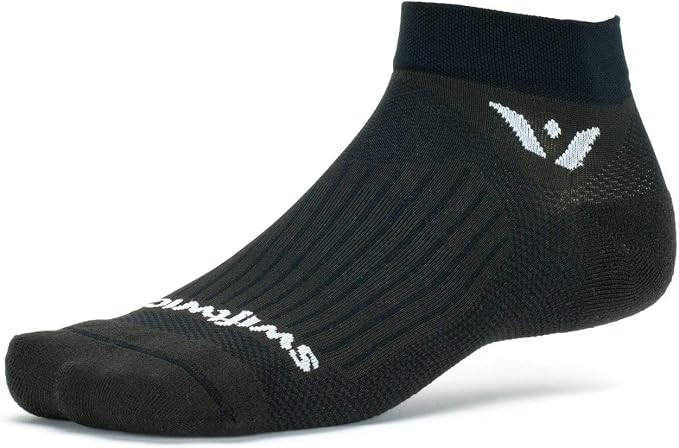
Swiftwick has a loyal following among runners and cyclists who want a sleek, no-nonsense sock. The Aspire One is the very short, minimal version. It is designed to disappear inside the shoe, with a snug fit that keeps the fabric from bunching and a light feel that does not trap heat.
The advantage of a short sock is airflow. In warm weather, exposed ankles stay cooler, and the lightweight knit dries quickly after a sweaty climb. Riders also like the way a thin sock lets the shoe fit as the manufacturer intended, which matters when your cycling shoes are already a precise fit.
The compromise is coverage. With such a low cuff, you lose the ankle protection and the classic road look of a taller sock, and in cool weather your ankles will notice. Think of this as your summer and race-day sock rather than your only sock.
Pros
- Very light and fast drying
- Snug, low-bulk fit
- Great for warm weather
Cons
- Minimal ankle coverage
- Not ideal for cool or wet rides
Compare sizes and colors
Check Swiftwick on Amazon
Pearl Izumi Attack Cycling Socks
Pearl Izumi is one of the most established names in cycling apparel, and the Attack socks reflect that experience. They are designed as a lightweight, performance-oriented sock with a fit that stays put through hard efforts and long rides.
The appeal here is reliability. You get a sock from a brand that designs shoes, shorts and jerseys, so the fit and feel are tuned for cyclists rather than adapted from a running or hiking sock. It is the kind of pair you can wear for a weekend group ride and then again for a commute, with no fuss in between.
It may not have the cult following of the wool specialists, but it fills a very useful gap for riders who want dependable performance without a boutique price.
Pros
- Cycling-specific design
- Dependable race-ready fit
- Reasonable value for a major brand
Cons
- Less cushioning than wool options
- Check listing for current blend and height
View current styles and pricing
Check Pearl Izumi on AmazonRacing and fast riding: what actually matters
In a race or hard group ride, you want zero distractions. That means no bunching, no pressure points and no sweaty foot sliding inside the sock. Low-profile socks help because they leave space in the shoe, and a firm arch band keeps the fabric from migrating. Light colors reflect heat on hot days, while dark colors hide road grime and chain oil on commutes.
If you are choosing between these two, think about your priorities. The Swiftwick is the more minimal, summer-leaning option, while the Pearl Izumi gives a more conventional cuff and a familiar cycling-brand fit. Either one works well as a dedicated race or hard-training sock, leaving your wool pairs for relaxed rides and bad weather.
6. Value and Everyday Picks: Thirty48 and DANISH ENDURANCE
You do not need to spend a lot to ride in comfort. These two options aim at riders who want solid everyday performance and, in one case, a longer cuff that offers extra coverage.

Thirty48 Cycling Socks
Thirty48 is a cycling-focused brand that targets riders who want a quality sock without paying boutique prices. These socks are designed to be comfortable through regular training, with a fit that keeps the fabric smooth under the foot and a construction meant to handle repeated washing.
For a typical rider doing a few rides a week, this is the sort of sock that does its job quietly. You put it on, you ride, you forget about it. That is the highest compliment you can pay a sock. They also make a sensible choice for building out a rotation, since you can buy several pairs without a major spend.
Pros
- Comfortable for regular training
- Good value for building a rotation
- Smooth, cyclist-focused fit
Cons
- Less brand heritage than long-established names
- Not a specialist for extreme weather
Check sizing and multi-pack options
Check Thirty48 on Amazon
DANISH ENDURANCE Long Cycling Socks
As the name suggests, this is a longer sock. A taller cuff covers more of the lower leg, which adds a little warmth, protects against chain-ring scuffs and delivers a supportive, stays-up feel. Many riders also simply prefer the look of a longer sock with a cycling kit.
The long design is useful when temperatures drop and you do not want bare skin between your sock and your knee warmers or tights. It also pairs well with riders who like a hint of compression, since the extra length helps the sock stay anchored rather than sliding down around the ankle.
Check the listing for the exact blend and sizing, and remember that a taller sock will feel warmer in hot weather.
Pros
- Extra coverage and a stay-put fit
- Good for cooler rides
- Classic road-kit look
Cons
- Warmer in peak summer
- Longer cuff is not for everyone’s taste
See current sizes and colors
Check DANISH ENDURANCE on AmazonIs spending more on socks worth it?
Not always. For a casual rider doing short, dry rides, a mid-priced sock is usually all you need. The benefit of premium socks appears on long rides, in extreme weather and for riders with sensitive feet. A good approach is to buy a couple of premium pairs for your hardest rides and fill out the rest of the drawer with affordable options like these. That way you get comfort where it counts without overspending.
Longer socks like the DANISH ENDURANCE also double as a mild layer for the lower leg, which is handy when mornings start cool and warm up later. Bring them on trips and you can handle a surprising range of temperatures with just one style.
7. Road Classics and Daily Drivers: Castelli and Pick #10
Some socks are about heritage and style, others about practicality. This pair of picks covers both ends: a road-racing classic and an affordable spare for the daily rotation.

Castelli Endurance / Gregge Cycling Socks
Castelli is an Italian brand steeped in road racing, and its socks carry that same refined, performance-first attitude. The Endurance and Gregge styles are aimed at riders who want a technical fit with a clean, classic look that matches a full kit.
The strength is in the details. Cycling-specific socks from a brand like this typically focus on fit zones, breathable construction and a comfortable cuff that stays put under bib shorts and tights. If you ride with a club and care that your kit matches from head to toe, these are an easy choice.
They are a good all-round road option, comfortable for long rides and neat enough for race day.
Pros
- Road-racing heritage and refined design
- Pairs nicely with a full kit
- Comfortable for long endurance rides
Cons
- Style choices vary, so read the listing
- Price can run above basic socks
Browse current Castelli socks
Check Castelli on Amazon
Everyday Value Cycling Socks (Pick #10)
Every rotation needs a few dependable, affordable pairs: the ones you wear for commutes, trainer sessions and rainy-day rides where you would rather not risk a premium sock. This pick fills that role. It is a practical option for riders who want to stretch their budget across more pairs.
The value of a spare is flexibility. When your favorite wool pair is in the wash, or when you are packing for a trip, having a few extra reliable socks means you never have to compromise on a ride. Check the listing for current fabric details, sizing and pack contents before ordering.
Pros
- Budget-friendly for building a rotation
- Handy for commutes and trainer rides
- Easy to replace when worn
Cons
- May not match premium socks for durability
- Confirm fabric and sizing on the listing
See current availability
Check Pick #10 on AmazonStyle, tradition and the rules of kit
Road cycling has a long culture of kit etiquette, and socks are part of it. Many riders prefer plain white or black socks with a classic cuff height. Others enjoy bold patterns that match their team colors. Style is personal, but if you ride with a club, it helps to know the local norm. Whatever you choose, comfort should still decide the final purchase.
As for the spare pair, keep one or two reliable socks in your saddle bag or gym bag. You never know when a flat tire in the rain will leave your feet soaked, and a dry sock at a café stop can rescue the second half of a ride.
8. Wet and Cold Weather Picks: Showers Pass and VeloToze
British riders joke that there is no such thing as bad weather, only bad clothing, and nothing proves it faster than a ride that starts dry and ends in a downpour. These two picks are built for conditions where a standard sock gives up.

Showers Pass Crosspoint WP (Waterproof)
Showers Pass specializes in rain gear for cyclists, and the Crosspoint WP is a waterproof sock designed to keep your feet dry when shoe covers are not enough. A waterproof, breathable layer helps block puddle splash and rain while still letting some moisture vapor escape.
This is a specialist tool. In heavy rain, commuting through winter or riding wet gravel, a waterproof sock can be the difference between a miserable ride and a tolerable one. Because the construction is more substantial, it feels warmer and snugger than a standard sock, so you would not choose it for a summer group ride.
Pair it with decent shoe covers and your feet will cope with a lot more than you expect.
Pros
- Waterproof protection for wet rides
- Useful for winter commuting
- Adds warmth in cold weather
Cons
- Too warm for hot weather
- Less breathable than standard socks
Check sizing and current price
Check Showers Pass on Amazon
VeloToze Active Compression Socks
VeloToze is best known for cold-weather cycling accessories, and its Active Compression socks bring a supportive, snug feel to longer days on the bike. Compression socks apply gentle pressure along the lower leg, which many riders find comfortable on long rides and helpful for the feel of their legs afterward.
Be realistic about the claims. Research on compression and performance is mixed, so treat it as a comfort and recovery preference rather than a guaranteed speed boost. If you like the sensation, or you spend hours seated with your legs working, you will probably enjoy it. If you prefer a lighter, looser feel, a standard sock may suit you better.
Pros
- Supportive compression feel
- Good for long days and travel
- Stays put on the leg
Cons
- Compression is not for everyone
- Benefits vary from rider to rider
See compression levels and sizes
Check VeloToze on AmazonLayering for wet and cold feet
Keeping feet warm and dry is a layering problem. Start with a snug base sock, add a shoe cover to block wind and spray, and consider a toe warmer or insulated overshoe for freezing days. A waterproof sock works best as part of that system rather than a replacement for it. If your shoes are already tight, remember that a thick or waterproof sock adds volume. Try the combination at home before you commit to a long ride, and size up your shoes if circulation becomes an issue.
Cold feet are rarely about the sock alone. Wind chill, wet shoes and tight straps all play a part. Loosening the shoe slightly can improve blood flow, and wiggling your toes now and then helps on cold descents. If your feet are always cold even in good gear, speak with a healthcare professional.
9. Sock Height and Length: Which Cuff Is Right for You?
Cuff height is half style and half function, and it affects comfort more than most riders expect. Cycling socks generally come in a few lengths, and each has a place.
| Cuff Height | Typical Look | Best Conditions |
|---|---|---|
| Ultra-short (about 1 inch) | Barely above the shoe | Hot weather, racing, indoor trainer |
| Short (about 3 inches) | Just above the ankle bone | Warm to mild rides, gravel, commuting |
| Classic (about 5 to 6 inches) | Mid-calf, traditional road look | Mixed weather and club rides |
| Tall (7 inches and up) | Reaches toward the knee | Cool weather, compression, tights |
Hot-weather riders usually choose shorter socks because airflow around the ankle helps with cooling. Cold-weather riders go longer so no skin is exposed between sock and leg warmer. Style also plays a role. Road cycling has strong traditions around sock height, and some clubs even enforce them, so a quick glance at what your riding group wears can save you an awkward moment.
There is one more practical point. The muscles you use when pedaling, from your calves to your quads, are worth looking after, and a sock that stays up and feels supportive makes long rides more pleasant. If you are curious about the bigger picture of what pedaling works, read our breakdown of what muscles cycling works.
Matching height to your kit
Think about what meets your sock cuff. With bib shorts and bare legs, the cuff is a visible style feature. With knee warmers or tights, a taller sock prevents gaps and chafing where fabrics overlap. With shoe covers, a slightly longer cuff keeps the cover from rubbing your ankle bone. Matching the cuff to the rest of your clothing makes the whole outfit feel cleaner and more comfortable.
Gender and fit considerations
Many cycling socks are marketed as unisex, but fit can differ. Women often have narrower feet and slimmer calves, so a sock labelled for women or a smaller size range may fit better. The opposite can apply for riders with wider feet or larger calves. Check the sizing chart and read the listing carefully, and do not be afraid to try a different size if the first one feels off.
Shop cycling socks by height
Browse Cycling Sock Heights10. Fit, Sizing and Compression: Getting It Right
A cycling sock lives inside a shoe that has almost no spare room, which makes fit critical. Too loose and the sock bunches and rubs. Too tight and circulation suffers, which leads to numb toes and cold feet. The goal is a snug, smooth fit that feels like a second skin.
Match the sock to your shoe
If your shoes are already snug, a thick wool sock may push them over the edge. In that case, consider a thinner synthetic or a lightweight blend. If your shoes have a little extra room, a cushioned wool sock can fill the space nicely. For more guidance on that side of the equation, take a look at our guide to the best cycling shoes, since sock choice and shoe fit go hand in hand.
Read the sizing chart
Sizes vary between brands, and many cycling socks come in ranges such as small, medium and large that cover several shoe sizes. If you sit between sizes, consider your foot shape. A wide foot may prefer the larger size, while a narrow foot often does better with the smaller one.
Understand compression levels
Light compression, the kind built into many standard cycling socks, mostly serves to hold the sock in place. Medium and firm compression socks, like the VeloToze option above, apply real pressure and should feel supportive but never painful. If a sock leaves deep marks or makes your feet tingle, it is too tight for you. Anyone with circulation concerns or a medical condition should check with a healthcare professional before using compression garments.
Watch for seams and hot spots
Flat or seamless toe construction makes a big difference on long rides. Run a finger around the inside of a new sock. If you feel a ridge across the toes, imagine it pressed against a shoe for four hours. Smooth construction is a hallmark of well-made cycling socks and a major reason to invest in good ones.
Break-in and testing
Treat a new sock the way you would treat new shoes. Wear it first on a short ride, then move on to longer ones. Check for rubbing, pressure and slipping, and look at your feet when you finish. Redness in one spot suggests a seam or fold in the wrong place. If you notice a problem, try smoothing the sock before you put your shoe on, since small folds near the toes can cause trouble later in a ride.
Toe boxes and arch support
A well-made cycling sock has a smooth, shaped toe box that follows the contour of your foot. Many also include an arch band, a ring of tighter knit that hugs the middle of the foot to keep the sock aligned. These features are small, but together they help your sock stay in place through thousands of pedal strokes.
Compare fits and compression levels
Shop Compression Cycling Socks11. Care and Longevity: Making Your Socks Last
Good socks are an investment, and a little care keeps them performing. The good news is that cycling socks are not demanding. A few habits go a long way.
- Wash after every ride. Sweat and bacteria break down fibers and cause odor. Do not let damp socks sit in a bag.
- Turn them inside out. This helps the wash reach the sweat-soaked inner surface and reduces pilling on the outside.
- Use a gentle cycle and cool or warm water. Hot water can damage elastic and shrink wool blends.
- Skip fabric softener. Softeners coat fibers and reduce their ability to wick moisture.
- Air dry when you can. High dryer heat shortens the life of stretch fibers. If you do use a dryer, choose low heat.
- Rotate pairs. Giving socks a rest between rides lets the fibers recover their shape.
Always check the care label on your particular pair, because wool blends, compression socks and waterproof socks each have their own rules. Waterproof socks in particular are usually best washed gently and dried carefully so the membrane stays intact.
Finally, know when to retire a sock. Thin spots at the heel and toe, loose cuffs that no longer hold, and fabric that has lost its stretch are all signs it is time. Wearing a worn-out sock invites blisters, and replacing it costs far less than a ride ruined by foot pain.
Storing socks and handling stains
Store socks flat or loosely folded rather than stretched over a hook, and keep them away from rough surfaces that could snag the fibers. If you ride in muddy conditions, rinse out heavy dirt before washing so grit does not rub into the knit. For stubborn odor, a soak in cool water with a small amount of mild detergent usually works better than hot water. Avoid bleach, which can damage both wool and elastic fibers.
Getting more life from a premium sock
If you own a premium merino pair, reserve it for the rides where it shines and rotate in cheaper socks for short or dirty rides. This stretches the lifespan of your best pair and lets you enjoy it for longer. Keep an eye on wear spots at the heel and ball of the foot, since those fail first. Trimming loose threads rather than pulling them prevents small snags from becoming holes.
Stock up on spare pairs
Find Cycling Sock Multipacks12. How to Choose the Right Cycling Socks for Your Riding Style
With ten strong options, the best sock is the one that matches your riding. Here is a simple way to narrow it down.
| If You Are… | Consider | Why |
|---|---|---|
| A high-mileage rider who wants one lasting pair | Darn Tough Vermont | Merino comfort and durability |
| A cool-weather or shoulder-season rider | DeFeet Wooleator / Woolie | Soft, warm and lightweight |
| A racer or hot-weather rider | Swiftwick Aspire One, Pearl Izumi Attack | Light, fast drying and snug |
| On a budget or building a rotation | Thirty48, Pick #10 | Solid value for several pairs |
| Wanting extra coverage or support | DANISH ENDURANCE, VeloToze | Longer cuffs and compression |
| A club rider who loves classic style | Castelli Endurance / Gregge | Road heritage and clean fit |
| A wet-weather commuter | Showers Pass Crosspoint WP | Waterproof protection |
Think about training too. If you are building toward longer rides, the right gear removes small obstacles that make riding feel harder than it needs to. Our guide on how to train for cycling explains how to build endurance step by step, and if you track your efforts with power, our explainer on what FTP is in cycling shows how to measure your fitness. Comfortable feet make it much easier to stick to that plan, because nothing derails a hard session like a blister.
A practical starter kit for most riders looks like this: two or three pairs of an everyday sock, one premium merino pair for long days, one short summer sock, and one waterproof or compression pair for specific conditions. That covers nearly every ride without overspending.
A simple three-question test
If you are still unsure, ask yourself three things. First, what is the weather on most of my rides? Hot weather points toward short, light socks, while mild and cool weather points toward wool or longer cuffs. Second, how long are my rides? Longer rides reward better fit, better materials and a bit of cushioning. Third, what is my budget? Set a sensible limit, then spend a bit more on the pairs you will wear most.
Do not forget the rest of your kit
Socks work best alongside other good gear. A properly fitted saddle, good shorts and well-adjusted cleats all reduce the strain on your feet and legs, and a quick visit to a bike fitter can solve problems that no sock will fix. If you are curious how pedaling builds your lower body, you may also enjoy our article on whether cycling builds glutes.
Build your sock rotation today
Shop Cycling Socks on AmazonFrequently Asked Questions About Cycling Socks
Do you really need special cycling socks?
You can ride in regular athletic socks, but cycling socks are designed for the shoe and the motion. They fit more precisely, manage sweat better and often have zones that stop slipping. On rides longer than an hour or two, most riders notice the difference quickly.
Are wool or synthetic cycling socks better?
Neither is universally better. Merino wool offers comfort across a wide temperature range and resists odor, while synthetics are lighter, dry fast and suit hot weather and racing. Many cyclists own both and choose based on the day.
What is the best sock height for cycling?
It depends on conditions and taste. Short socks work well in the heat, classic mid-calf socks suit mixed weather and club rides, and tall socks help in cool conditions or with compression. Choose what stays comfortable and fits your style.
Do compression cycling socks improve performance?
Evidence for performance gains is mixed. Many riders like the supportive feel and find it comfortable on long days, but you should treat compression as a comfort preference rather than a guaranteed advantage.
How do I stop my feet from going numb on rides?
Numbness often comes from a combination of tight shoes, pressure points and poor sock choice. Make sure your sock is not too thick for your shoe, check your cleat position and shoe fit, and avoid overtightening the straps. If it persists, talk with a bike fitter or healthcare professional.
Are waterproof cycling socks worth it?
For wet-weather commuting and cold, rainy rides, they can be very worthwhile. They keep splash and rain out and add warmth. For dry or hot conditions they are unnecessary and can feel too warm.
How many pairs of cycling socks should I own?
Three to five pairs is a sensible starting point for regular riders. That lets you rotate pairs through the wash and have the right sock available for hot, mild and cold days.
How often should I replace cycling socks?
Replace them when you see thin spots, stretched cuffs or reduced elasticity. For regular riders, quality socks can last a long time, while budget pairs may wear sooner. A worn sock invites blisters, so do not push it.
Can I wear cycling socks for running or hiking?
Yes, many people do. Cycling socks are generally thin and moisture-wicking, which works for casual use. For hiking, a dedicated cushioned sock usually offers more padding and protection.
Should cycling socks be tight?
They should be snug and smooth but never painful. A sock that bunches or slides is too loose, and one that leaves deep marks or causes tingling is too tight.
How do I prevent blisters when cycling?
Choose a well-fitting, seam-smooth sock, keep feet dry, make sure your shoes fit properly and replace worn socks. Wool and quality synthetics both help by managing moisture, which is the main cause of friction hot spots.
Should I buy cycling socks in a different size from my shoe size?
Not usually. Match the sock to your normal shoe size, but check the manufacturer’s size chart, because many cycling socks cover a range of sizes. If you sit between sizes, consider your foot width and the volume of your shoes before deciding.
Does cycling help with weight loss?
Cycling is a great low-impact way to burn calories and build fitness, and comfortable gear makes it easier to ride consistently. Read more in our guide to cycling for weight loss.
Conclusion: Small Upgrade, Big Difference
The best cycling socks do their job so well you forget they are there. Whether you choose the long-lasting merino comfort of Darn Tough, the cozy feel of DeFeet, the race-day lightness of Swiftwick, the classic style of Castelli or one of the specialist waterproof and compression options, the right pair will protect your feet, keep you comfortable and make every mile more enjoyable.
Start with the conditions you ride in most, add a couple of specialist pairs for the extremes, and look after them with simple washing habits. Your feet will thank you on the next long ride, and you may find yourself riding further just because it feels better.
Ready to upgrade your ride? Find your perfect pair.
Shop the Best Cycling Socks