
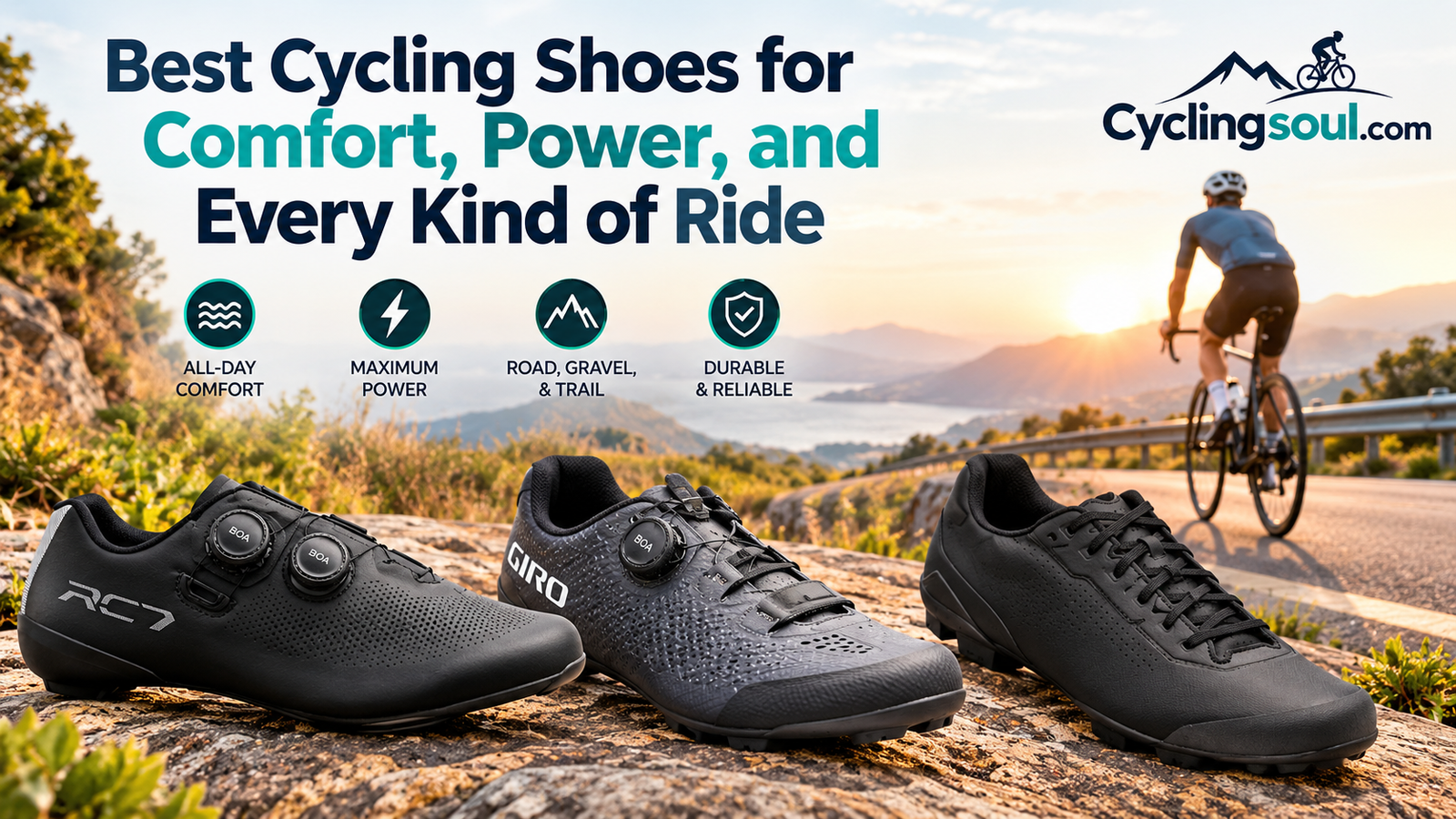
10 Best Cycling Shoes for Comfort, Power, and Every Kind of Ride
From stiff-soled road racers to indoor studio favorites and walkable SPD options, here is a practical, honest guide to picking the pair that actually fits the way you ride.
Why Cycling Shoes Matter More Than You Think
Most new riders spend their budget on the bike, then wonder why their feet go numb at the forty-minute mark. The truth is that your shoes are one of only three contact points between you and the machine, and they are the only one that directly transmits the work your legs produce. A flexible sneaker sole bends under every pedal stroke, which wastes a little energy each time and concentrates pressure on a small patch of your arch. Over a long ride, that adds up to hot spots, tingling toes, and tired legs that feel like they should have had more left.
A proper cycling shoe fixes this in a few quiet ways. The stiffer sole spreads force across the whole foot, so you push with the big muscles instead of fighting the shoe. A cleat locks your foot to the pedal, which lets you pull up as well as push down and keeps your foot from wandering. And the shape of the upper is designed for a bent-knee, forward-leaning position rather than walking, so your foot sits where it should stay put for hours.
If you are just getting going and still wondering whether you even need clipless pedals, our guide on how to start cycling walks through the basics of gear, so you can decide how far to go before spending on shoes.
Better shoes also change how the whole ride feels. Riders who switch often describe a more connected, direct sensation at the pedals, and many notice they can hold effort for longer simply because less is lost between hip and pedal. If you plan to follow a structured plan, which we cover in how to train for cycling, a stiff, secure shoe is one of the easiest upgrades to turn that training into real speed.
The ten pairs below cover road, indoor, and mixed-use riding, and they span from budget-friendly to near-premium. None of them is the best for everybody, and that is the point: the right choice depends on the bike you ride, the cleats you prefer, and how much walking you do off the saddle.
What actually changes when you clip in
Think about what your foot does on a pedal. In a sneaker, the pedal pins press into a soft sole, the foot slides a few millimeters on every stroke, and the arch flexes around the pedal spindle. None of that is dramatic on a twenty-minute spin, but it accumulates. A cycling shoe holds the ball of your foot directly over the spindle, which is where most riders produce power most comfortably, and it keeps your ankle, knee, and hip stacked in a consistent line from stroke to stroke.
That consistency matters for comfort as much as speed. Riders who struggle with knee soreness or foot numbness often find that a stable, properly set up shoe and cleat solves the problem without any other changes. It is not magic, and it will not fix a bike that does not fit, but it removes one big variable from the equation and makes it far easier to work out what else needs adjusting.
There is also a confidence benefit. Many riders worry that being attached to the pedals will be scary, and the first few clip-ins can feel awkward. Within a couple of weeks, though, unclipping becomes an automatic twist of the heel, and the secure connection lets you focus on the road, the group, or the workout instead of keeping your feet from bouncing off the pedals on rough surfaces.
Ready to browse the full range of cycling shoes?
Shop Cycling Shoes on AmazonHow We Chose These 10 Cycling Shoes
A good roundup should tell you how it was built, so here is the thinking. We looked for shoes that cover the real ways people ride: fast road miles, relaxed weekend loops, indoor studio classes, and commuting where you need to walk a bit. For each pair we weighed the same handful of factors.
Sole stiffness and power transfer
The sole is the engine room of a cycling shoe. Entry-level models typically use a nylon or composite plate that offers a good balance of efficiency and comfort. Higher-end shoes move to carbon plates that barely flex at all. More stiffness is not automatically better, because a very rigid sole can feel harsh on long, casual rides, especially if your pedaling is smooth rather than aggressive.
Closure system
Hook-and-loop straps, ratchet buckles, and dial systems all work, but they feel different. Straps are simple and light, buckles hold well and are easy to adjust with gloves on, and dials give fine, even tension that many riders love. We favored shoes with closures that hold their setting for the whole ride.
Cleat compatibility
Not every shoe fits every pedal. Three-bolt road cleats and two-bolt SPD cleats are not interchangeable, and some shoes accept both. We paid close attention to what each model supports, and we explain the differences in detail further down.
Fit, ventilation, and walkability
A shoe that fits badly is the wrong shoe, however good the spec sheet looks. We looked at toe box room, heel hold, and breathability, plus how comfortable each pair is when you step off the bike for a coffee stop.
Value
Finally, we considered what you get for the money. A budget shoe that does its job well earns a place just as readily as a premium option, because the best purchase is the one that keeps you riding.
One caution: manufacturers refresh materials and closures from time to time, so always check the current product listing for the exact specs, sizing notes, and included parts before you buy.
Materials and durability
Uppers are typically made from synthetic leather, woven mesh, or knit fabrics. Synthetic leather tends to be durable and easy to wipe clean, mesh breathes well in heat, and knit uppers are soft and conforming but can be less protective in cool or wet weather. We considered how each style suits the kind of riding the shoe is meant for, rather than treating any single material as the winner.
Weight and ventilation
Lighter shoes feel livelier, and ventilation matters more than most people expect. Feet get hot on summer rides, and a shoe with generous vents or breathable panels can be the difference between a comfortable day and a soggy one. On the other hand, heavily vented shoes let in more air on cold mornings, so riders in cooler climates may want to pair them with thicker socks or shoe covers.
Compare current prices and sizes in one place.
Compare Best Cycling ShoesQuick Comparison of the 10 Best Cycling Shoes
If you want the short version, this table lines up each pair by its best use and the kind of rider it suits. The details and honest trade-offs for every shoe follow in the sections after it.
| Shoe | Best For | Riding Style | Our Take |
|---|---|---|---|
| Shimano SH-RC302 | Road riders stepping up | Road, fitness, long rides | Dependable all-rounder |
| Shimano SH-RC703 | Performance-minded riders | Fast road, events | Step into serious power transfer |
| Giro Cadet | Newer road riders | Road, mixed riding | Friendly fit, easy to live with |
| Giro Stylus | Riders wanting a refined look | Road, group rides | Clean style, comfortable build |
| Fizik Tempo Overcurve R5 | Riders wanting a snug, athletic fit | Road, endurance | Sleek and race-flavored |
| Shimano SH-RP101 | Beginners and budget buyers | Road, fitness | Simple, proven entry point |
| Peloton Cycling Shoes | Indoor studio riders | Indoor cycling | Plug-and-play for studio bikes |
| KESCOO Unisex Cycling Shoes | Budget-conscious riders | Indoor and casual outdoor | Affordable way to try clipless |
| Kyedoo Men’s SPD Cycling Shoes | Commuters and trail riders | Commuting, touring, mountain | Walkable and practical |
| Tommaso Strada Peloton | Home and studio riders | Indoor cycling | Value-focused indoor shoe |
See every shoe in this lineup on Amazon.
Browse Road Cycling ShoesShimano SH-RC302 and SH-RC703: Two Ways Into Serious Road Shoes
Shimano has been making cycling footwear for a very long time, and its road range is a good starting point because it climbs in logical steps. The RC302 sits in the approachable middle of that ladder, while the RC703 is aimed at riders who want to push harder and care about every watt.

1. Shimano SH-RC302
The RC302 is the shoe many riders graduate to after their first pair, and it is easy to see why. It brings a stiff, power-friendly sole together with a secure closure and a supportive upper, without the price that comes with top-tier racing gear. It handles a Saturday group ride and a long Sunday endurance day with equal ease, and it feels like a real cycling shoe from the first pedal stroke.
Shimano’s fit tends to run on the slightly narrow side for some riders, so it is worth reading the sizing notes in the listing. Riders with wider feet may want to look closely at the width options available.
Pros
- Stiff sole for efficient pedaling
- Secure, adjustable closure
- Trusted brand with broad cleat support
- Good value for a performance shoe
Cons
- Can feel snug for wide feet
- Walking is awkward, as with any road shoe

2. Shimano SH-RC703
The RC703 is for the rider who has outgrown the entry level and wants a shoe that feels like a precision tool. The sole is notably stiffer, the closure is finer to adjust, and the whole shoe has a tighter, more locked-in feel. When you stand to sprint or grind up a climb, the shoe stays out of the way and lets the force go straight to the pedal.
That stiffness is a double-edged sword. On a four-hour endurance ride at an easy pace, a very rigid sole can feel unforgiving, so this pair makes the most sense if you ride with purpose and enjoy pushing the pace.
Pros
- Excellent power transfer
- Precise, secure fit
- Race-ready feel for events and fast group rides
- Premium build from a respected maker
Cons
- Higher price than entry-level options
- Firm ride can be too much for relaxed cruising
Choosing between the two comes down to how you ride. If you do a mix of rides and want one dependable shoe, the RC302 is the smarter pick. If you chase personal bests and enjoy fast sessions, the RC703 rewards that ambition. Either way, pair them with comfortable cycling socks to keep your feet dry and blister-free over long distances.
Head-to-head: RC302 vs RC703
Imagine two riders. The first rides three or four times a week, mixes group rides with solo endurance days, and wants a shoe that is comfortable for hours. The RC302 matches that profile: stiff enough to feel efficient, forgiving enough to wear all day, and priced sensibly. The second rider trains with intervals, enters fast events, and notices small differences in how power reaches the pedals. For that rider, the extra rigidity and finer fit of the RC703 are worth the added cost.
If you are on the fence, a useful test is to ask whether you have ever wished your current shoe felt more solid under hard efforts. If the answer is yes, step up. If your complaint is more about comfort or fit, a premium sole will not solve it, and the RC302 is the better place to put your money.
Looking for more Shimano options?
Shop Shimano Cycling ShoesGiro Cadet and Giro Stylus: Comfort-First Road Options
Giro built its reputation on helmets, and its shoes carry the same attention to fit and finish. Both of these models lean toward comfort and approachability rather than all-out racing, which makes them a great match for riders who value a pleasant ride over a pure stiffness number.

3. Giro Cadet
The Cadet is an easygoing shoe that welcomes riders who are still finding their feet. The fit is forgiving, the closure is straightforward, and the overall feel is reassuring rather than intimidating. It is the sort of pair you can lace up for a spontaneous ride and forget about, which is exactly what a good beginner-friendly shoe should do.
It will not give you the razor-sharp feedback of a carbon-soled racer, and that is fine. Most riders on their first clipless setup benefit more from comfort and confidence than from squeezing out the last percent of efficiency.
Pros
- Comfortable, forgiving fit
- Simple, approachable design
- Good for a mix of riding styles
Cons
- Less rigid than performance shoes
- Check cleat compatibility before buying

4. Giro Stylus
The Stylus brings a cleaner, more refined look to the Giro lineup, and it pairs that look with a comfortable, secure build. It is a pleasant shoe to wear on group rides, coffee runs, and weekend adventures where you want to look put-together without giving up performance. The upper feels well finished, and the fit is the kind that disappears once you are rolling.
If you care about appearance as much as ride quality, this one deserves a look. It is a reminder that cycling shoes do not need to look like pure equipment to work well.
Pros
- Neat, attractive styling
- Comfortable for long sessions
- Reliable fit and finish from Giro
Cons
- Not the stiffest option for hard racing
- Confirm sizing and cleat support in the listing
Both Giro shoes work well for riders who spend time on varied routes. If you are putting in miles in the hope of dropping weight, take a look at our breakdown of whether cycling builds glutes to see how a stable foot position helps you recruit the right muscles.
Choosing between the Cadet and the Stylus
The two Giro models overlap more than they differ, so think about priorities. If you want the most welcoming, low-fuss fit and you are still building your cycling habit, the Cadet is a natural starting point. If you already know you enjoy riding with others, care about how your kit looks, and want a polished finish, the Stylus rewards that taste. Both are comfortable choices for riders who would rather enjoy the ride than chase marginal gains.
Whichever you choose, spend a few minutes with the size guide, because Giro sizing is usually reported in European sizes and may not line up neatly with your usual shoe number. If you are between sizes, read buyer feedback about whether the shoe runs small or large before deciding, and remember that a slightly roomier fit is usually easier to live with than one that is too tight.
Want to see the full Giro range?
Shop Giro Cycling ShoesFizik Tempo Overcurve R5 and Shimano SH-RP101: Athletic Fit Meets Simple Value
This pairing shows the two ends of a useful spectrum. One is a sleek, snug-fitting shoe with a sporty personality. The other is a no-nonsense entry point that does the basics very well.

5. Fizik Tempo Overcurve R5
Fizik is an Italian brand with a strong racing pedigree, and the Overcurve R5 shows it. The shoe wraps the foot in a snug, athletic way and favors a low-profile, aerodynamic look. Riders who like the feeling of a shoe that hugs the foot from heel to toe tend to love this design, and the contoured shape helps hold you in a good position on longer efforts.
That snugness is the thing to check before buying. If you have a wider forefoot or prefer a roomy toe box, try to confirm the fit details in the reviews and listing first.
Pros
- Sleek, sporty design
- Snug, secure feel
- Racing-inspired heritage
Cons
- Narrower fit may not suit everyone
- Priced above basic entry-level shoes

6. Shimano SH-RP101
Not everyone needs a top-shelf shoe, and the RP101 is proof. It is a simple, sensible road shoe that gets you clipped in without a large outlay. The build is basic, the closure is easy to use, and the whole package is designed to help you ride more, not spend more. It is a great fit for fitness riders, newcomers, and anyone who wants to test clipless pedals before committing to an expensive pair.
You give up some stiffness and refinement compared with Shimano’s higher models, but for many riders that trade is entirely reasonable.
Pros
- Wallet-friendly price
- Easy to use and adjust
- Solid first step into clipless riding
Cons
- Less stiff than premium models
- Basic materials and finish
When you are trying to decide how much to spend, remember that the shoes are only part of the comfort equation. Good cycling shorts and a well-fitted saddle matter just as much, so spread your budget across the whole kit rather than putting everything into one item.
Who should buy which
The Fizik suits riders who already know they like a close, performance-oriented fit and who value the look of a sleek, race-inspired shoe. It is a good choice if you have tried looser shoes and found your foot moving around inside them. The Shimano RP101 is the opposite kind of purchase: it is for riders who want a straightforward, affordable way to start using clipless pedals and who would rather invest the savings in a good helmet, lights, or shorts.
There is no shame in starting small. Many experienced riders began with an entry-level shoe, learned what they liked and disliked, and then bought a more specialized pair with much better information. Buying a modest shoe first is often smarter than guessing at premium features you may never use.
Find the right fit and budget for your next pair.
Shop Road Bike ShoesPeloton and KESCOO Shoes: Built for Indoor Riding
Indoor cycling has its own shoe ecosystem. Studio bikes and many home bikes use a three-bolt cleat design, so the shoes that work best are built around it. Comfort during a forty-five-minute class matters more than weather resistance or walking ability, and both of these options are designed with that in mind.

7. Peloton Cycling Shoes
If you ride a Peloton or a similar bike, these shoes are the plug-and-play answer. They are made to work with the bike’s pedals, they are comfortable for class-length sessions, and they remove the guesswork about compatibility. Setup is quick, and the fit is geared toward the quick tempo changes of a studio workout.
They are not the best choice for riding outdoors on a road bike with different pedals, so treat them as an indoor-first shoe.
Pros
- Designed for studio and home bikes
- Comfortable for class-length rides
- Easy, no-fuss setup
Cons
- Best suited to indoor use
- Not meant for walking long distances

8. KESCOO Unisex Cycling Shoes
The KESCOO is a budget-friendly way to see whether clipless riding is for you. It suits riders who want to try a locked-in connection to the pedals without a big commitment, and it can serve both indoor sessions and relaxed outdoor rides depending on the cleat setup you choose.
As with most low-cost shoes, expect basic materials and a simpler overall finish. If you ride often, you may eventually upgrade, but as a starter pair it covers a lot of ground for very little money.
Pros
- Very affordable
- Unisex design for a broad range of riders
- Good for trying clipless pedals
Cons
- Basic build quality
- Less refined than premium brands
Indoor riders often focus heavily on intensity, and a locked-in shoe makes it easier to stay on top of structured sessions. Many people add power targets over time, and understanding what FTP is in cycling helps you make the most of the work you do in the saddle.
Getting more from indoor shoes
Indoor sessions are intense, hot, and sweaty, so ventilation and closure security matter. Make sure the shoe stays snug when you stand out of the saddle, because loose closures tend to shift under hard efforts. Wear moisture-wicking socks, and let the shoes dry fully between classes so they stay fresh.
It is also worth thinking about how often you ride. If you attend classes once a week, a budget pair like the KESCOO may be all you ever need. If you ride most days and care about long-term comfort, the Peloton or Tommaso options give you a more dedicated, bike-matched experience. As always, confirm cleat compatibility with your specific bike before ordering, since indoor bikes vary and some use different pedal systems.
Shop indoor cycling shoes for your next class.
Shop Indoor Cycling ShoesKyedoo SPD and Tommaso Strada: Practical Picks for Real-World Riding
The final two shoes are about practicality. One leans toward everyday versatility, and the other toward good-value indoor riding.

9. Kyedoo Men’s SPD Cycling Shoes
SPD-style shoes are the practical choice for riders who walk as much as they pedal. The recessed cleat sits inside the sole, so you can walk into a cafe or office without clomping around like a duck on ice. The Kyedoo is built around this idea, making it a smart pick for commuters, touring riders, and casual trail explorers.
The trade-off is that this style of shoe is a little less stiff than a dedicated road racer, but for mixed use that is often a feature rather than a flaw.
Pros
- Walkable thanks to a recessed cleat design
- Great for commuting and touring
- Works with popular two-bolt SPD pedals
Cons
- Less rigid than road shoes
- Not designed for racing

10. Tommaso Strada Peloton
The Strada is a straightforward indoor shoe that suits home and studio riders who want a dependable fit at a fair price. It is designed with the same three-bolt compatibility indoor riders look for, and it aims to offer comfort for the typical class or home session without a premium price tag.
If you ride indoors several times a week, a dedicated pair like this is a sensible upgrade over sneakers, and it often pays for itself in comfort alone.
Pros
- Good value for indoor riders
- Designed for popular indoor bike pedals
- Comfortable for regular sessions
Cons
- Aimed at indoor use more than road riding
- Simpler materials than top-tier shoes
Whichever way you ride, a good shoe makes you want to get out more often, and that consistency is what drives results. Curious which muscles you are really working with every pedal stroke? Our guide on what muscles cycling works explains it in plain language.
When SPD beats road cleats
Many riders assume road cleats are the serious choice and SPD is a compromise. In practice, the best choice depends on your day. If your ride involves stops, shops, stairs, or rough ground, SPD cleats make life easier and safer, and the double-sided pedals are quick to engage. If you are touring with luggage or commuting through traffic, being able to unclip and put a foot down quickly is a real advantage.
The Tommaso Strada, on the other hand, belongs in a different category: it is built for riders whose cycling happens in the living room, the garage, or the studio. Choosing between the two is simple once you decide where most of your riding happens.
Find SPD shoes for commuting and touring.
Shop SPD Cycling ShoesCleat Systems Explained: SPD, SPD-SL, and Delta
Before you buy any shoe, you need to know what type of pedals you have or plan to buy, because cleats and pedals are a matched pair. Getting this wrong is the most common mistake new riders make, and it is easy to avoid once you understand the three main systems.
Two-bolt SPD
SPD is a two-bolt system with a small metal cleat that sits recessed inside the sole of the shoe. Because the cleat does not stick out, you can walk almost normally. It is the standard for mountain biking, commuting, touring, and any riding that involves stops and short walks. The pedals are also often double-sided, which makes clipping in simple.
Three-bolt road cleats
Road systems use a larger plastic cleat attached with three bolts, which sits proud of the sole. The wider platform gives a stable, efficient connection that road racers prefer, and it spreads pressure across a larger area of the shoe. The downside is that walking can be awkward and a little slippery on smooth floors.
Delta-style indoor cleats
Many indoor bikes use a three-bolt Delta-style cleat. It looks similar to a road cleat but is not always interchangeable with every road pedal, so check before you buy. Indoor shoes are typically designed around this setup, which is why they work so well for studio-style classes.
| System | Bolt Pattern | Best For | Walkability |
|---|---|---|---|
| SPD | Two-bolt | Commuting, touring, mountain | Good |
| Road three-bolt | Three-bolt | Road riding and racing | Limited |
| Delta-style | Three-bolt | Indoor studio bikes | Limited |
Some shoes accept both two-bolt and three-bolt cleats, which gives you flexibility if you switch between bikes. Always confirm the specific compatibility in the product listing, and remember that cleats are usually sold separately from the shoes, so factor that into your budget.
Float, release tension, and cleat position
Cleats are adjustable in more ways than most beginners realize. Float refers to how much your heel can rotate while your foot stays clipped in. A little float is gentler on the knees, while a fixed position offers a more locked-in feel. Many cleat sets come with different float options, so it is worth choosing the one that matches your comfort.
Release tension, usually set on the pedal rather than the cleat, controls how hard you must twist to unclip. Start with a light setting while you practice, then increase it only if you find your foot popping out under hard efforts. Fine-tuning these small details turns a decent setup into a great one, and it costs nothing but a few minutes with the right tool.
Pick up the right cleats to match your pedals.
Shop Cycling CleatsCycling Shoe Sizing and Fit Guide
Even the best shoe is a poor choice if it does not fit properly. Cycling shoe sizing is its own world, and it rarely matches your sneaker size exactly. A little time spent getting this right saves a lot of discomfort later.
Measure your feet
Stand on a sheet of paper and trace your foot, then measure the length from heel to longest toe. Do this in the afternoon, when your feet are slightly larger, as they are during a ride. Compare your measurement against the size chart for the exact shoe, because brands vary quite a bit.
Know what a good fit feels like
You want a secure heel that does not lift when you pedal, a midfoot that feels held without pinching, and enough room at the front for your toes to spread slightly. A thumbnail of space ahead of your longest toe is a good rule of thumb. Your feet swell a little on hot, long rides, so a shoe that feels perfect when new and tight may feel uncomfortable by the end of a long day.
Watch for common warning signs
- Numb toes or tingling often point to a shoe that is too tight across the forefoot.
- Hot spots on the top of the foot may mean the closure is overtightened.
- Heel lift suggests the shoe is too big or the heel cup does not suit your foot shape.
- Pain on the outside of the foot can come from a narrow shoe that squeezes the forefoot.
Do not forget your socks and insoles
Thin, breathable socks usually work best, and thick winter socks require extra room. Many riders also benefit from supportive aftermarket insoles that match their arch type, which can transform how a shoe feels over time.
Finally, remember that cleat position matters as much as shoe size. A cleat set too far forward or back can cause knee or foot pain, so make small adjustments and ride a short distance between changes until it feels natural.
A simple break-in and cleat setup routine
Start by loosely attaching the cleats so you can still slide them. Position the ball of your foot over the pedal axle as a starting point, then tighten the bolts once the position feels right. Practice clipping in and out on a stationary bike or while leaning against a wall until the motion becomes automatic.
Take a short, easy ride in a quiet area and notice how your feet and knees feel. If anything pinches or twists, adjust the cleat a few millimeters and try again. Small changes make big differences, so be patient and change one thing at a time. After a few rides, you should find a position that feels natural and stays comfortable over long distances.
Round out your setup with insoles and socks.
Shop Cycling InsolesWhich Type of Cycling Shoe Is Right for You?
With ten options on the table, the best way to choose is to start with how you actually ride rather than which shoe looks best. Here is a simple way to think about it.
If you ride mostly on the road
Look at the Shimano SH-RC302, SH-RC703, Fizik Tempo Overcurve R5, or the Giro options. Road shoes give you the stiffest platform and the most efficient power transfer. Choose a three-bolt cleat system and pair the shoe with matching road pedals.
If you ride indoors
The Peloton, KESCOO, and Tommaso Strada shoes are tailored to this world. Check which cleat style your bike uses, then pick the shoe that matches. Indoor shoes tend to be lighter and more affordable, because they do not need to handle rain, mud, or long walks.
If you commute or tour
The Kyedoo SPD is the stand-out for walking-friendly versatility. Recessed cleats let you step off the bike without drama, which is a real advantage if your day includes stops, shops, and stairs.
If you are on a tight budget
The Shimano SH-RP101 and KESCOO shoes make clipless riding accessible without much outlay. You can always upgrade later once you know what you like and how often you ride.
If you are riding to lose weight or build fitness
Any comfortable, secure shoe will serve you well, and comfort should be your top priority, because the best workout is the one you will actually do. If that is your goal, our guides on cycling for weight loss and whether cycling burns belly fat are good companions to this article.
Common mistakes to avoid
The first mistake is buying for the bike you wish you had rather than the one you ride. A race-level shoe on a casual commuter is often more frustrating than helpful, because the rigid sole and tight fit reward a style of riding you may not do. The second is ignoring the cleat system until the shoes arrive, then discovering your pedals do not match. A thirty-second check of your pedals before ordering saves a return and a week of waiting.
The third mistake is choosing on looks alone. Color and style matter, and they are part of why you will enjoy wearing the shoe, but they should come after fit, closure, and compatibility. The fourth is rushing the break-in. New shoes and new cleats need a few shorter rides to settle, so avoid starting with a long event or a big climbing day. Give your feet and knees time to adapt, make small cleat adjustments, and you will find the setup that feels as if it was made for you.
Finally, do not assume that a higher price guarantees a better experience. Comfort is personal, and a mid-range shoe that suits your foot shape will beat an expensive one that squeezes your toes. If you can, read recent buyer feedback that mentions foot width and arch height, because those details tell you more about real-world fit than any marketing description.
| Your Priority | Look At |
|---|---|
| Maximum power transfer | Shimano SH-RC703, Fizik Tempo Overcurve R5 |
| Balanced all-round road use | Shimano SH-RC302, Giro Cadet, Giro Stylus |
| Indoor classes | Peloton, Tommaso Strada, KESCOO |
| Walking and commuting | Kyedoo Men’s SPD |
| Lowest cost | Shimano SH-RP101, KESCOO |
Ready to choose? Browse the full selection.
Browse All Cycling ShoesHow to Care for Your Cycling Shoes and When to Replace Them
Cycling shoes are an investment, and a few simple habits will make them last much longer. The same habits keep them comfortable, which is just as important as keeping them looking nice.
Clean them regularly
Wipe the uppers with a damp cloth after muddy or sweaty rides, and brush grit out of the cleat area. Dirt packed into the cleat recess can make clipping in and out sticky, and it wears down the cleat faster than normal use would.
Dry them the right way
After a wet or sweaty ride, remove the insoles and let the shoes dry at room temperature. Avoid direct heat, such as a radiator or hairdryer, which can warp materials and weaken adhesives. Stuffing the shoes loosely with newspaper helps draw moisture out overnight.
Check your cleats often
Cleats wear down with use, especially if you walk in them. Worn cleats can make unclipping unpredictable and clipping in feel sloppy, so replace them when the edges look rounded or when engagement feels loose. Check the bolts occasionally and keep them snug.
Know when it is time to move on
- The sole has begun to crack or separate from the upper.
- The closure no longer holds its tension through a ride.
- The insole is compressed and no longer supports your arch.
- You develop new aches in your feet or knees that were not there before.
With sensible care, a quality pair will often last for several seasons of regular riding. Replacing them when they start to fail keeps you comfortable and protects your joints, so do not push worn shoes beyond their useful life.
Storing and traveling with your shoes
Store your shoes in a cool, dry place with the closures loosened, which helps them keep their shape. Avoid leaving them in a hot car, since heat can soften adhesives and warp materials. When traveling, protect the soles and cleats by packing the shoes in a bag, and keep the cleats clean so they do not pick up grit that scratches other items.
Stock up on cleats and care essentials.
Shop Replacement CleatsConclusion: Find the Pair That Keeps You Riding
The best cycling shoes are not the most expensive or the stiffest. They are the ones that fit your feet, match your pedals, and make you want to ride again tomorrow. If you ride fast on the road, the Shimano SH-RC302 and SH-RC703 give you two excellent paths, depending on how ambitious your goals are. If comfort and style matter most, the Giro Cadet and Giro Stylus are easy to live with. The Fizik Tempo Overcurve R5 adds a sleek, athletic option, and the Shimano SH-RP101 proves that value can still deliver a lot.
For indoor riders, the Peloton, KESCOO, and Tommaso Strada shoes keep things simple and comfortable. And if your riding involves walking, the Kyedoo SPD brings practical versatility to the table. Start with how you ride, confirm your cleat system, and then choose the shoe that fits your feet and your budget.
Whichever pair you choose, take your time with the fit, set your cleats carefully, and enjoy how much more connected your ride feels.
If you are still unsure, remember that you can start modestly and upgrade later. Your first pair teaches you what you value, whether that is stiffness, ventilation, a roomy toe box, or easy walking. Most riders find their second pair is a much more confident purchase than the first, and the experience you gain along the way is worth every mile.
Ready to upgrade your ride? Find your perfect pair today.
Shop the Best Cycling ShoesFrequently Asked Questions About Cycling Shoes
Do I really need special cycling shoes?
You do not need them to enjoy cycling, but they make a noticeable difference once you ride longer or harder. The stiff sole improves comfort and efficiency, and cleats keep your foot securely in position.
What is the difference between road and mountain bike cycling shoes?
Road shoes are stiffer and use a larger three-bolt cleat that sits outside the sole, which makes walking awkward. Mountain and commuter shoes use a recessed two-bolt cleat and a grippier sole, so walking is far more comfortable.
Can I use cycling shoes on any pedals?
Not automatically. The shoe, cleat, and pedal must all be compatible, so match your cleat type to your pedal system before buying anything.
Are cycling shoes worth it for beginners?
Yes, especially if you plan to ride regularly. A modestly priced pair gives you better power transfer and comfort, and it helps you build good habits from the beginning.
Which cycling shoes are best for indoor cycling?
Shoes built around the three-bolt Delta-style system, such as the Peloton shoes and the Tommaso Strada, are designed for studio and home bikes. Always check your bike’s pedal type first.
How tight should cycling shoes be?
Snug but not painful. Your heel should stay put, your midfoot should feel held, and your toes should have a little room to spread. If your feet go numb during a ride, loosen the closure or try a wider fit.
Do cycling shoes run true to size?
Often not exactly. Sizing varies by brand and model, so always consult the maker’s size chart and read recent buyer feedback on fit before ordering.
Do cleats come with cycling shoes?
In many cases cleats are sold separately, so check the listing carefully. It is a good idea to budget for a set if they are not included.
How long do cycling shoes last?
With regular use and decent care, a quality pair typically lasts several seasons. Signs that it is time to replace them include cracked soles, loose closures, and flattened insoles.
Can I walk in road cycling shoes?
You can, but it is not comfortable. The cleat sticks out from the sole, which makes steps slippery and awkward. If you walk a lot during rides, an SPD-style shoe is the better pick.
Are stiffer cycling shoes always better?
No. A stiffer sole transfers power more efficiently, but it can feel harsh on long, relaxed rides. The best balance depends on your riding style, your pedaling, and your comfort preferences.
How do I clean smelly cycling shoes?
Remove the insoles, wipe the uppers, and let everything air-dry away from direct heat. Washing or replacing the insoles and wearing moisture-wicking socks usually keeps odors under control.
Still deciding? Explore top-rated cycling shoes now.
View Top-Rated Cycling Shoes